
Cavities between Front Teeth: Choosing Composite or Crowns
Not every cavity between front teeth requires a crown. Composite may be considered when decay is limited and enough tooth remains. If the remaining tooth is weak or multiple surfaces are extensively damaged and partial restoration cannot maintain form and function, a full-coverage crown may be considered.
In this case, severe decay between several upper front teeth was removed and the teeth restored with ceramic crowns. The crowns were placed approximately two hours after tooth preparation was completed. This is the interval for this case, not the entire appointment or a production time that applies to every patient.
Watch the front-tooth cavity case
CASE SUMMARY · Ceramic crowns for front-tooth decay
Case at a glance
- Area: cavities between upper front teeth
- Treatment: decay removal and preparation followed by ceramic crowns
- Aim: preserve retainable tooth structure and restore natural color and shape
- Photographic stages: decay assessment, tooth preparation and immediately after crown placement
Based on the case explanation and materials supplied by Dr. Hanna Lee of Harue Dental Clinic. The discolored-composite photograph is a separate reference from another patient and is distinguished from this treatment. Methods, timing and outcomes depend on individual oral conditions.
Dr. Hanna Lee, Harue Dental Clinic · Front-tooth cavity case
Questions about cavities between front teeth
“Can the dark areas between my front teeth be filled with composite?”
“Does a crown require extensive tooth preparation?”
“Will ceramic crowns prevent decay from returning?”
“Can the color and shape look natural?”
Treatment is not determined solely by the visible size of a dark area. Planning assesses the depth and extent of decay, remaining structure, pulp and gums together.
Which is appropriate: composite or a ceramic crown?
Composite directly fills a defect and can preserve teeth when the decay and remaining structure are suitable. A crown surrounds the prepared tooth and may be considered when little structure remains or extensive restoration is needed. The American Dental Association’s crown guidance also describes crowns for weakened teeth or large restorations with limited remaining tooth structure.
Choosing composite, partial ceramic or full coverage involves assessing healthy tissue and additional preparation together. The related information below discusses research and criteria in more detail.
01. Assessing the cavities between teeth
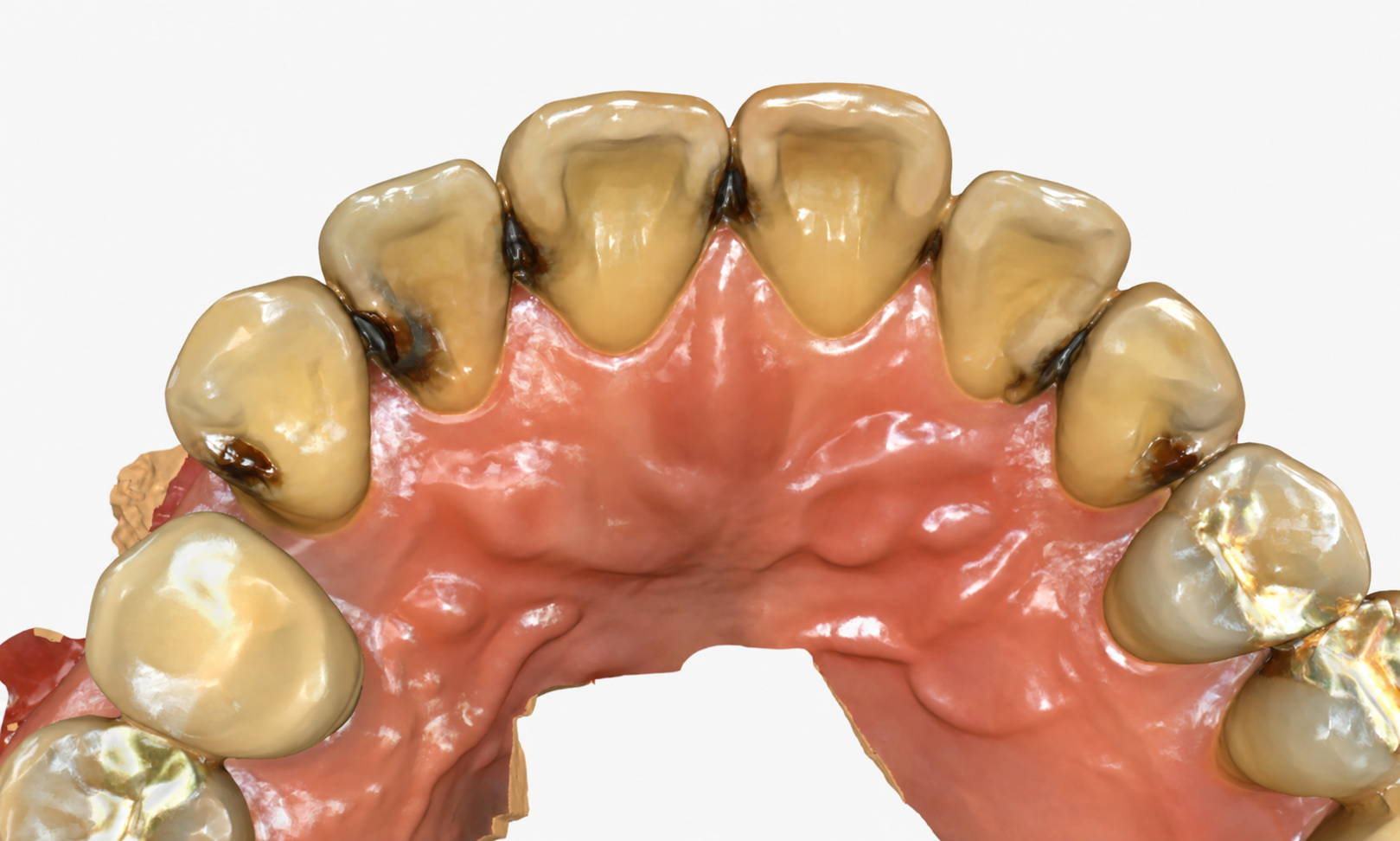
Interproximal decay can extend farther internally than is visible from the front. Several upper front teeth in this patient had severe decay, so we planned removal of damaged areas and coverage of the remaining teeth.
The starting goal was restoring the form and function of teeth damaged by decay, rather than cosmetic whitening.
02. Removing decay and preparing the teeth
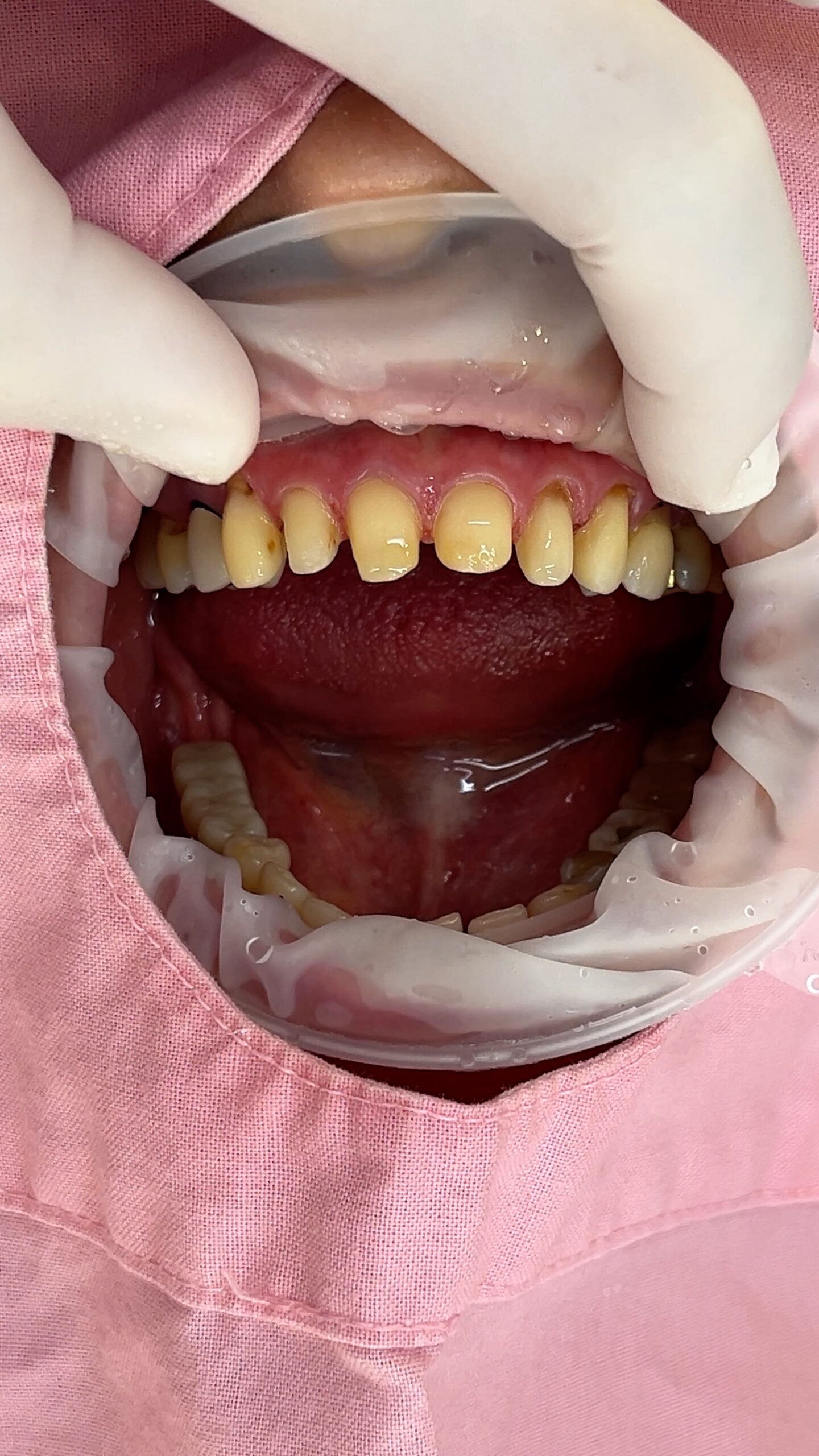
Decay was removed and the interproximal and overall contours prepared for ceramic crowns. I aimed to preserve as much retainable tissue as possible while providing the thickness required by the chosen material and stable placement conditions.
Reduction varies with decay, original shape, bite and material. Ceramic alone does not guarantee minimal preparation for every patient.
03. Crowns placed around two hours after preparation
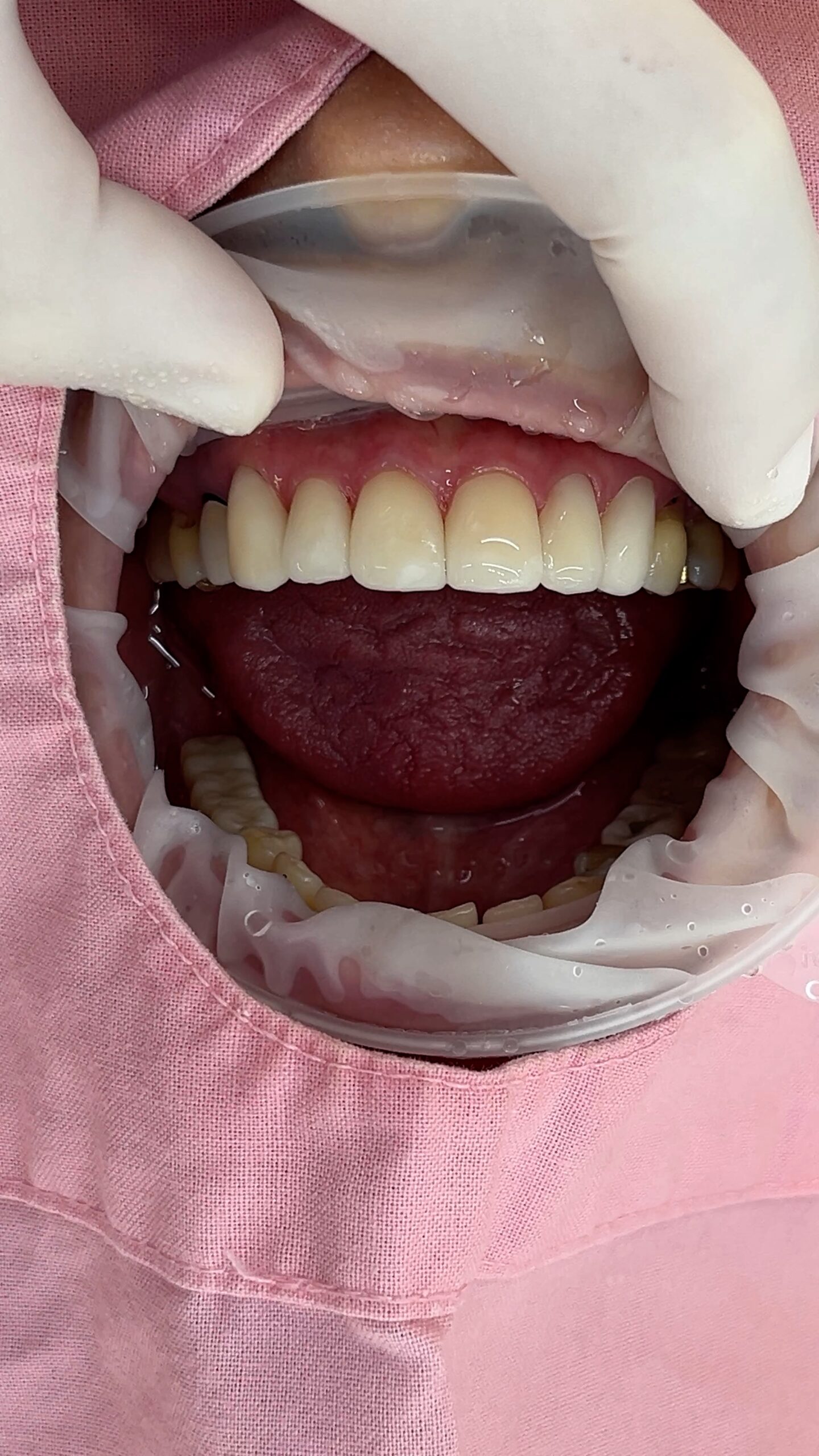
We aimed to retain the character of the original teeth while making the shade slightly brighter and contours more orderly. Fit, contacts between teeth and the bite were considered together.
Timing varies with crown number, material, processing and additional treatment. Same-day placement should be confirmed after consultation.
04. Restoring function and a natural appearance
After treatment, the patient said:
“They look beautiful.”
Although the goal was to restore damaged teeth, their front position made harmonious color and shape important too. This response is that patient’s subjective impression, not a guarantee of satisfaction or long-term outcomes for others.
These photographs show the result immediately after placement. Long-term progress must be assessed at regular reviews of the teeth around the crowns, gums and bite.
REFERENCE · Composite discoloration
Reference image: how front-tooth composite may discolor
The photograph below is not a pretreatment photograph of this ceramic crown patient. It is a separate reference illustrating discoloration that can develop after composite treatment. It should not be read as evidence that this patient received crowns because old composite had discolored.

Composite can develop color differences or surface staining over time. Material aging, surface condition, food and habits are assessed alongside maintenance. Discoloration does not necessarily mean recurrent decay or a need to switch to a crown. Polishing, partial repair or replacement may be considered after examination.
This image does not compare the superiority or discoloration rates of composite and ceramic. Not all composite restorations discolor in the same way, and a photograph alone cannot determine the cause or need for retreatment.
Will crowns prevent further decay?
Ceramic itself does not decay, but the crown margins and natural tooth underneath can develop cavities. Crowns were chosen here to restore extensive damage in a maintainable shape. This case alone cannot establish a lower recurrent-decay rate than composite.
- Brush twice daily with fluoride toothpaste and clean between teeth with floss or suitable interdental aids.
- Clean crown margins and the gumline carefully, and reduce frequent sugary food and drinks.
- Arrange review intervals according to your caries risk and oral condition.
- Seek a checkup for persistent sensitivity or pain, a loose crown or repeated food trapping.
Reference for daily care and decay prevention: NIDCR oral hygiene guidance.
Related cases and front-tooth consultations
See also the case of veneers for discolored front-tooth composite (Korean). Similar-looking concerns may need different plans depending on decay and remaining structure.
Frequently asked questions
Do cavities between front teeth always need crowns?
No. Composite may be suitable for limited decay with enough remaining tooth. Crowns or other options are considered according to damage and the structure left after decay removal.
Do ceramic crowns require almost no preparation?
Crowns require preparation. Planning aims to preserve retainable structure, but the amount depends on decay, material and the bite.
Can every patient finish treatment in about two hours?
No. The two hours in this case ran from completed preparation to crown placement. It was not the total time including examination and decay removal, nor a time applicable to other patients.
Does yellowing composite mean decay has returned?
Staining and discoloration must be distinguished from recurrent decay. A photograph is insufficient; examination guides surface care, repair or replacement.
Do crowned teeth still need flossing?
The spaces between teeth and gum margins need care. Ask for flossing instructions and suitable interdental aids based on crown shape and gum condition.
Materials and references
Clinical photographs, case progress and the patient’s brief comment are based on Dr. Hanna Lee’s supplied explanation. The composite-discoloration image is a separate reference, not this patient’s before-and-after record. Individual photo dates and long-term follow-up duration were not supplied and have not been invented.
Materials checked: October 7, 2026. This is one patient’s case; individual treatment and outcomes are assessed after examination and testing.