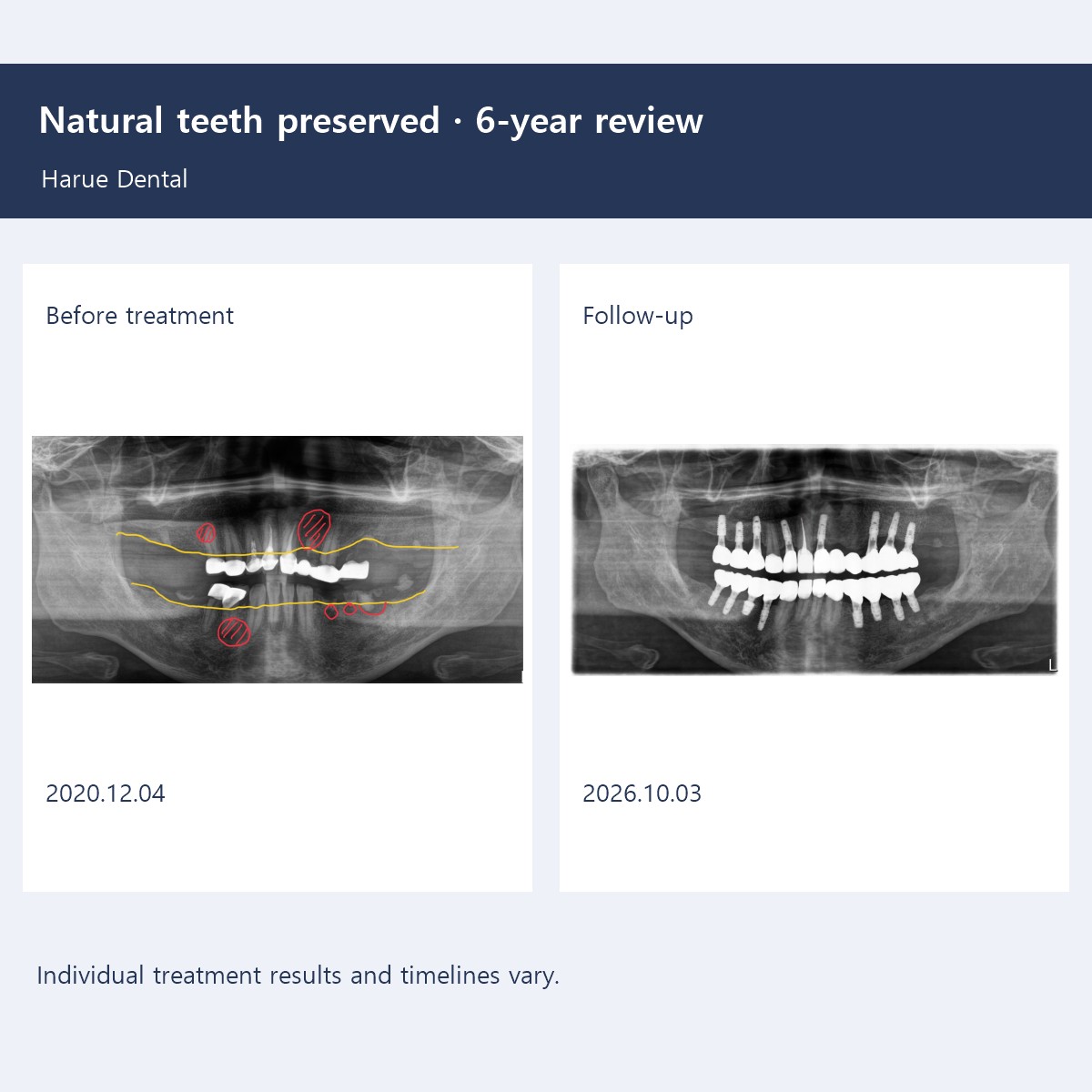
At Haru Dental Clinic, we draw on Dr. Hanna Lee’s clinical experience in tooth design and restorative dentistry since 1994 to preserve natural teeth wherever possible and plan treatment around each patient’s facial proportions and dental condition.
We began guided implant surgery in 2002. In 2007, we filed a trademark application for Navigation Implant with the Korean Intellectual Property Office (application no. 41-2007-0021759).
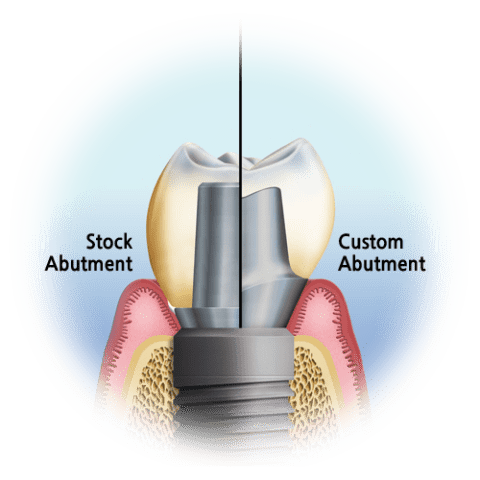
An abutment is the connecting component between an implant and its crown. At Haru Dental Clinic, I personally design each custom titanium abutment to fit the relationship between the implant and the gum tissue and support long-term hygiene and maintenance.
Implant restorations commonly use porcelain-fused-to-metal (PFM) or metal-free zirconia crowns. At Haru Dental Clinic, I personally design the zirconia crowns, which we produce in-house using a digital workflow. A 3D camera makes taking dental impressions easier, and the restorations are designed in three dimensions. Our advanced digital dental laboratory equipment, with an investment of approximately ₩5 billion, supports precise restoration fabrication.
Front teeth affect more than chewing: they directly influence the appearance of your smile and your speech. Front tooth implant treatment therefore requires planning beyond implant placement. We consider the gum line, tooth length, translucency, and the spaces between teeth (black triangles) together when designing the result.
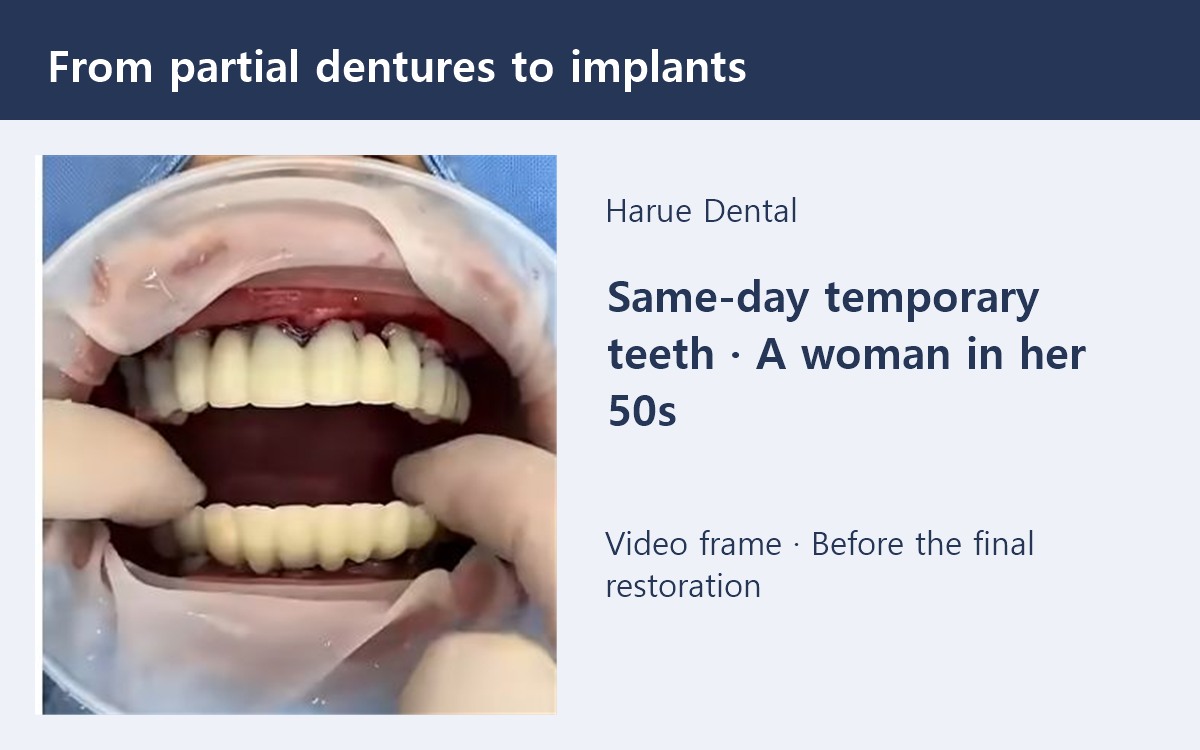
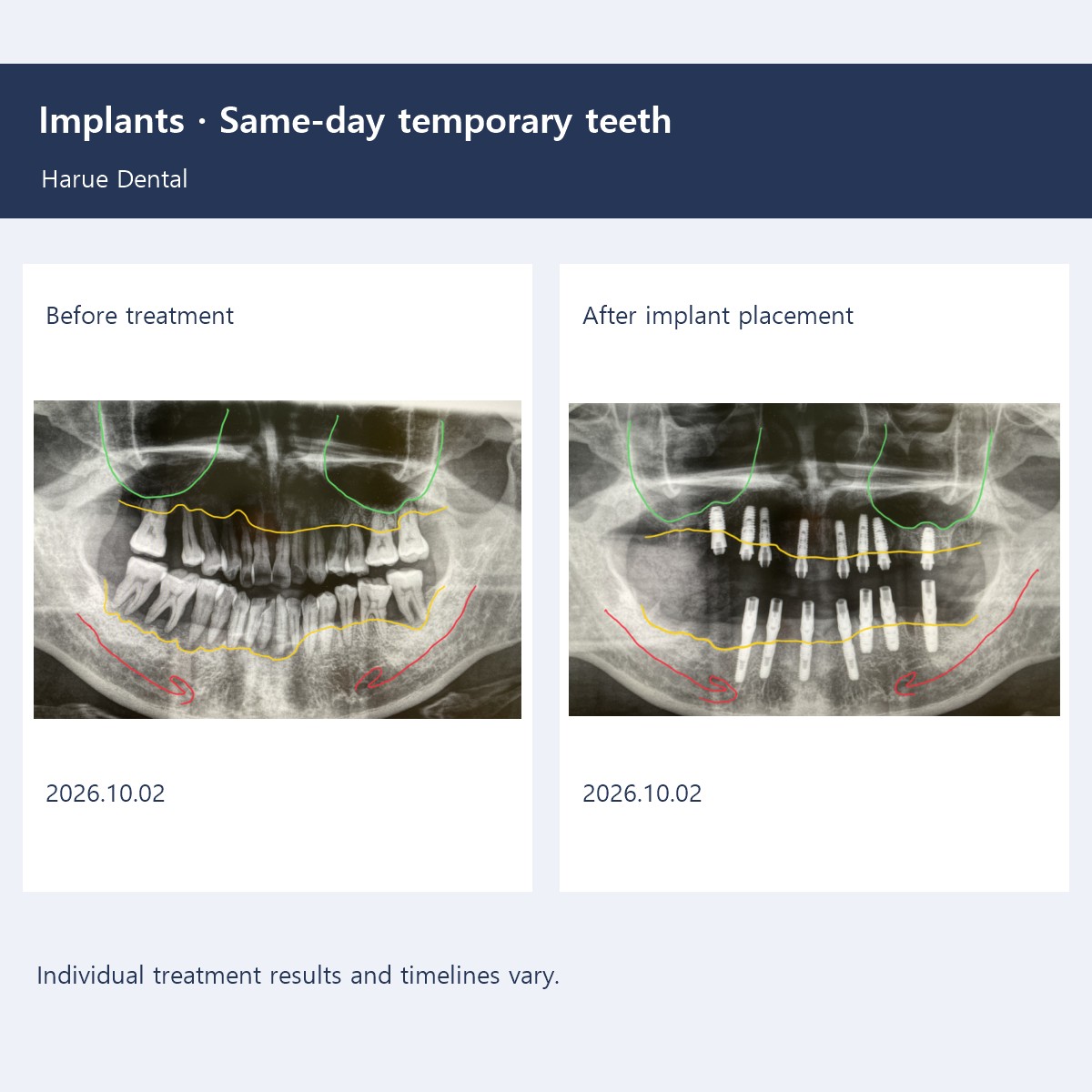
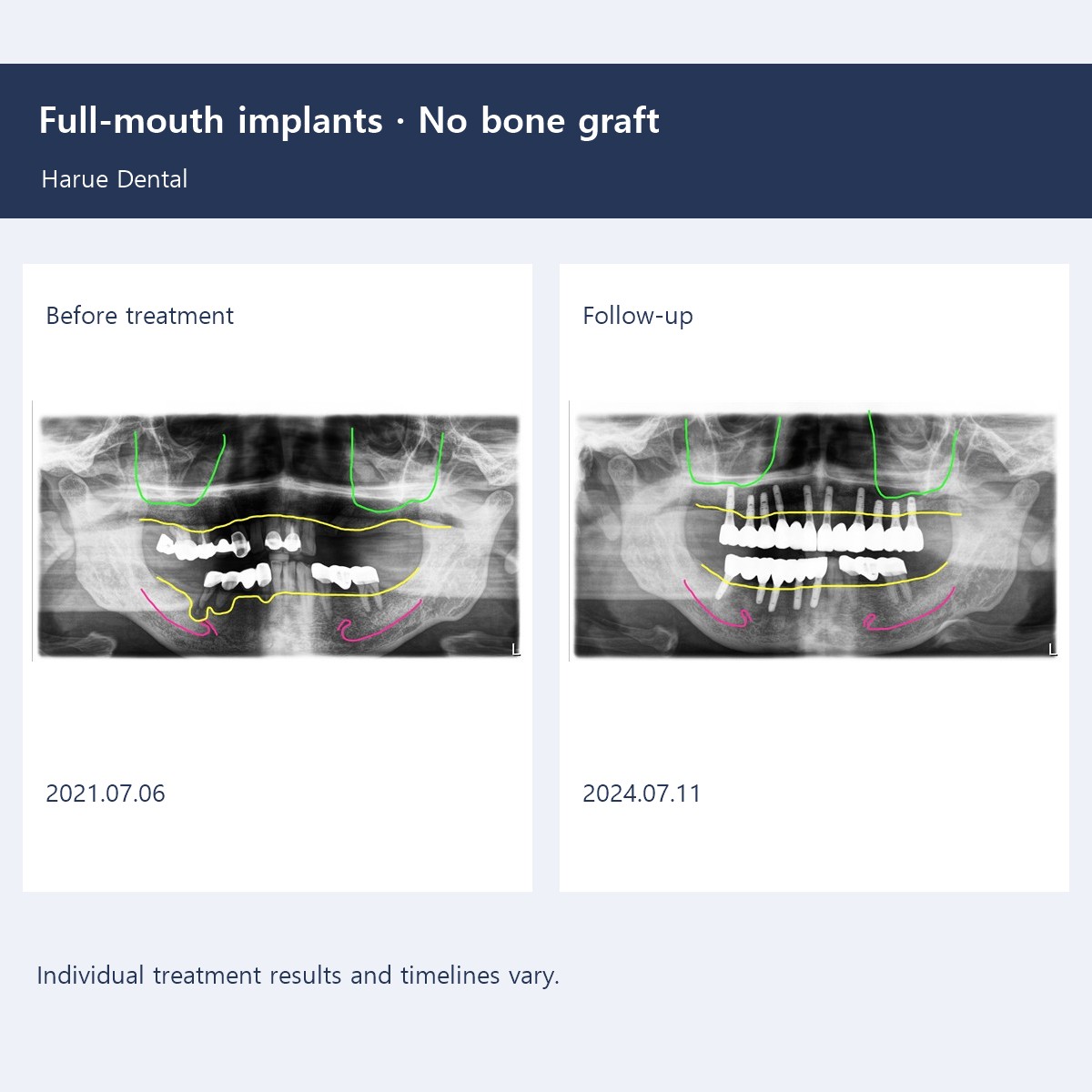
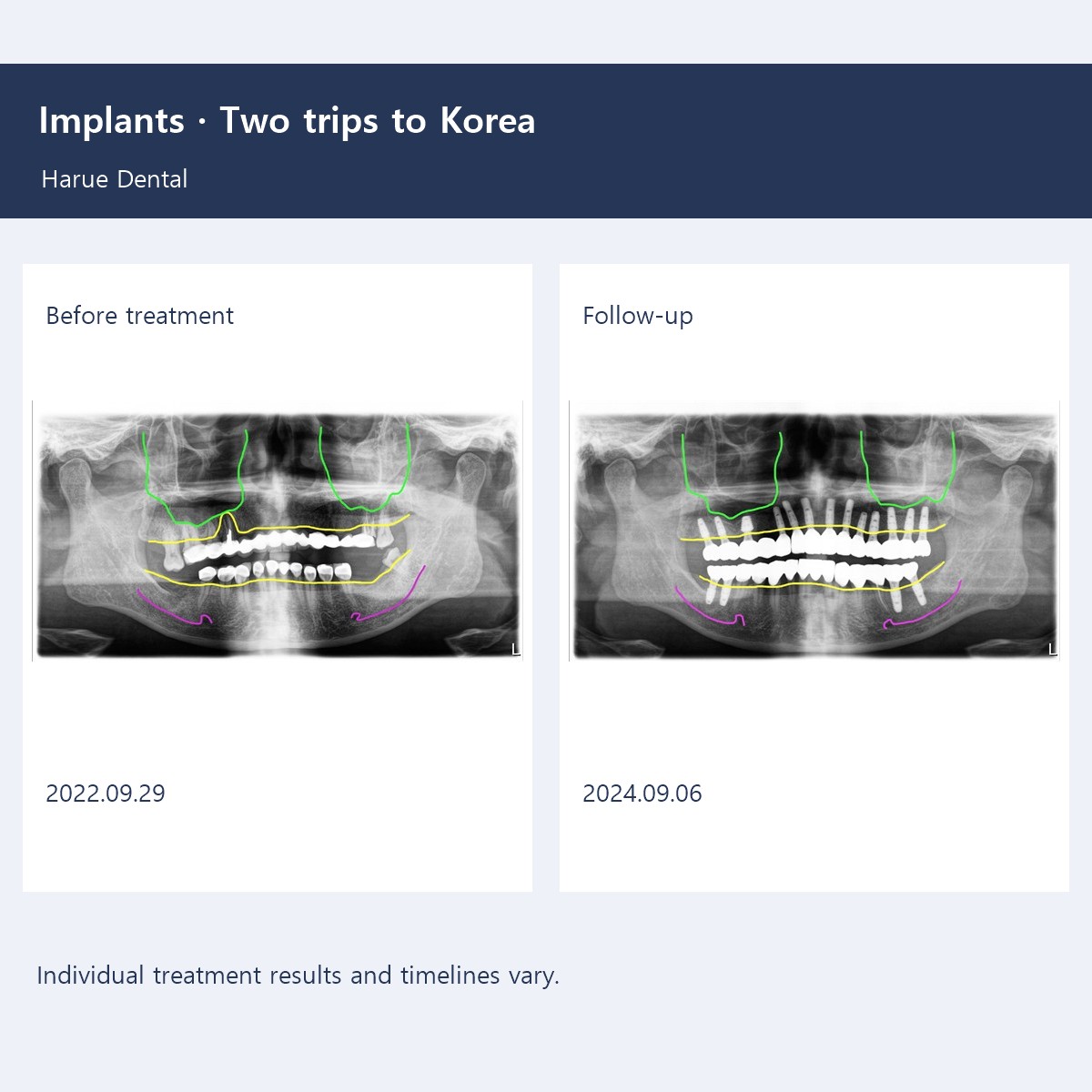
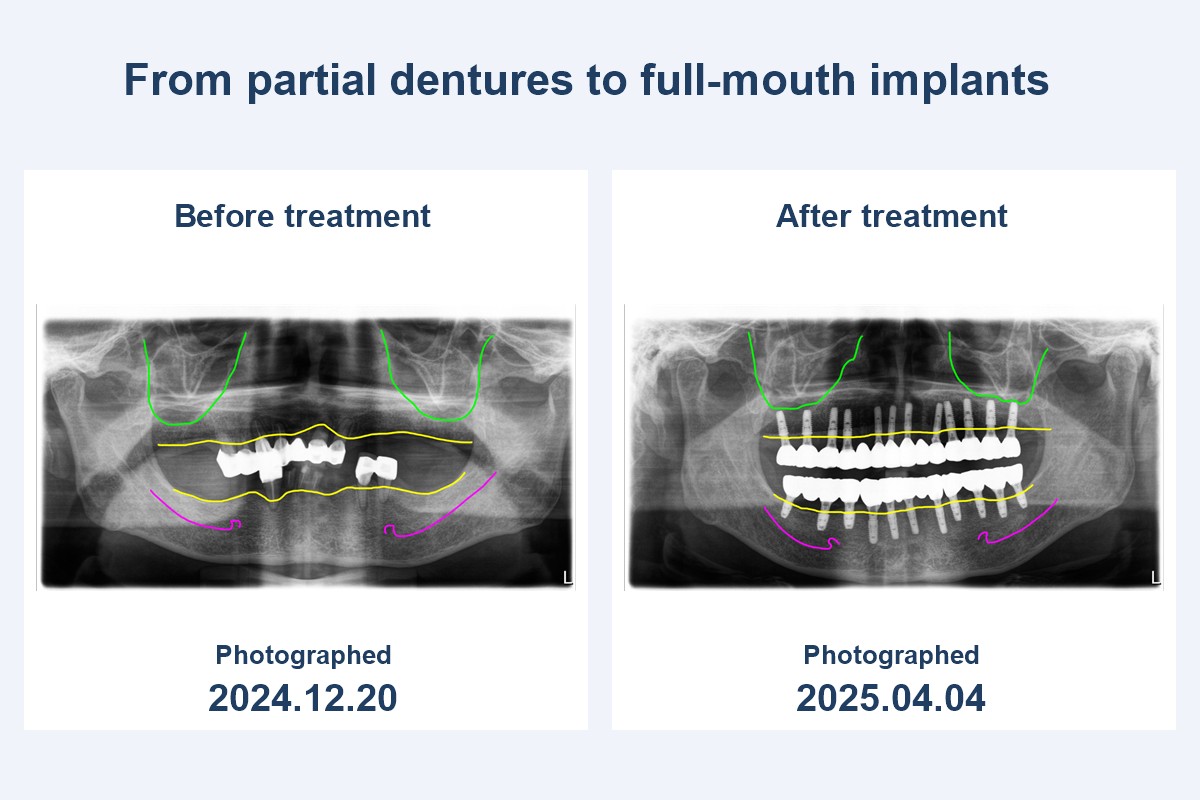
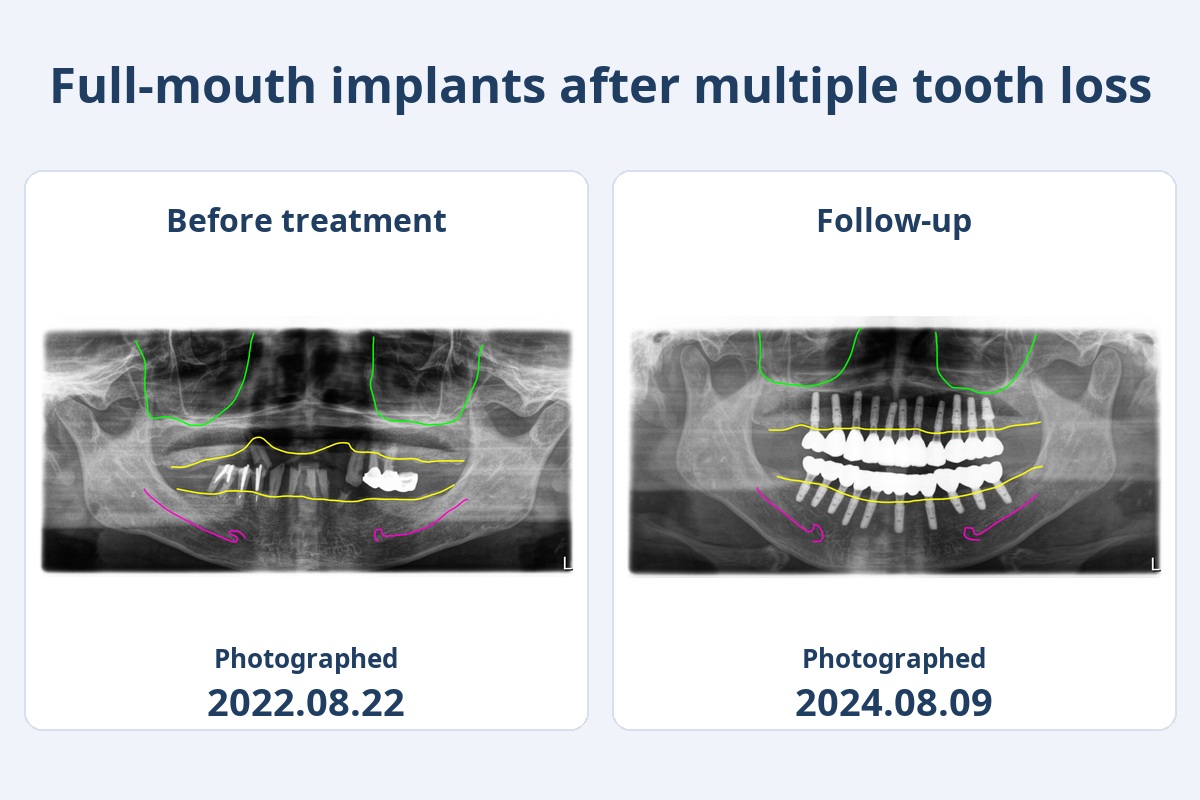
At Haru Dental Clinic, we have provided immediate-loading full-mouth implant treatment since 2000. Traditionally, we connected temporary teeth on the day the implants were placed. More recently, we have also delivered final restorations on the day of surgery in selected cases.
01 · Who Is It For?
This guidance is for patients considering extensive implant treatment because several or all of their teeth are missing.
The scope and approach are determined individually after an examination and consultation.
02 · Process and Timeline
After examination and consultation, we create a treatment plan and proceed with surgery and the planned restorations. Full-mouth implant treatment usually takes around 3–6 months.
The initial consultation may be a separate visit; in some cases, surgery can take place after the consultation.
We explain the actual schedule and number of visits according to your condition and treatment plan.

03 · Same-day Restoration Criteria
Connecting temporary teeth on the day of surgery is different from delivering final restorations on that day. We have recently provided same-day final restorations in selected full-mouth implant cases.
Suitable bone conditions and good cooperation during surgery are required. The clinical team determines suitability; this approach is not possible for every patient.
04 · Follow-up Care
Regular check-ups are still necessary regardless of whether an early follow-up visit is needed. They are usually scheduled every six months.
05 · Fees
Fees related to treatment complexity, bone grafting, and sedation are assessed separately.
Full-mouth Implant FAQs and Aftercare (Korean) →
Clinical information reviewed by: Dr. Hanna Lee, Lead Dentist
Front Tooth Implants · Digital Restorative Technology · Directions and Opening Hours
During the Chuseok holiday in 2022, I had an opportunity to review our full-mouth implant patients. There had been approximately 1,300 full-mouth implant cases over the three years preceding 2022, and each patient’s treatment had progressed differently. Reviewing these cases helped me prepare improved treatment protocols.
I began placing dental implants in 1998 and completed my first full-mouth implant case in 2000. Since then, for more than 25 years, I have continued to place implants throughout the mouth and connect temporary teeth on the same day. My fascination with immediate loading—placing implants and attaching temporary teeth that day—was also what led me to study implant dentistry at graduate school. Professor Yong-Chang Choi’s lectures made a particularly strong impression on me.
The clinical term is the immediate-loading technique. After attending Professor Choi’s lectures, I had the opportunity to observe his treatment in practice. I believe this was around 2000. At the time, an older woman helped me at home while I was raising my children, and she wore complete upper and lower dentures. I asked whether she would be my first full-mouth immediate-loading implant patient, and she readily agreed. I placed implants in both arches and fixed her existing dentures to them so that loading could begin that day. Surgery and the attachment of her dentures were completed that morning, and I delivered her final restorations two months later.
That first case gave me the confidence to continue offering full-mouth implant placement with temporary teeth. The principle behind extracting teeth, placing implants throughout the mouth, and attaching temporary teeth on the same day is bilateral balance: distributing the load across both sides. For this approach, an adequate number of implants, good primary stability, and temporary teeth that connect the implants across both sides are important.
Even when temporary teeth are fitted on the day of surgery, they must not be overloaded. Implant placement creates a wound in the bone, and healing takes place where the implant and bone meet. Initially, some damaged bone is resorbed. Bone-forming cells called osteoblasts then appear in the area previously occupied by the blood clot and form new bone. If the healing tissue moves excessively, soft tissue may form instead of bone, preventing the implant from becoming stable and leading to failure. That is why, with same-day temporary teeth, you should avoid excessive loading during the approximately two to three months needed for bone formation.
Over the seven years discussed in my original clinical reflection, I treated more full-mouth implant cases than at any earlier point in my practice.
Many patients placed their trust in me. As I reflected on my life, I wanted to make the time I have left in practice as meaningful as possible. Adjusting our implant fees allowed me to provide treatment for more people. I sometimes wish I had done this sooner, but I am grateful to be able to do it now.
I hope this information helps if you are considering implant treatment for yourself, a parent, or someone you know.
Our gallery includes clinical photographs covering a range of dental concerns.
These treatment records offer a closer look at Haru Dental Clinic’s experience with implant care.