
HARUE · VENEER CASE
Even after braces, front teeth can still look flared, or their color may remain a concern. In this case, I adjusted the visible shape and color with veneers while leaving the fixed orthodontic retainer behind the front teeth in place. This patient’s treatment was completed in approximately three hours on the same day.
Same-day completion and the treatment time describe this individual case. The schedule varies with the examinations, preparation, and treatment required.

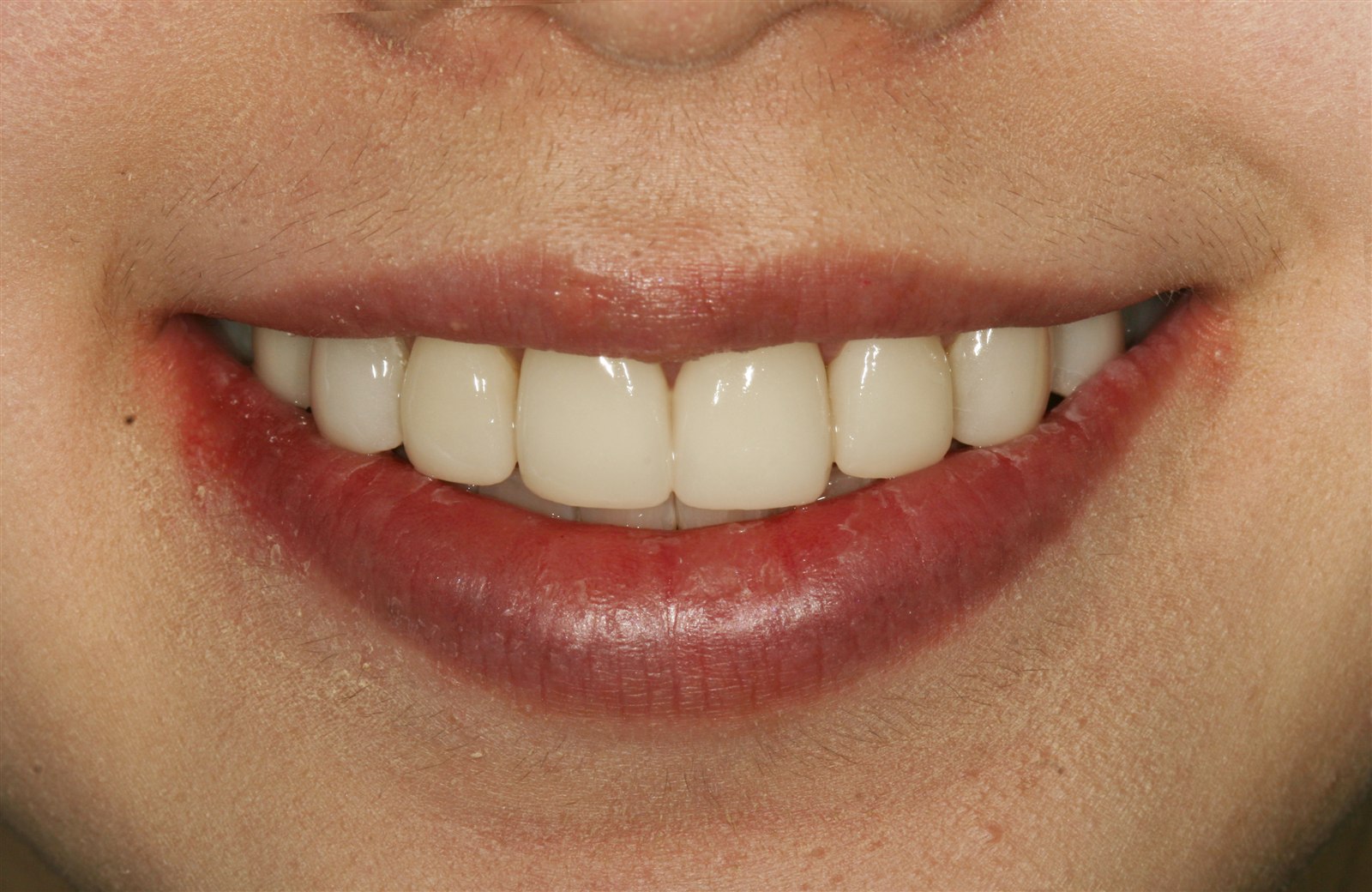
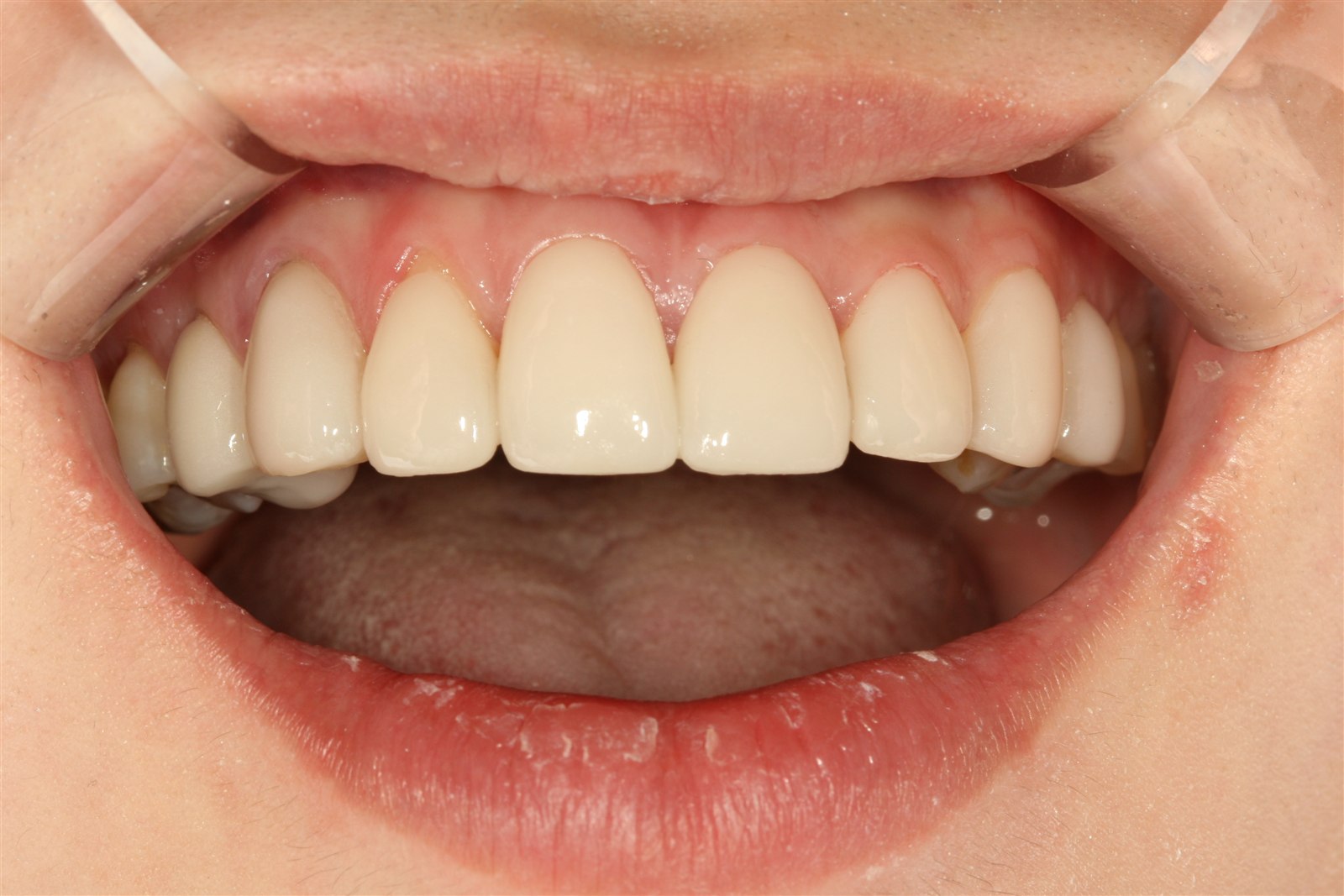
These are photographs of the same patient before and after treatment on February 4, 2010. Camera angle, lip position, and lighting differ. Individual treatment results vary.
Two concerns that remained after orthodontic treatment
This patient had finished orthodontic treatment but was concerned that the front teeth looked splayed outward and appeared yellow and dark. I assessed not only their alignment, but also the width, length, surface contours, and color visible when the patient smiled.
Orthodontic treatment changes tooth position and the bite. It does not necessarily change a tooth’s intrinsic color or shape, so these concerns may remain after braces. This does not mean that everyone needs veneers after orthodontics. First, I distinguish concerns about tooth position from those about shape or color.
① Before treatment
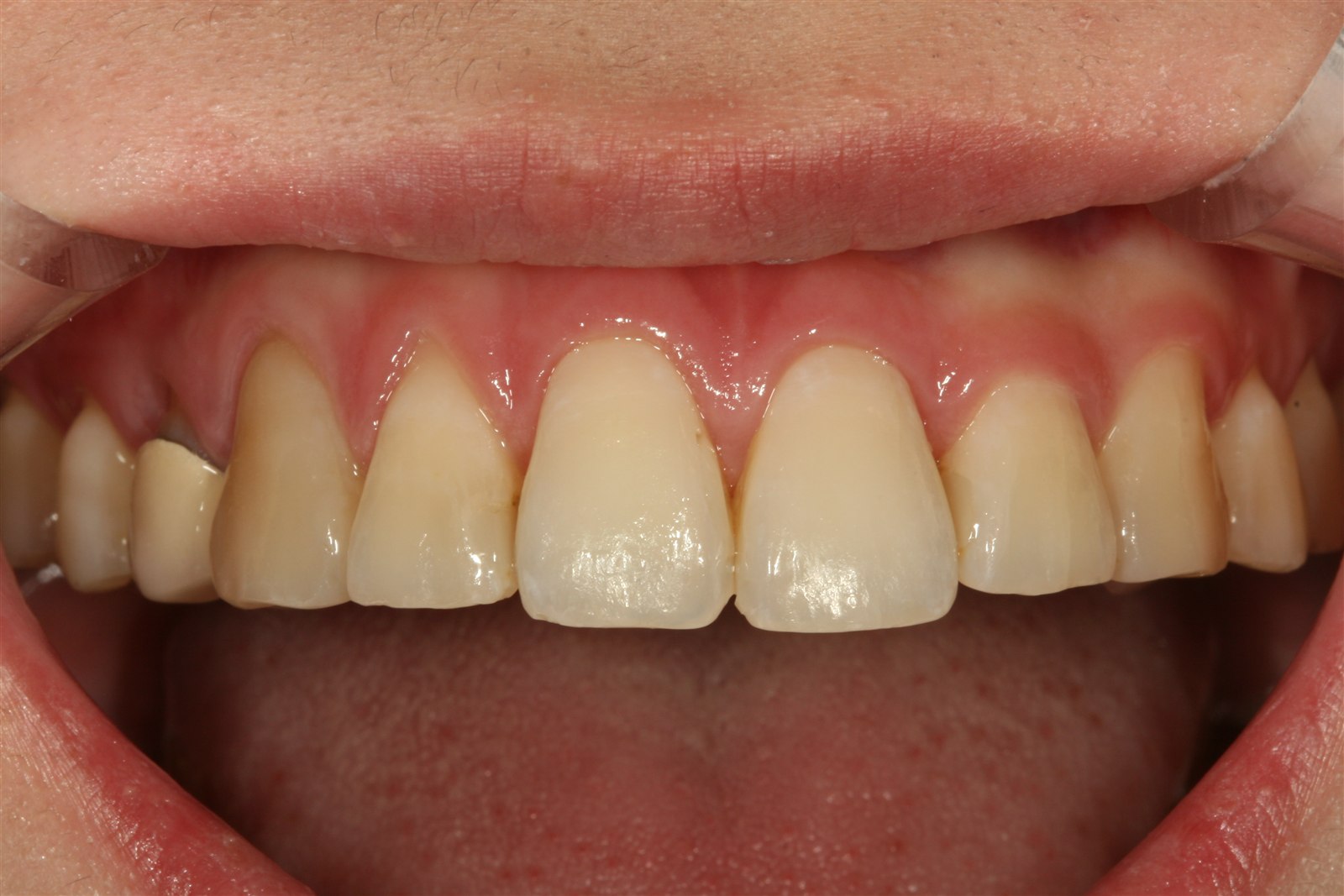
I checked the tooth surfaces, gum margins, and the relationship between the front teeth. A fixed wire retainer was attached behind them to maintain their alignment after orthodontics.
② Preparing the tooth surfaces
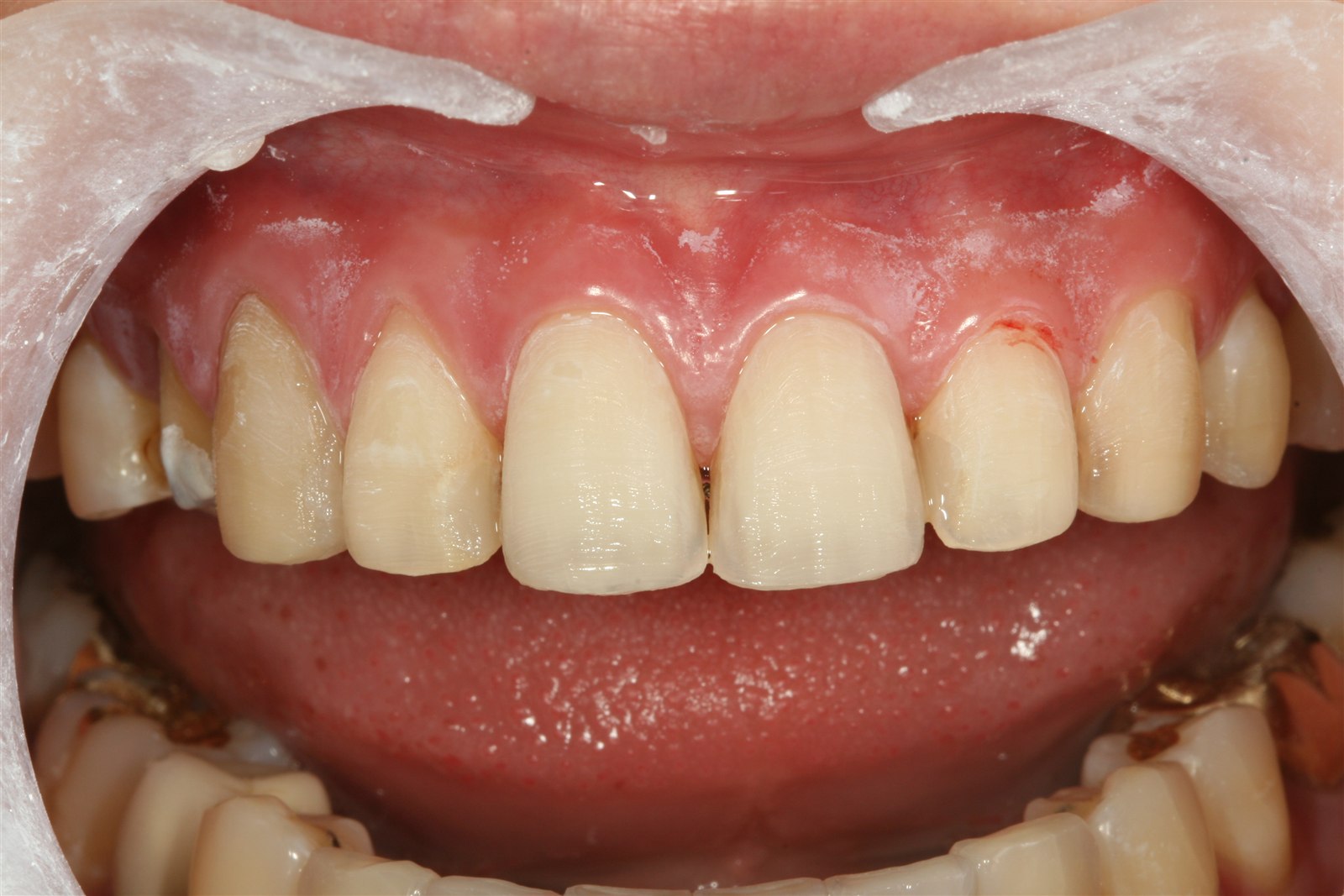
I planned the preparation needed to adjust shape and color, aiming to limit tooth reduction. The photograph below shows the surfaces after preparation for bonding. The amount removed cannot be measured from the photograph alone; this was not a no-preparation veneer case.
Can veneers be placed without removing a fixed retainer?
In this case, I kept the fixed wire retainer in place throughout treatment. An intraoral scan recorded the tooth shapes instead of a conventional impression. However, this approach is not suitable for every retainer. Its position and attachment, the bite, and the space available for the restorations must be assessed.
Removing excess bonding cement between the teeth is also important when the retainer stays in place. The wire can prevent floss from passing in the usual way. As shown here, I passed floss through in advance to clean the areas between the teeth and near the gums.
③ Checking around the retainer
The wire on the inner surfaces remained in place while I arranged access for floss. This helped me check for and remove excess cement around the retainer and restorations.

④ Cleaning between the teeth
This frontal view shows the floss used during cement cleanup. It is a treatment photograph, not an instruction to use multiple strands this way at home. I recommend daily cleaning tools and techniques suited to each patient’s retainer.

What changed in the appearance of the flared front teeth?
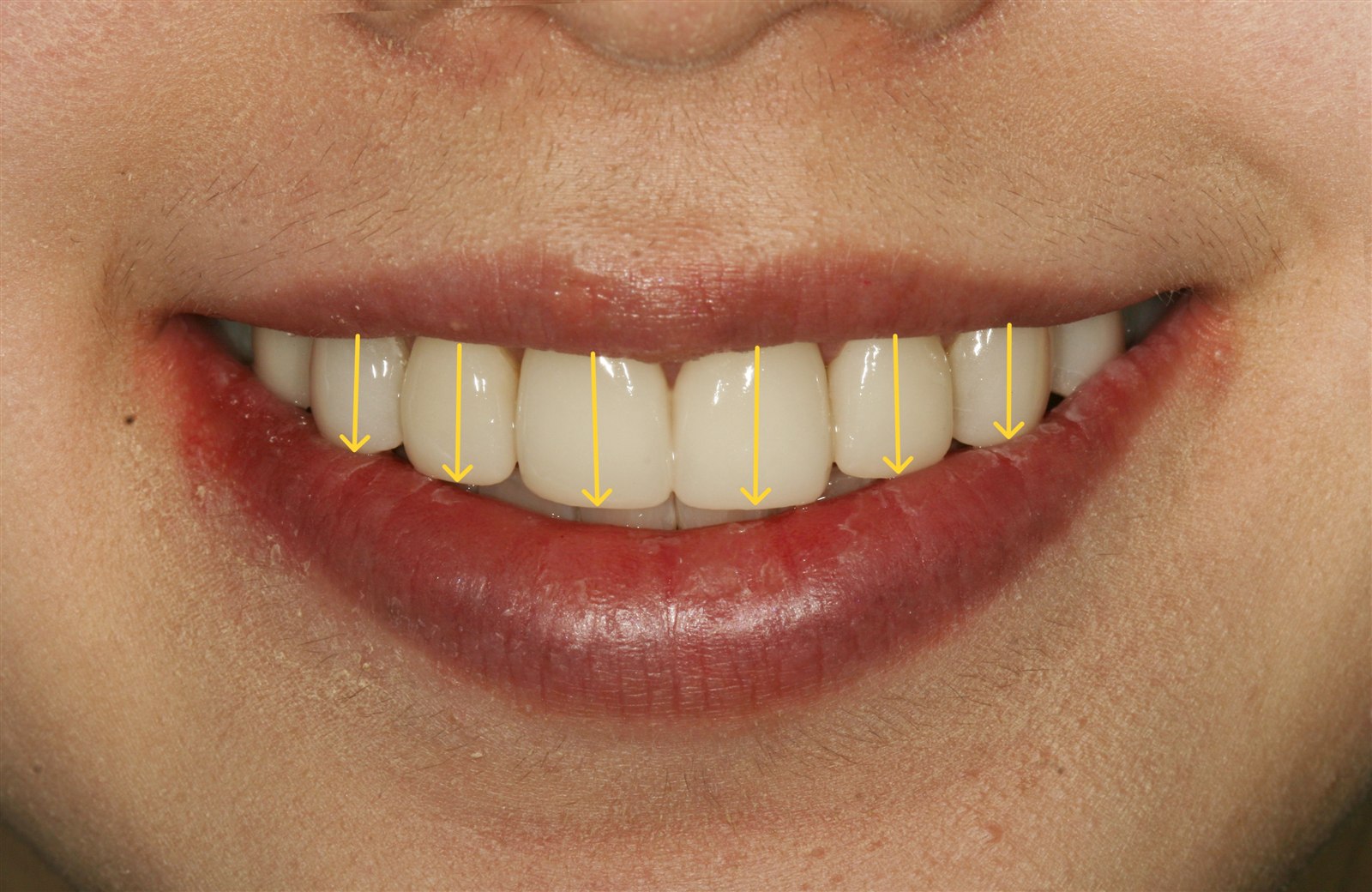
I designed the visible surfaces and contours to reduce the impression that the teeth were fanning outward when the patient smiled. I also adjusted their color.
The yellow arrows were already present in the supplied photographs to explain the visible direction of the teeth. They do not measure the actual root axes, and do not mean that veneers moved the tooth roots.
Before · visible direction

After · visible direction
Checking shape and color after same-day placement
After placing the veneers, I checked their shape, color, gum margins, and the spaces between the teeth. This patient completed treatment that day with the orthodontic retainer still in place.
The preparation, fit, and cement cleanup matter more than the approximately three-hour treatment time. Photographs taken that day cannot establish long-term stability or the lifespan of the restorations.
Veneers after braces: frequently asked questions
Does everyone need veneers after orthodontic treatment?
Can I have veneers with a fixed orthodontic retainer?
Can veneers straighten teeth that look flared?
Do yellow teeth need veneers instead of whitening?
Can everyone’s veneers be completed in about three hours?
How do I clean around veneers and a fixed retainer?
How much does this treatment cost?
Fees depend on the materials, treatment scope, and condition of the teeth.
An individual treatment plan and total cost are explained after diagnosis.
These are the current standard fees on the fee information page, not the amount paid by this patient.