
HARUE DENTAL · FULL-MOUTH IMPLANTS
This patient initially wanted help with an uncomfortable upper partial denture. When she returned about three years later, decay and periodontal problems required a different plan. I considered her osteoporosis medication history and checked bite adaptation with PMMA restorations before fitting definitive zirconia teeth.
Dr. Hanna Lee

01 · Why the treatment plan changed
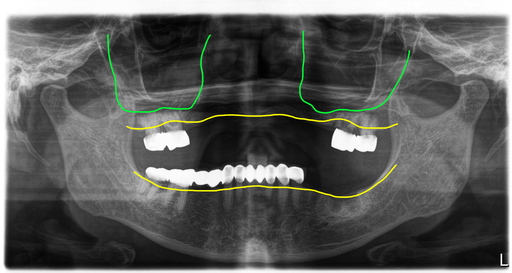
The patient, a woman in her sixties from Goheung, first asked about an implant-retained denture. I assessed the missing teeth, recurrent decay and periodontal support, and initially planned treatment of the affected sites.
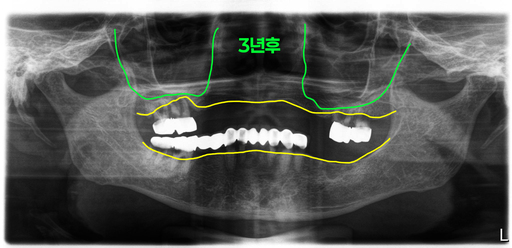
She returned about three years later with deterioration of the remaining upper teeth and decay beneath the lower bridge, which had become mobile. After reassessment, we decided to remove teeth that could not be maintained and proceed with full-mouth implant treatment.
02 · Osteoporosis medication and surgical timing
The record describes a six-month interval after an osteoporosis injection before surgery. This was an individual treatment decision, not a general rule for every osteoporosis drug. Medication type, schedule, medical history and the planned surgery need to be assessed; patients should not stop treatment on their own.
03 · Grafting, implants and temporary teeth
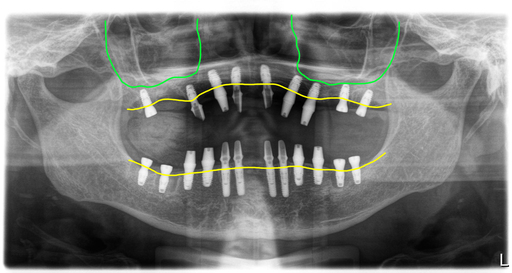
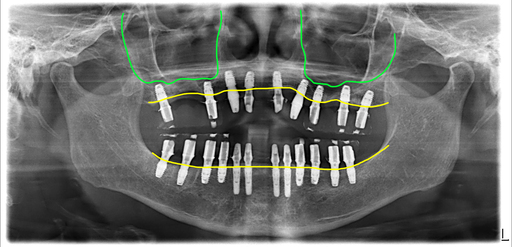
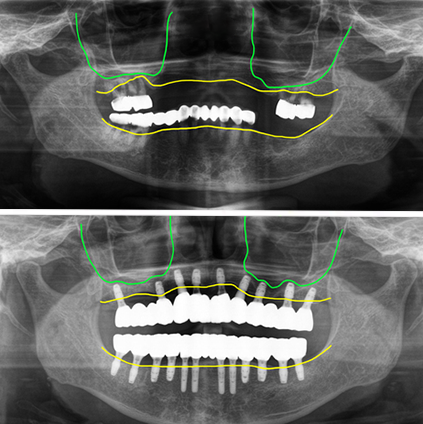
I placed nine implants in the upper jaw and twelve in the lower jaw with bone grafting. Six upper and eight lower implants received abutments to support temporary teeth on the day of surgery.
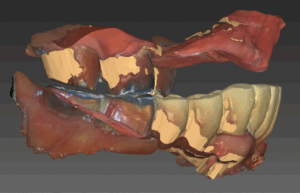
The initial record described reduced bite height. I adjusted the temporary restorations while considering the relationship of the jaws. Same-day temporary teeth did not mean that healing or definitive treatment was complete.
04 · PMMA before the definitive restorations
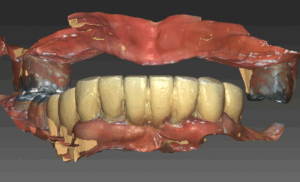
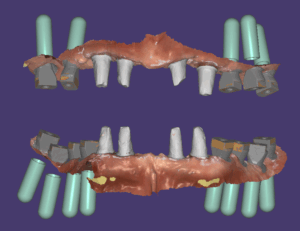
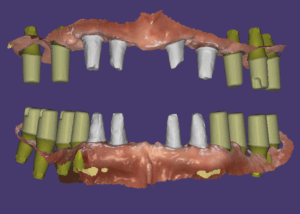
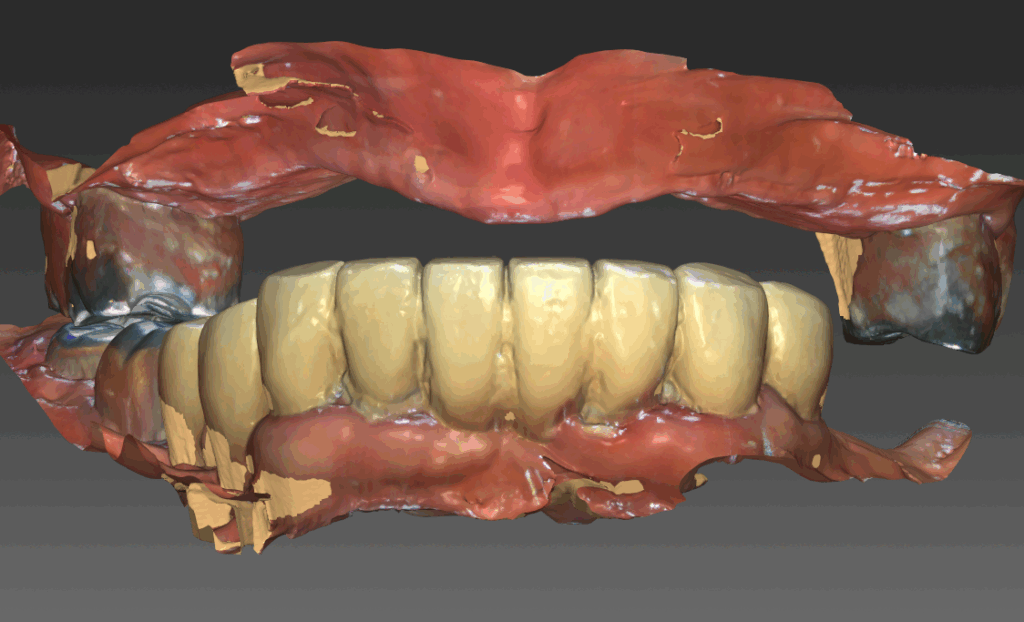
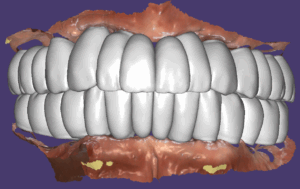
About five months after surgery, I scanned the implant positions, made custom abutments and fitted PMMA restorations in the planned final shape. I used this stage to check the bite and adaptation before making the definitive material the endpoint.
After approximately three months of use and assessment of comfort and function, I replaced the PMMA restorations with zirconia. The panoramic image dated 15 October 2024 shows the definitive-restoration stage. The image dated 15 July 2024 records the implant and abutment stage, not an independently confirmed surgical date.
05 · Understanding the visit and follow-up records
The original reference to five months and four visits applies to the PMMA stage. It should not be read as the complete schedule through the definitive zirconia restorations; the total number of visits needs separate chart confirmation.
An earlier written account mentions roughly a year and a half of follow-up and annual reviews. That historical statement is not a newly verified examination result. Continued cleaning and reviews remain important.
Clinical photographs


Frequently asked questions
Does osteoporosis treatment always require a six-month wait?
No. The interval in this case is an individual record. I assess the medication and surgical risks and coordinate with the prescribing clinician when needed. Do not change medication without medical advice.
Why use PMMA first?
It allows me to assess the planned tooth shape, bite height and function before definitive restorations. The timing and material depend on the individual findings.
Is one full-mouth implant method always the strongest?
No universal ranking applies. Bone support, implant distribution, restoration design, bite and cleaning access all matter. Removable and fixed options have different maintenance needs and limitations.