
HARUE DAVINCI · LAMINATE
Starting with a plan to preserve teeth
Laminate veneers
We consider front-tooth colour and shape together with harmony in your smile. At Harue, we first plan the final tooth form, then design treatment to selectively prepare the necessary areas and bond ceramic.
From no-preparation or minimal-preparation possibilities to same-day fabrication, decisions are based on your current teeth.
01 · What are laminate veneers?
Ceramic bonded to front-tooth surfaces to adjust colour and shape
Veneers bond thin ceramic restorations mainly to the front surfaces of teeth. Their coverage differs from crowns that surround the whole tooth. We select an appropriate method for remaining structure and existing treatment.
Rather than aiming only for a brighter shade, we consider length, width, symmetry, the lip line and neighbouring tooth colour.
02 · Suitable situations
Which concerns may be addressed?
- Concerns about front-tooth colour or shape
- Gaps between front teeth or small chipped areas
- Adjusting harmony in tooth size and length
- Addressing colour and shape concerns remaining after orthodontics
Whitening may better suit colour concerns, and orthodontics may better suit position concerns. Examination determines the treatment needed.
03 · Limitations to suitability
When preliminary treatment or another method is considered
Decay and gum inflammation are included in planning first. Severe protrusion, irregular alignment or major shape changes may call for orthodontics or another restoration.
Grinding, clenching, bite and remaining tooth structure can affect veneer suitability.
04 · Planning tooth reduction
We plan the final shape before deciding how much to prepare
We assess position, colour, existing restorations and desired shape together. No-preparation or minimal-preparation approaches may be possible, but the same method cannot be applied to every tooth.
Diagnostic wax-ups and mock-ups help assess the proposed shape and required space. We selectively prepare the areas needed for the plan while preserving enamel where possible.
Removed tooth tissue does not regrow. Before treatment, carefully review expected reduction and alternatives.
05 · From diagnosis to fitting
How veneer treatment proceeds
01 · Treatment planning
We assess alignment, colour, gums, bite and desired changes to plan extent and design. If needed, a diagnostic wax-up and mock-up help preview the form.
02 · Tooth preparation
We selectively shape the areas needed for the plan. Depending on the tooth and goals, preparation may sometimes be omitted.
03 · Checking tooth reduction
We check and explain the prepared area and remaining tooth, aiming to preserve enamel where possible.
04 · 3D intraoral scan
The scanner records tooth shape, bite and other fabrication information.
05 · Veneer design
Digital records guide length, width, colour and harmony with neighbouring teeth.
06 · Ceramic fabrication
Milling equipment shapes ceramic blocks, which are finished for the material and design.
07 · Try-in and fitting
We check shade, shape and fit on the teeth before bonding.
08 · Final checks
We assess the bite, overall harmony and comfort, make necessary adjustments and explain care.
A Smile Preview can be provided on the same day if desired, at an additional fee. The preview and final outcome may differ.
06 · Time and visits
Can it be completed in one day?
Harue has used digital CAD/CAM systems since 2007. With suitable teeth, gums and fabrication conditions, veneers can be made and bonded on the same day.
Treatment can follow consultation or take place at a separate appointment. Orthodontics, gum-inflammation care or other preliminary treatment requires more time and visits.
Regular follow-up is needed even after same-day completion.
07 · Colour and shape
Design in harmony with neighbouring teeth
We consider the underlying tooth colour, ceramic thickness and translucency, and the teeth visible when smiling. If the desired shape differs greatly from the current tooth, minimal preparation may be difficult.
Tooth numbers are planned around the changes needed and surrounding harmony rather than a fixed package.
08 · Featured treatment cases
Veneer cases with different plans
Extent and preliminary treatment vary between patients. Explore each plan alongside the photographs.
Antibiotic-related discolouration and small teeth · Same-day veneers
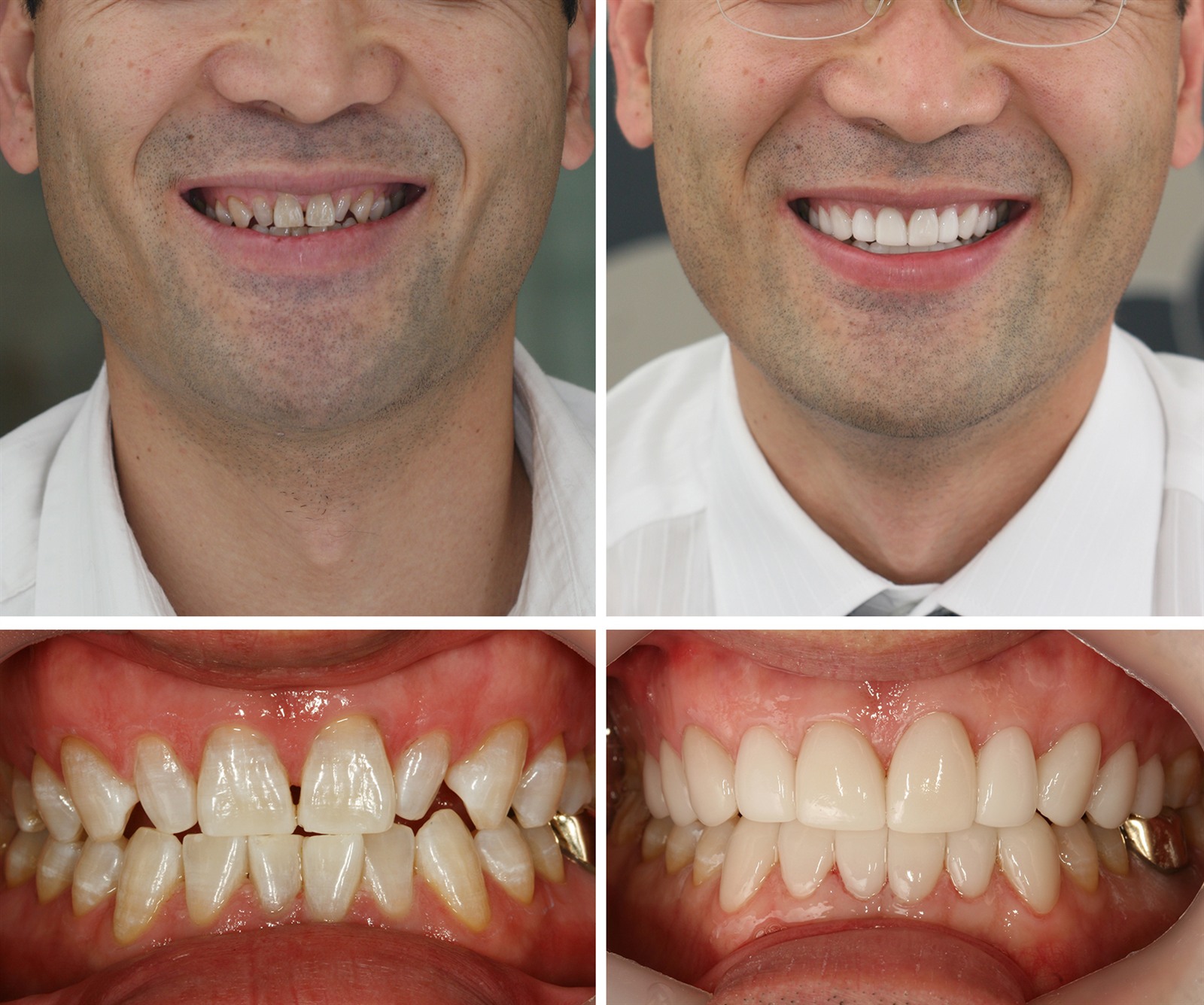
Considering antibiotic-related discolouration and small lateral incisors on both sides, the upper teeth were left unprepared and the lower teeth minimally prepared, with veneers completed the same day.
Rotated lateral incisors and canines · Minimally prepared same-day veneers

Rotation of the lateral incisors and canines affected the flow of the smile. Only necessary areas were minimally prepared, enamel was checked after drying, and the dentist directly scanned, designed and milled veneers for same-day bonding.
Four upper front teeth · Selective preparation guided by wax-up and mock-up
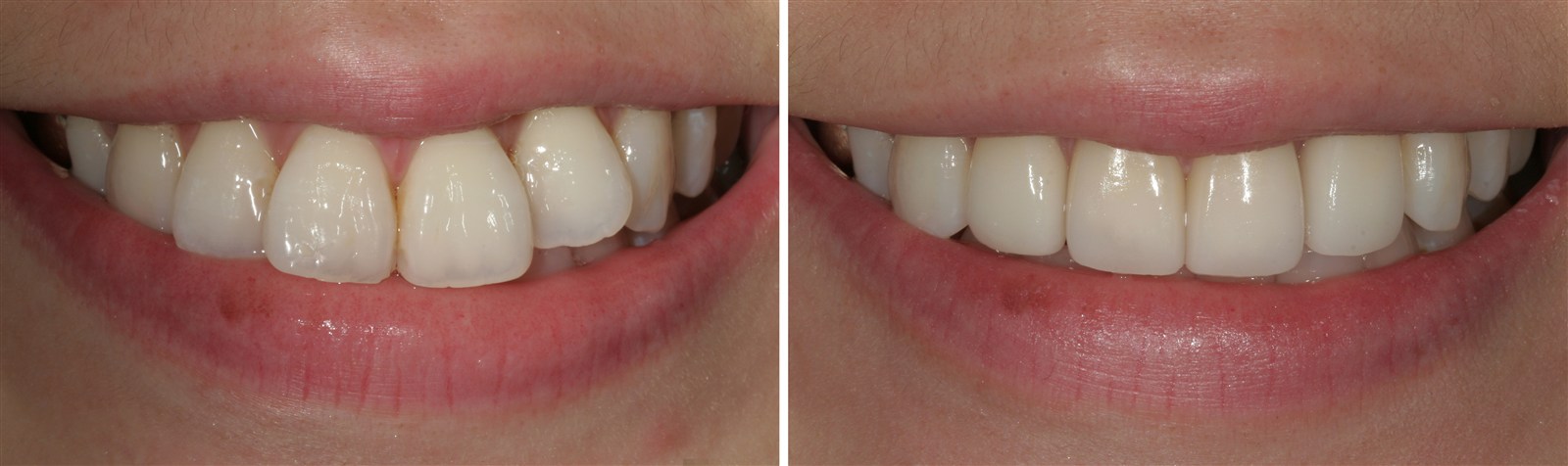
The final form was checked with a diagnostic wax-up and mock-up, then the necessary areas of four upper front teeth were selectively prepared for veneers.
After about five weeks of orthodontics · Eight upper and six lower veneers
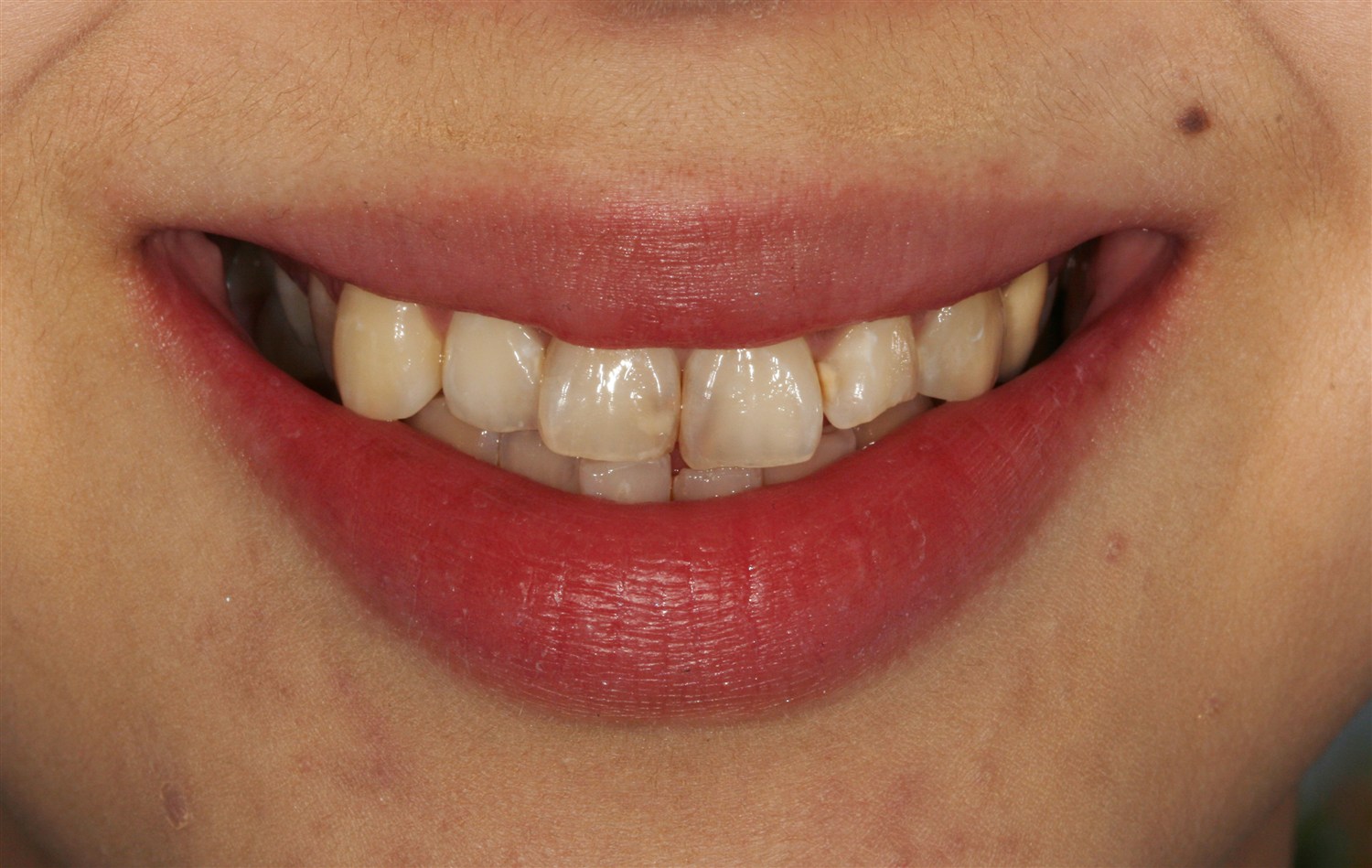

About five weeks of orthodontics were added for crowding before veneers on eight upper and six lower teeth. Tooth position was planned separately from colour and shape improvements.
Each case’s extent, duration and outcome reflect that patient’s records. Plans and outcomes vary with oral condition, and photographic conditions can affect apparent colour.
09 · Care after treatment
Care for teeth and gums after bonding
Daily brushing and cleaning between teeth
Brush gently to the gum line and use floss or interdental brushes between teeth. We explain tools and technique suited to your gums.
Regular check-ups
Usually every six months; with good hygiene, the interval may be adjusted to a year according to condition.
Review habits that apply excessive force
Avoid biting hard objects. If you grind or clench, ask whether a protective appliance is needed.
If bleeding, bad breath or discomfort continues
Seek care if gum bleeding or bad breath persists despite cleaning, or if sensitivity, bite discomfort, fracture or debonding occurs. We assess the cause and advise appropriate care.
10 · Fees
Fees explained according to treatment goals and difficulty
Harue does not set different prices solely by restoration type or material. Fees centre on treatment goals and difficulty. Extent and additional treatment needs are confirmed after diagnosis.
Smile Preview, gum contouring and sedation carry separate fees. Sedation is very rarely used for this treatment. Root canal treatment solely for cosmetic purposes is not covered by Korea’s National Health Insurance.
Frequently asked questions about veneers
Can every tooth receive no-preparation veneers?
No. We assess position, colour, existing treatment and desired shape together. Severe protrusion or major shape changes may call for other approaches.
If my front teeth are uneven, does orthodontics come first?
It depends on how much movement is needed and the bite. When necessary, orthodontics can adjust position before veneers improve shape and colour.
Do veneers require root canal treatment?
Veneers alone do not mean every tooth needs root canal treatment. We assess decay depth, pulp condition and the treatment needed.
Why is preserving enamel important?
Enamel is the hard outer tissue and an important bonding surface for ceramic. Planning balances remaining enamel with the design needed rather than simply removing more tooth. Moisture control, bonding technique and the bite also affect adhesion.
Can veneers break or come off?
Excessive force can fracture ceramic, and bonding or bite conditions can lead to debonding. We assess grinding, clenching and other risks and use protective appliances when needed. Seek care rather than trying to glue a loose veneer yourself.
How long can I use them after treatment?
The same lifespan cannot be guaranteed for everyone. Remaining tooth, bonding, bite and care habits matter, so regular checks assess condition.
Discuss a veneer plan suited to your teeth
We assess your current teeth and desired changes, then explain the necessary extent and schedule.
Clinical care and design: Dr. Hanna Lee
General information references: American Dental Association (ADA): veneers