
SINCE 1995 · HARUE DENTAL CLINIC
Harue Dental Clinic Molar Implants Treatment Guide
We plan implant treatment to restore chewing in the back teeth and support lasting function.
Is it all right to leave one molar missing?
A tooth that is out of sight still matters.
Not every missing molar must be replaced with an implant.
We first assess how well you chew and any changes in the remaining teeth and jawbone.
This individual treatment video shows an approach and outcome that vary with oral condition.
01 · Planning molar implant treatment
What Harue carefully considers in molar implant treatment
① To withstand chewing forces
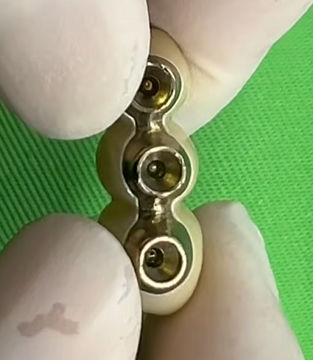
Titanium-bar-reinforced implant restorations
Molars bear substantial chewing loads. When bite forces are strong or you grind or clench, we carefully plan restoration materials and connections. Where needed, we choose an implant restoration reinforced with titanium.
The design addresses structural limitations, considering porcelain chipping in PFM restorations and fractures in zirconia restorations.

② Guided planning
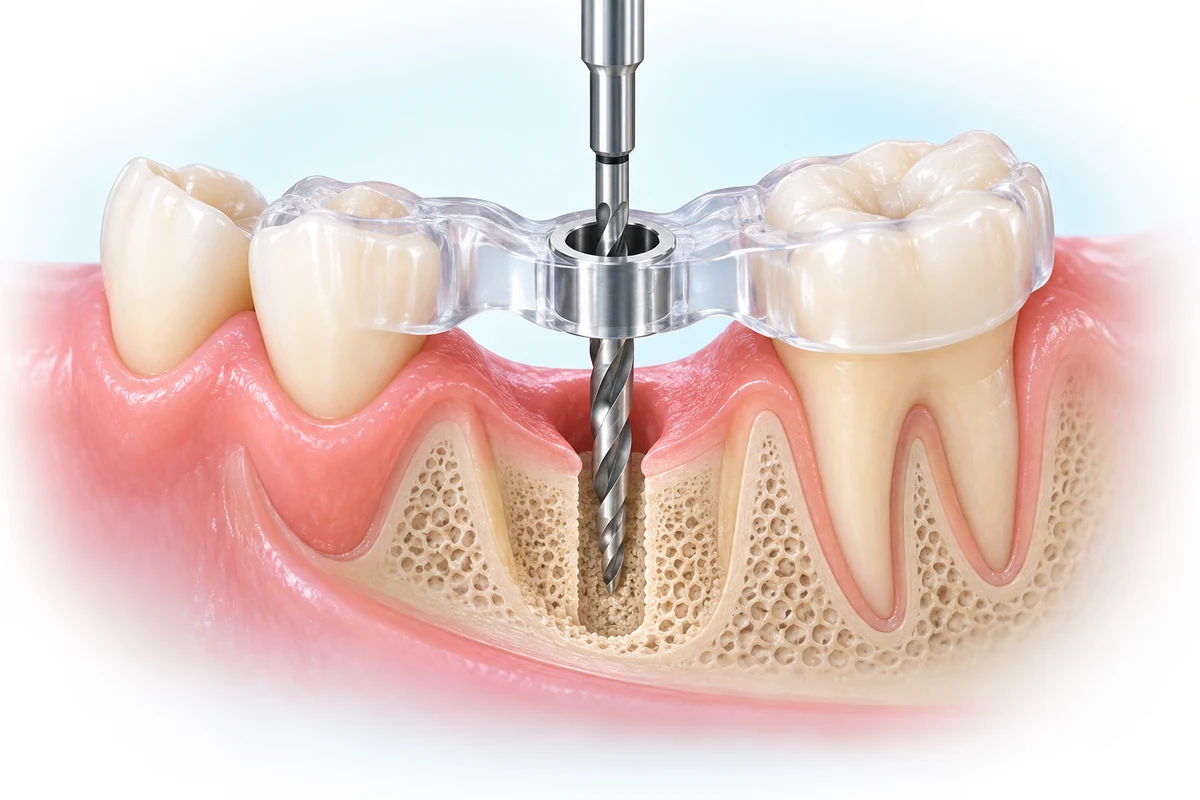
of implant position
Implant position, direction and restoration shape can influence how chewing forces are transmitted. We assess the position using CT imaging and the planned final restoration.
We use a guided-surgery template when precise positional guidance is needed. Its use and the surgical method are decided after assessing bone, the nerve canal, the maxillary sinus and oral condition.
③ Designed for cleaning
and repair
Plaque accumulation and inflammation around implants can damage the surrounding bone. A shape and spaces that allow interdental brushes and floss are important.
Hand movement and cleaning ability differ, so we design restorations around the tools and methods you can use. We also consider whether removal for inspection or repair is possible and how screws can be accessed.

④ Sufficient stable gum tissue
around the implant
We assess gum thickness, movement, the extent of firm gum tissue and discomfort during cleaning. Thin gums or nearby movable mucosa may make cleaning difficult.
We preserve surrounding gums where possible. If insufficient tissue or contour makes care difficult, gum grafting may be considered. The need and method depend on the individual; grafting alone cannot prevent all inflammation or bone damage.

- Clean between teeth daily
- Check for gum bleeding and swelling
- Have the bite checked regularly
- Check grinding and clenching
02 · Changes after losing a molar
If it does not bother me, why have an examination?
Tooth positions and chewing patterns can change even with little discomfort.
We first check for changes and their possible effects.
Tilting into the gap
Movement can change spacing and the bite.
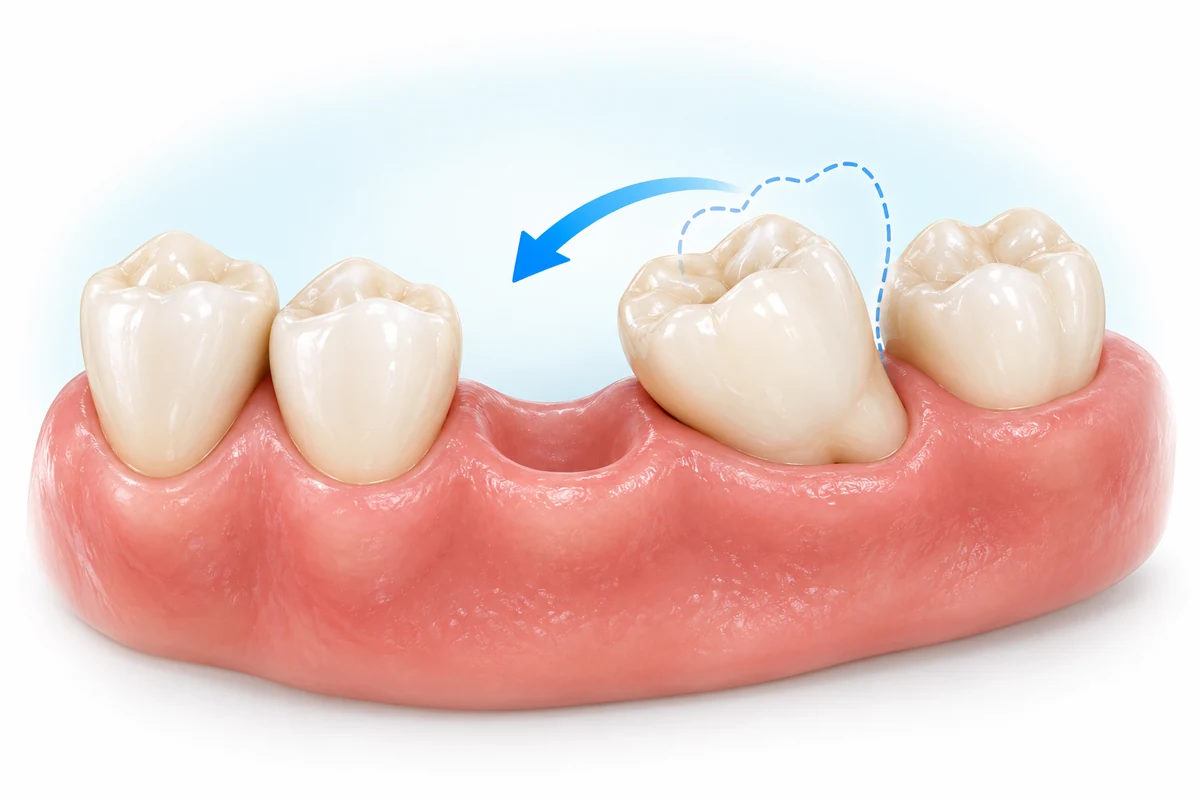
What we check Enough room for a restoration
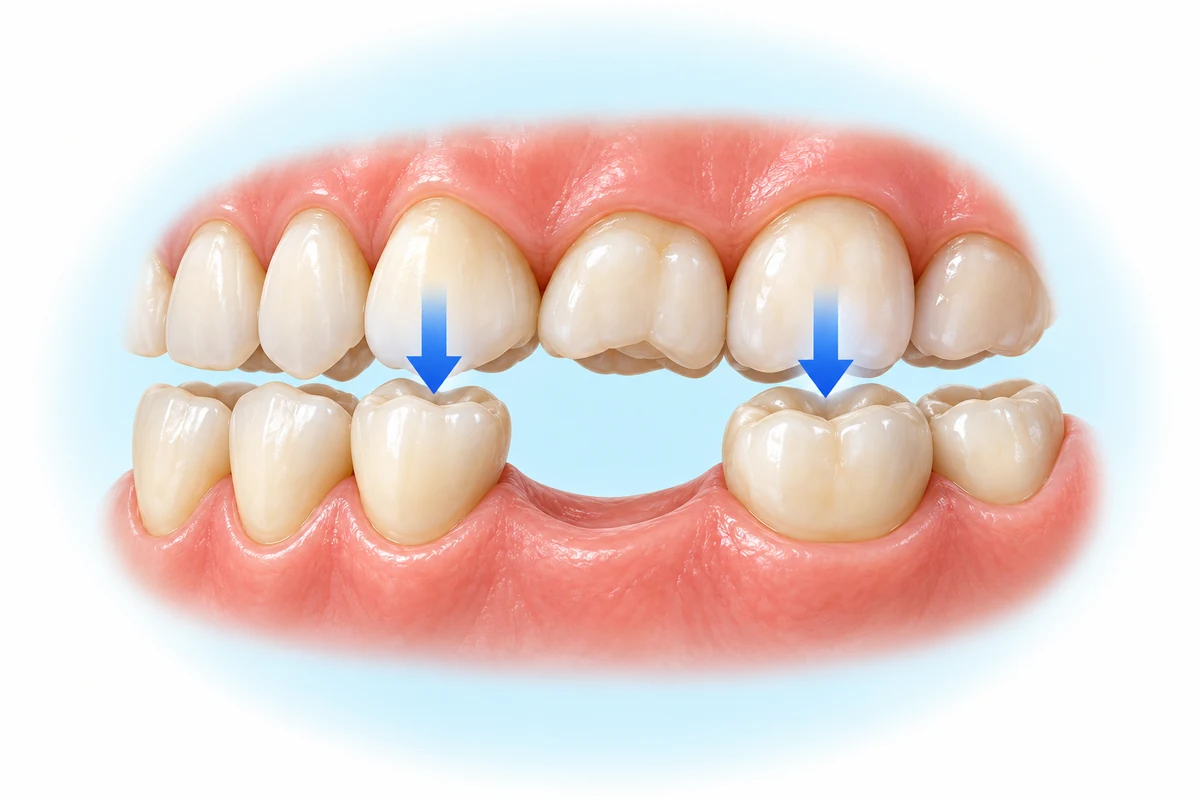
Overeruption into the gap
An upper tooth may move down or a lower tooth up, reducing space for the restoration.
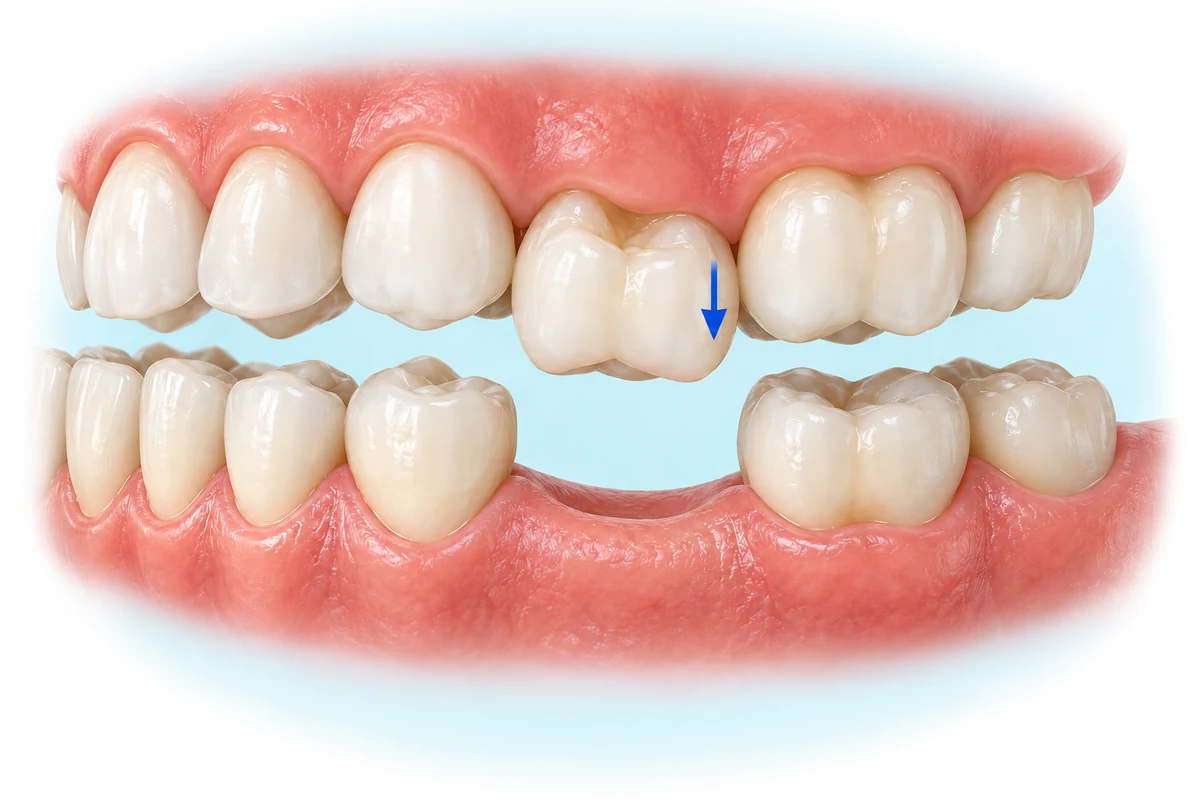
What we check Clearance between upper and lower teeth
Changes in bone width and height
Bone shape changes as it heals after extraction. A long-standing gap does not automatically rule out treatment.
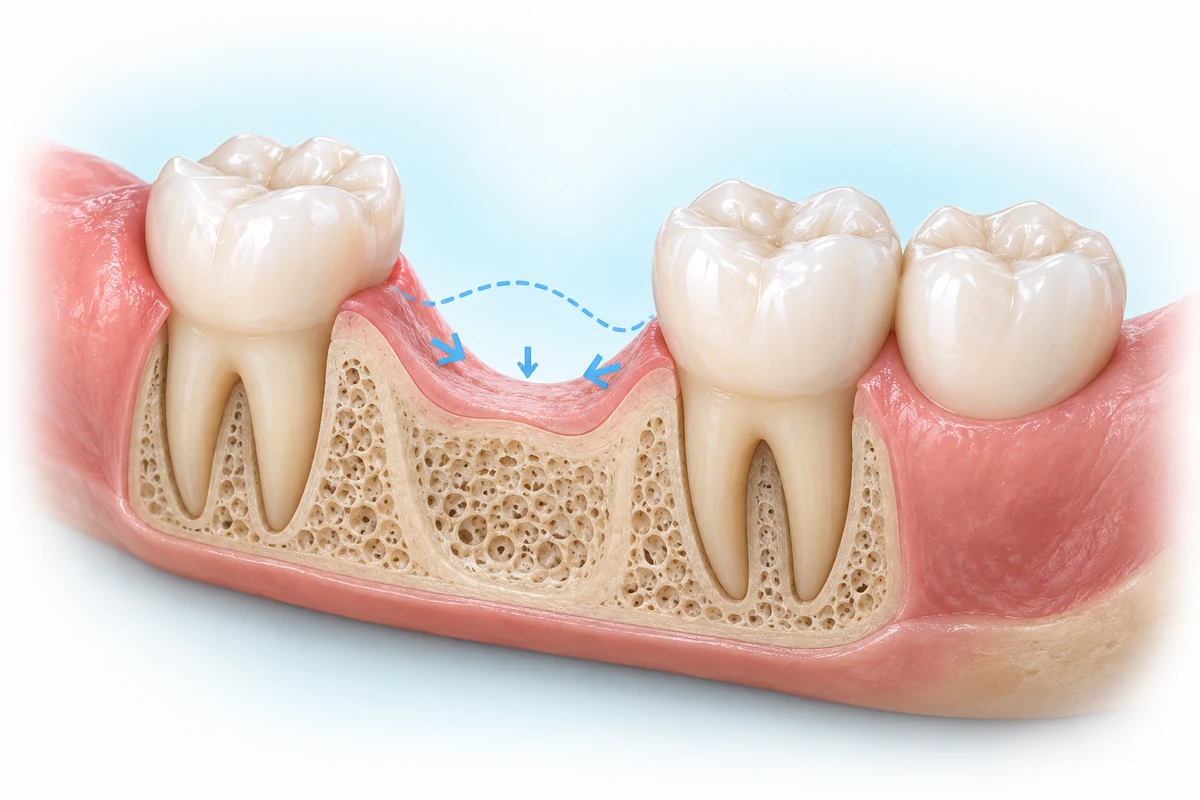
What we check Current bone volume and grafting needs
Changing roles of remaining teeth
We assess the whole bite for one-sided chewing or forces concentrated on certain teeth.
What we check Remaining tooth health and actual chewing function
These changes do not occur at the same rate or to the same extent in everyone.
This individual treatment video shows an approach and outcome that vary with oral condition.
03 · Placement timing by condition
Place immediately after extraction, or wait for healing?
We first confirm that extraction is necessary. If so, infection, bone condition and
the ability to achieve stable fixation determine the sequence.
Placement on extraction day
When placement conditions are suitable
If the extraction site and surrounding bone allow it, same-day placement is considered, with bone grafting when needed.
- Extraction + placement
- Confirm bone integration
- Final restoration
Placement after extraction-site healing
When gums and the socket need recovery
We allow weeks to months to assess resolution of inflammation and gum and bone healing before placement. Eating and temporary restoration needs during the wait are also planned.
- Extraction
- Check healing
- Placement & integration
- Final restoration
Delayed placement after grafting
When supporting bone is insufficient
For a large defect, grafting first prepares the site. The extent of the graft and healing add waiting time, and sinus-related treatment may also be needed.
- Grafting & healing
- Placement & integration
- Final restoration
04 · Treatment time and eating
When can I chew food again?
More than the surgery date, stable integration with boneis what matters.
Healed gums and readiness to chew on an implant are different milestones.
Early after surgery
Gum healing and
protection of the surgical site
About 1–2 weeks
We check early gum healing and suture-removal timing and explain eating habits that avoid excessive force on the site.
Healing after placement
Confirming integration
between implant and bone
Usually 2–6 months
This is the usual period for bone integration. Grafting extent, initial stability and health can lengthen it.
After stability is confirmed
Final restoration and
bite-force adjustment
Decided after assessment
We make and fit the restoration and adjust the bite. Foods and permitted chewing force depend on adaptation.
These periods are general reference ranges for healing. Two to six months is not the total treatment time. Waiting after extraction, prior grafting and fabrication may add time. Your schedule is explained after examination.
During treatment, how should I eat?
Start with soft foods using the area advised by your dentist; do not forcefully chew hard or tough foods on the surgical site. If molars are missing on both sides, we plan chewing areas and temporary restorations before treatment.
Can a temporary toothalso be fitted that day?
We consider this selectively with sufficient initial stability and a suitable bite. Even with a temporary tooth, chewing may be restricted. Molars receive strong forces, so in most cases we do not attach temporary teeth.
Planning care to minimize visits
To reduce the burden of visits, Harue aims to combine appropriate treatment and restoration fabrication in one visit. Even when a buried implant needs second-stage surgery, suitable conditions may allow scanning, fabrication and attachment of the final restoration on that day.
We decide after checking bone integration, gums, bite and connection method, while allowing necessary recovery and follow-up.
Final restoration on second-stage surgery day: case and conditions →
General healing time reference: Leeds Teaching Hospitals implant patient information · ITI consensus on loading protocols
This individual treatment video shows an approach and outcome that vary with oral condition.
05 · Number of implants needed
Do I need one implant for every missing tooth?
Three missing teeth do not necessarily require three implants.
The required number depends on the location and number of missing teeth, remaining teeth, chewing forces and bone condition.
The aim is not more implants, but stable chewing with an appropriate number and distribution.
One missing molar
Usually restored with one implant.
A single missing molar is generally treated with one implant and a crown. This can restore it independently without preparing healthy teeth on either side.
Wisdom teeth and some molars of limited functional importance do not always need replacement.
Several missing teeth in separate areas
We generally plan the implants needed in each area.
One missing molar on each side is usually treated with one implant on each side. Separate gaps are difficult to join with one restoration, so each site is planned according to function and bone.
Not every gap must be restored; actual chewing and bite conditions determine the extent.
The very last molar is missing
Replacement may not be essential, depending on the opposing tooth and chewing function.
If it has no opposing tooth or contributes little to chewing, monitoring without an implant may be appropriate.
Replacement may be recommended when it is important for chewing or there is concern about tooth movement or overeruption.
Without a supporting tooth behind the gap, a conventional tooth-supported bridge can be difficult, making implants a main option.
Several adjacent missing teeth
Fewer implants than missing teeth may be possible.
Three adjacent missing molars do not always require three implants. If suitable, two implants can support a three-unit bridge with an artificial tooth between them.
Longer restorations or strong chewing forces may require more implants. Position, connection design, cleaning access and number are considered together.
Two design examples for three adjacent missing molars

Design B is not suitable for everyone. The central tooth in the diagram is supported from both sides. This differs from a cantilever extending beyond the last implant. Implant distribution and bite forces still need individual assessment when the rearmost tooth is missing.
References: ADA dental implant information · ITI consensus on multiple posterior restorations
06 · Frequently asked questions
Before deciding on treatment, explore your questions
Ten questions people considering treatment often ask.
Does one missing molar always need an implant?
What if I have been without a molar for a long time?
Can placement be done immediately after extraction?
When can I chew normally?
How long do molar implants last?
Is bone grafting always necessary?
What about pain and nerve or sinus complications?
How do single and multiple implants differ?
Which is better: a bridge or an implant?
Why do molar implant fees vary?
Fees to confirm before treatment
Molar implants Fee guide
Fees depend on materials, treatment extent and the condition of teeth and bone. After examination, we explain the needed treatment, restoration options and estimated total.
Materials and restoration design
Check implant, abutment and crown types and the connected span.Additional treatment
Check the need and cost of grafting, sinus procedures or guided surgery.Included and separate items
Check coverage of examinations, temporary teeth, final restorations and follow-up.These are current reference fees on our fee guide, not the actual fee paid by a particular case patient.
References: ADA missing-teeth guideFDA patient guide to dental implantsITI consensus on loading protocols
Clinical guidance: Dr. Hanna Lee · Updated October 30, 2026
General treatment information; not a substitute for an individual diagnosis and treatment plan.