
Harue Dental · Dr. Hanna Lee · Front implant cases
Planning a natural-looking front implant includes the point where the tooth meets the gums. Shade and contours, gum height, implant position and the supporting abutment are considered together. Photographs from three different patients illustrate these principles.
Case One: Restoring a Missing Front Tooth and Its Gum Transition
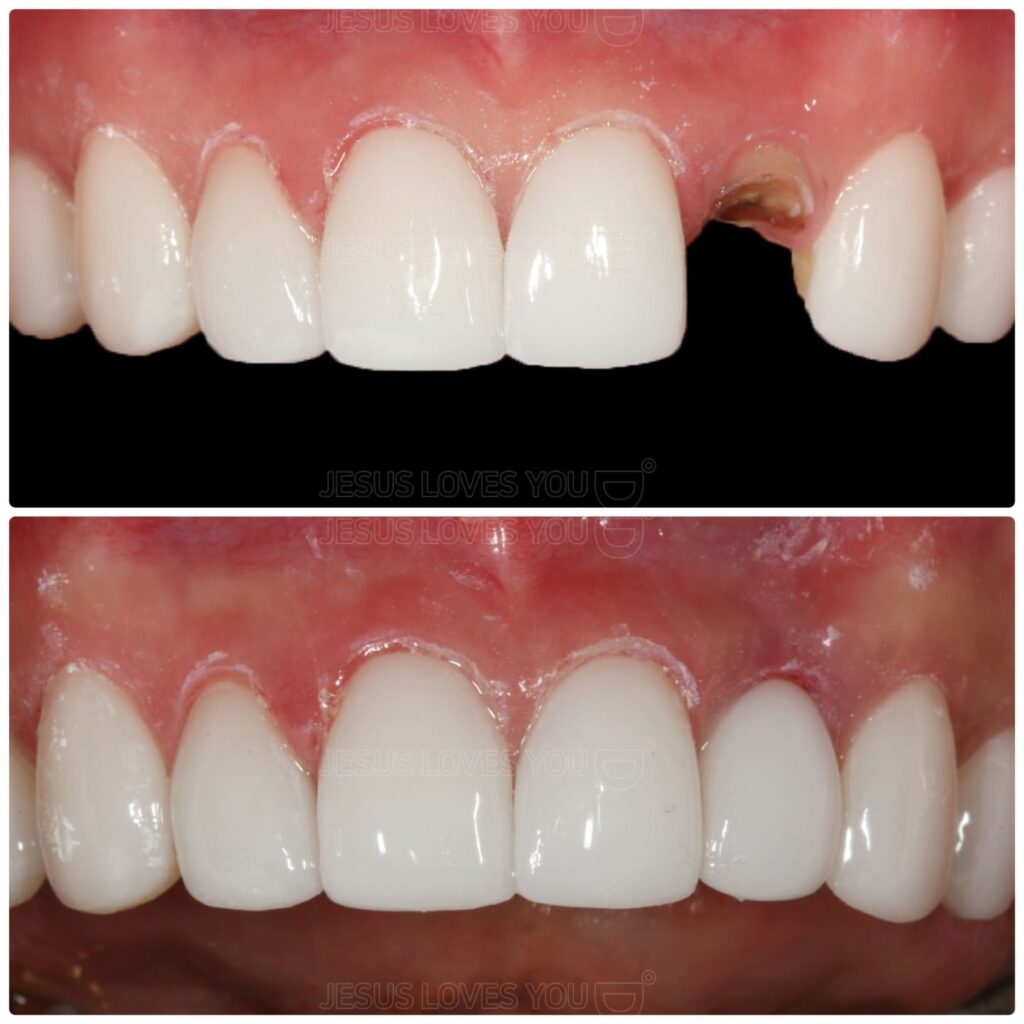
Photographed: 2008.02.05
The upper image shows the site without the front restoration; the lower image shows the restored tooth shape. We assess more than whether the space is filled: width and length relative to neighboring teeth, emergence from the gums and the tissue between teeth also matter.
Gum recession may make a restoration look long or expose its margin. We therefore assess bone, gums and implant position before making the restoration. Results and additional procedures depend on the individual bone, gums and bite.
What Helps a Front Implant Look Natural?
1. Gum line and tissue between the teeth
Straight tooth edges alone are not enough. We assess how gum levels connect, whether gaps show between teeth and whether the margin is visible when the lip lifts.
2. Implant position planned around the final tooth
We first consider where the final tooth should emerge, then plan implant position and angle. A position too far forward, insufficient outer bone or thin gums can affect margin stability and appearance.
3. Shape and shade in harmony with neighboring teeth
We consider neighboring tooth length, width, subtle color variations, translucent edges and texture. For a single front tooth, harmony with the adjacent natural tooth is particularly important.
4. The abutment-and-crown combination
The abutment supports the tooth above the implant; the crown is the visible restoration. Abutment color and contours must be planned with crown thickness and shade.
Case Two: From a Tooth-colored Abutment to the Final Crown
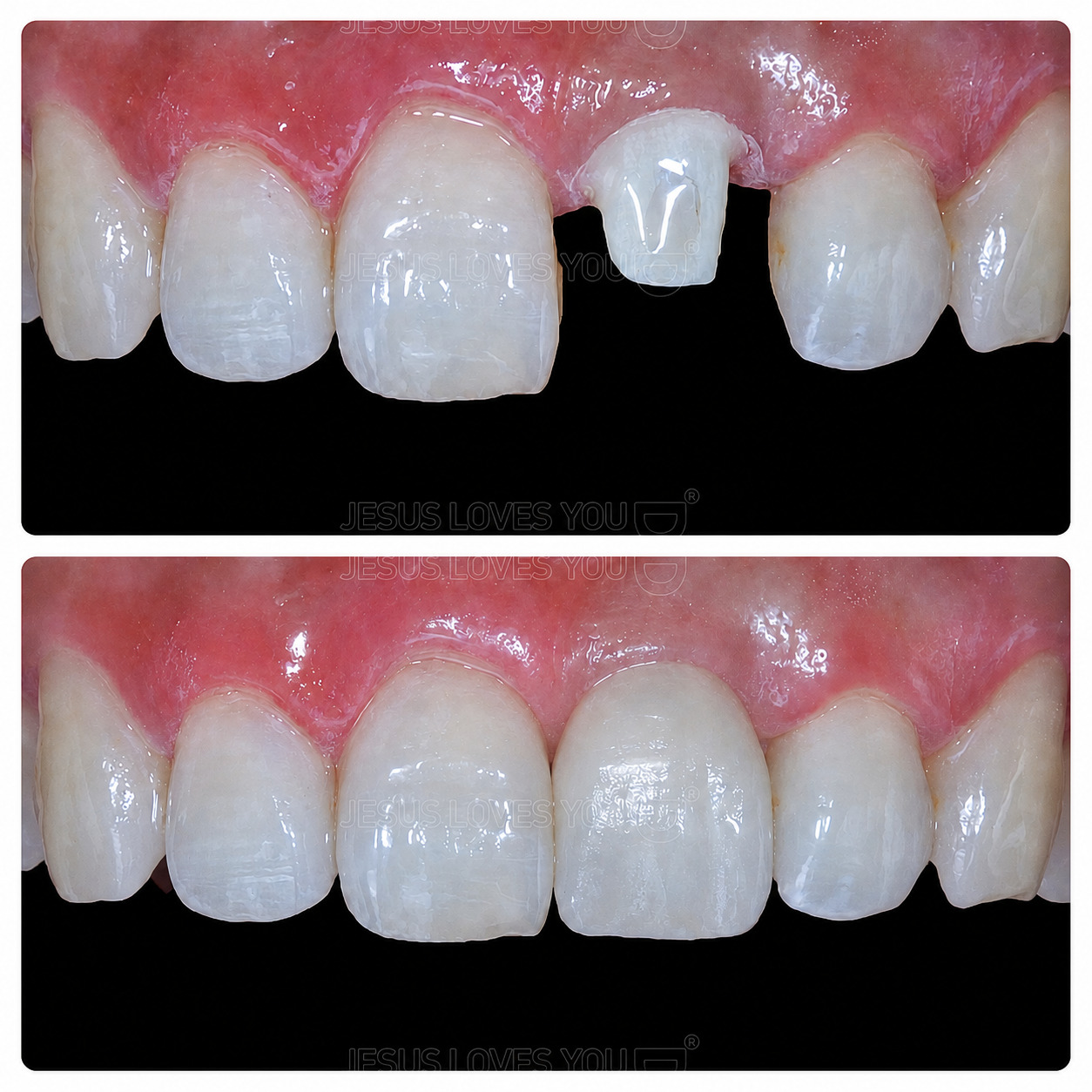
The upper image shows the exposed supporting post, and the lower image the connected restoration. We use the neighboring front tooth as a guide to shade, texture, length and inclination. Distinguishing the abutment stage from the crowned stage helps explain how internal structure and external shape relate.
What Does a Tooth-colored Cercon Abutment Do?
With thin gums, underlying metal can make the margin appear dark. Tooth-colored abutments such as Cercon may help reduce this metallic influence. Material choice also considers gum thickness, implant position, connection and chewing forces.
Clinical comparisons of zirconia and titanium abutments have found differences in gum color, but some found no clear difference in patient aesthetic satisfaction. Even tooth-colored posts can have aesthetic problems if gums recede or restoration contours are unsuitable.
Compare Cercon abutments with titanium and PFMCase Three: Retreatment of an Old Front Restoration
The patient attended with extensive damage to teeth beneath an old restoration. After removal, we assessed remaining teeth and planned implants where preservation was difficult. Considering the initial condition and internal structure helps explain the treatment choice.
The existing front restoration
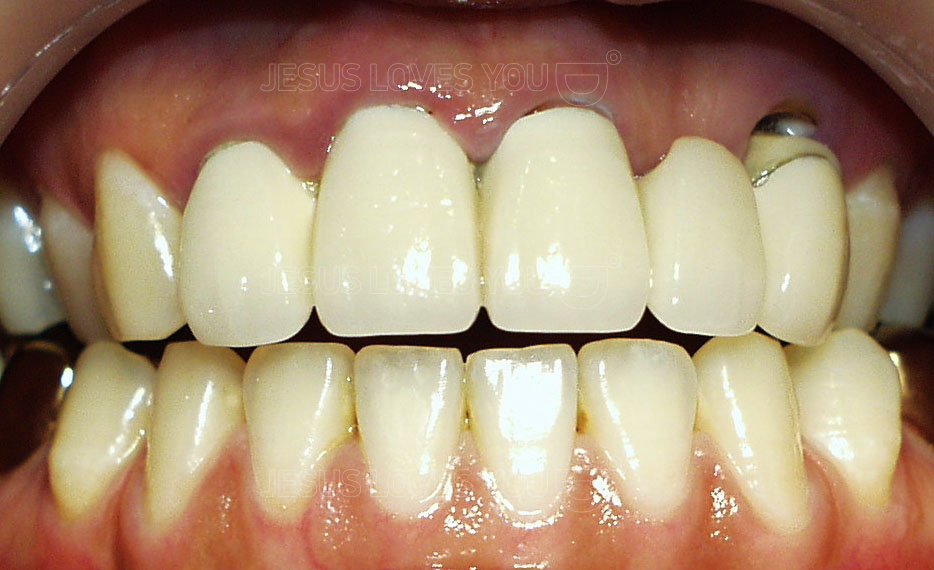
Assessing tooth length, gum margins and the transition to neighboring teeth.
Assessment after removing the restoration

We assess whether the remaining teeth can be preserved and decide the treatment extent. Extraction is not decided on appearance alone.
Preparation with tooth-colored supporting posts
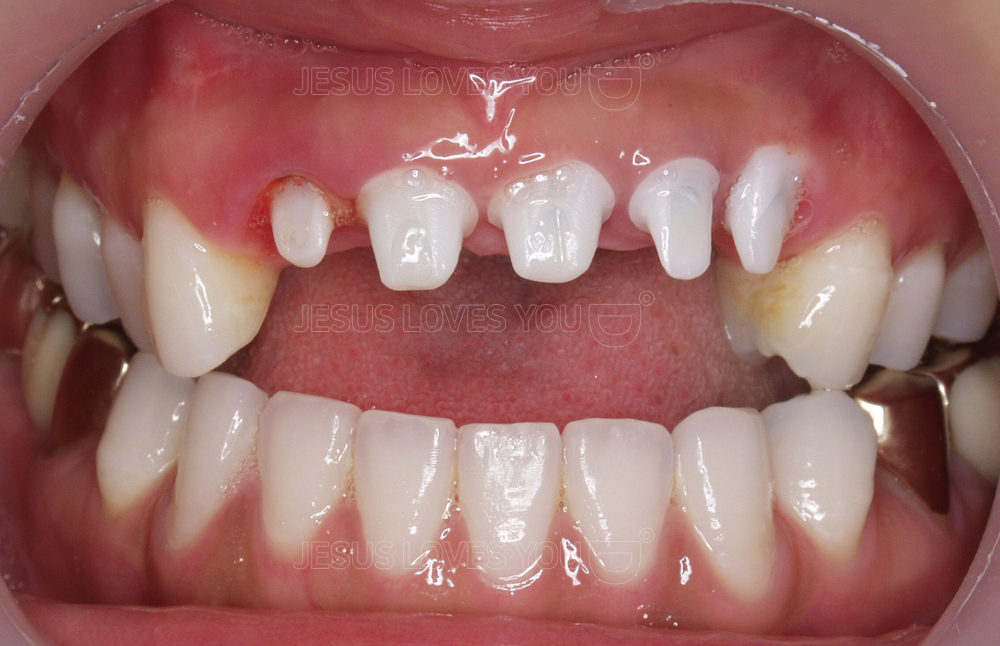
The supporting posts were prepared with attention to emergence from the gums and the connection to adjacent teeth.
The final restoration within the smile
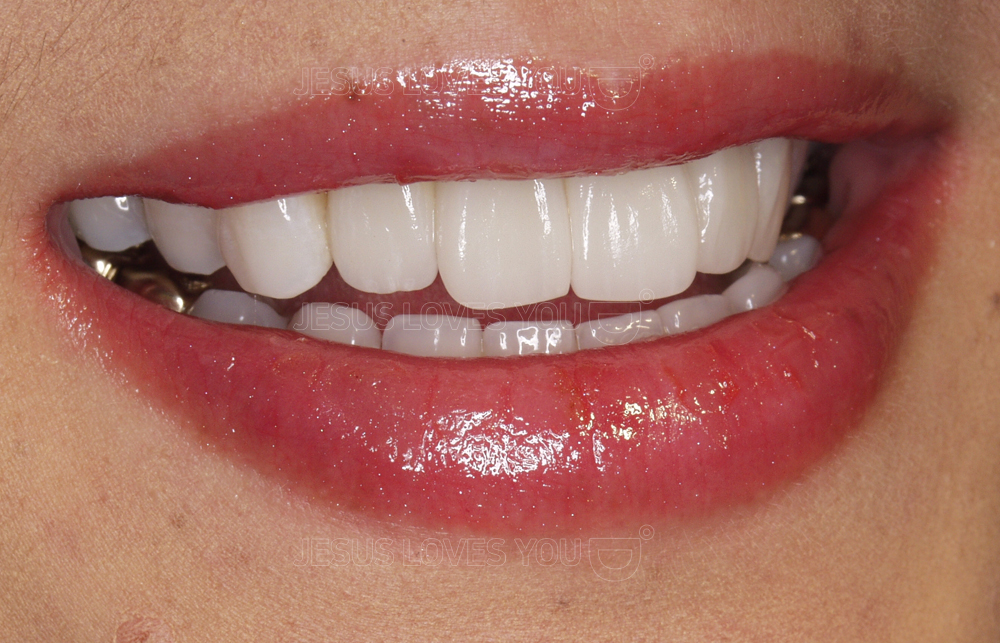
Alongside close-up views, we assess the relationship between lips and teeth when smiling. Width, length and texture matter as well as brightness.
If a Front Implant Looks Long or Prominent
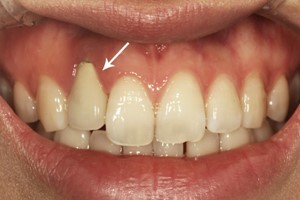
An apparently long or forward tooth requires assessment of recession, bone contours and implant position and angle as well as crown shape. Comparing the arrowed area with neighboring tooth lengths and gum levels is part of the evaluation.
We distinguish problems that can improve through restoration adjustment or replacement from those requiring bone or gum augmentation. Some implant-position problems are difficult to resolve by changing the crown alone.
When Are Bone Grafting and Gum Treatment Considered?
Not every front implant needs the same additional procedures. Clinical and appropriate radiographic examinations assess remaining bone contours and gum thickness. Augmentation may be considered if implant placement at the planned position or maintenance of surrounding contours would otherwise be difficult.
If grafting is needed, its timing, extent and healing period are planned together. Bone grafting and tooth-colored abutments do not completely prevent recession.
Care Alongside Appearance
Peri-implant inflammation or recession can change the original margins and contours. Restoration chipping, screw loosening or detachment may require repair or replacement. Brush, clean between teeth and attend regular reviews of gums, bite and connections. Seek assessment for bleeding, swelling, looseness or discomfort when chewing.
Questions about Natural-looking Front Implants
Is matching a white shade enough?
Width, length, translucency, texture and gum margins need to harmonize with neighboring teeth as well as color. An excessively bright shade may look different from the surrounding teeth.
Does Cercon eliminate all metal show-through?
It may reduce the influence of metal color, but gum thickness, recession, margins and implant position also affect the outcome. One material cannot guarantee the result.
Does every front implant need bone grafting?
It depends on the remaining bone and gums. We assess whether the implant can be placed at the planned position and surrounding contours maintained.
Should every old front restoration be replaced with implants?
First, we assess whether the remaining teeth can be preserved. Restoration retreatment or other care may be appropriate; extraction and implants are considered for teeth that cannot be maintained.
Planning Treatment to Suit Your Front Teeth
The aim is to restore chewing function with contours that suit neighboring teeth and gums. We explain the planned tooth position, gum margins and care together.
Front implant and abutment treatment sequenceImplant maintenance guideFront implant consultation · 1544-0208Records and References
Written and clinically explained by Dr. Hanna Lee, Harue Dental
First case photographs: 2008.02.05
Text and photo-layout editing: 2026.11.13