
Dr. Hanna Lee · Harue Dental · Full-mouth implant case
Painful partial dentures,
followed by temporary teeth on the day of surgery
Hello, I am Dr. Hanna Lee of Harue Dental. This case concerns a woman in her 50s who began full-mouth implant treatment after wearing upper and lower partial dentures.
After assessing the remaining teeth and bone, we placed eight implants in the upper jaw and eight in the lower jaw, 16 in total, and attached temporary teeth on the day of surgery. This record covers implant surgery and same-day temporary teeth. The final restoration was planned after healing.
Treating dentist: Dr. Hanna Lee
Before treatment and after implant placement
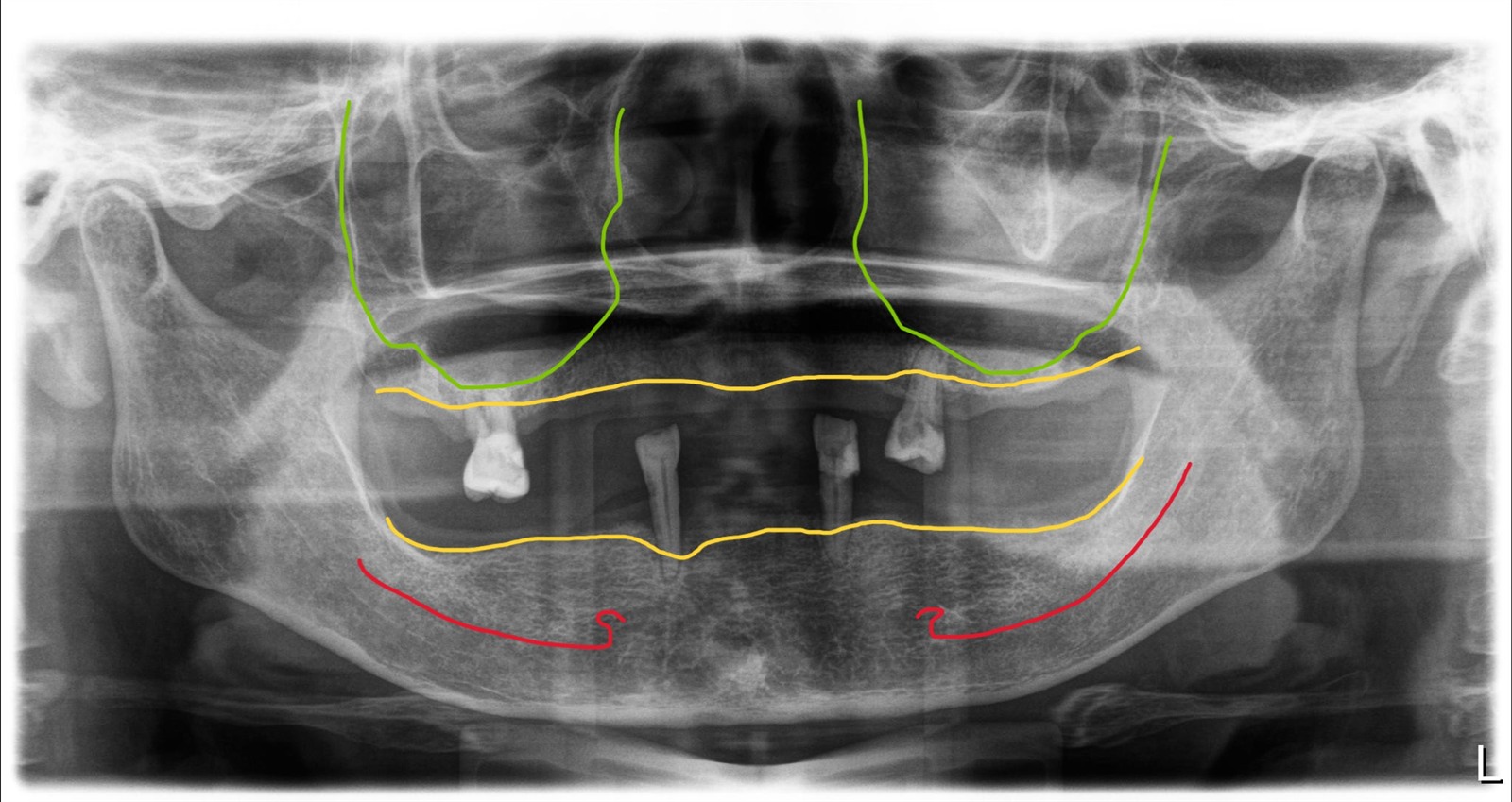
Before treatment
After implant placement

These images record the same patient before treatment and after implant placement. Select an image to enlarge it.
Case at a glance
Upper and lower partial dentures
Gum pain while wearing dentures
Loose remaining teeth
8 upper and 8 lower implants
Sinus elevation and bone grafting where needed
Temporary teeth attached that day
Suture removal and review after 2 weeks
Approximately 6 months of healing
Final restoration after reassessment
The teeth attached that day were intended for the healing period. Implant surgery can cause pain, swelling or bleeding, and complications such as infection or failure to integrate with bone are possible. Follow-up during healing is necessary.
01 · Assessment
We assessed both the amount and quality of bone after long-term denture use
The patient reported that her upper denture was more uncomfortable than the lower one. Wearing dentures caused considerable gum pain, and all the remaining teeth were loose.
Two posterior teeth remained in the upper jaw and two canines in the lower jaw, but their periodontal condition was poor.
Panoramic imaging and CT showed areas with insufficient bone in the upper posterior region and the right lower posterior region. After a long period of tooth loss and denture use, resorption had left the top of the ridge narrow and pointed.
We nevertheless judged that sufficient bone remained overall to position implants. Planning considered both bone volume and the ability to achieve firm implant fixation.
02 · Findings during surgery
Implant positions were adjusted to the actual bone conditions
A surgical plan is based on examination findings, but it may need to change when the bone is assessed directly during surgery.
In this case, we did not place an implant at the planned most posterior upper-jaw site because the bone was poorer than expected. At other sites, positions and numbers were adjusted to maintain appropriate spacing between adjacent implants.
Sinus elevation and bone grafting were performed in the upper posterior region, considering the available bone height beneath the sinus. The remaining lower-jaw bone and the intended restoration were also assessed. Ultimately, eight implants were placed in each jaw.
The actual bone conditions and the positions of the future teeth were more important than simply placing the initially planned number.
03 · Same-day temporary teeth
The teeth attached on the day of surgery were temporary
After implant placement, abutments to support the restorations were fitted and the sites sutured. Panoramic imaging and an intraoral scan were followed by the design, manufacture and attachment of temporary teeth that day.
These were temporary teeth for the healing period.
Surgery began at 8:00 a.m. After the temporary teeth were fitted and aftercare instructions explained, the patient left at 11:50 a.m. This period included surgery, imaging, scanning, temporary-tooth design and manufacture.
The time required and suitability for same-day temporary teeth depend on each patient’s condition.
04 · Healing and final restoration
Approximately six months of healing were planned because of the bone quality
The bone quality observed during surgery was poor. We therefore planned approximately six months of healing while the patient used temporary teeth.
Suture removal and review were planned two weeks after surgery, with reassessment of the implants and gums approximately six months later before preparing the final restoration.
Even when partial dentures are uncomfortable, the appropriate treatment depends on the remaining teeth, bone and gums. In this case, the plan was adapted to the findings during surgery, allowing temporary teeth to be attached that day.
The plan was to continue monitoring healing through the final-restoration stage. This schedule was the plan made at the time of surgery and could be adjusted according to healing.
Treatment video
From partial-denture removal
to same-day temporary teeth
The video shows abutment connection and temporary-tooth fitting after implant placement. The teeth shown are also at the temporary stage, before the final restoration.
The thumbnail uses a frame from approximately 33.6 seconds into the video, showing the temporary teeth being fitted.
Watch the treatment video on YouTube →Partial dentures and full-mouth implants: FAQ
Do painful partial dentures always require full-mouth implants?
No. The cause of pain, denture fit, and the condition of the remaining teeth, gums and bone must first be assessed. Full-mouth implants were planned in this case because all remaining teeth were loose and their periodontal condition was poor.
Does every patient need eight implants in each jaw?
That is the number actually placed in this case. Implant positions and numbers are selected according to available bone, bone quality, the restoration design and other individual conditions.
Is treatment finished once teeth are attached on the day of surgery?
No. Healing and follow-up remain necessary after temporary teeth are attached. For this patient, the plan was to reassess after approximately six months of healing, considering the bone quality, and then prepare the final restoration.
How much does this treatment cost?
Costs vary with the materials, treatment scope and condition of the teeth. A precise plan and total estimate are provided after diagnosis.
The fee page shows current reference prices, not this patient’s actual bill. An individual estimate should clarify additional procedures such as bone grafting and whether temporary teeth and the final restoration are included.
Images and records
Pre-treatment panoramic X-ray: June 17, 2026 · Post-placement panoramic X-ray: June 24, 2026.
Prepared from the supplied clinical record, panoramic images and treatment video. The colored lines were already present in the supplied originals.
General information about implant risks and recovery
FDA dental implant information · NHS advice after dental implant surgery