
HARUE DENTAL · FULL-MOUTH IMPLANTS
This man in his fifties had worn partial dentures for about ten years. After a front tooth fractured and the denture was damaged, I planned full-mouth implants while reassessing bite height and the horizontal gap between the front teeth. Twelve upper and eleven lower implants supported same-day temporary teeth; definitive zirconia restorations followed after approximately three months and four visits.
Dr. Hanna Lee


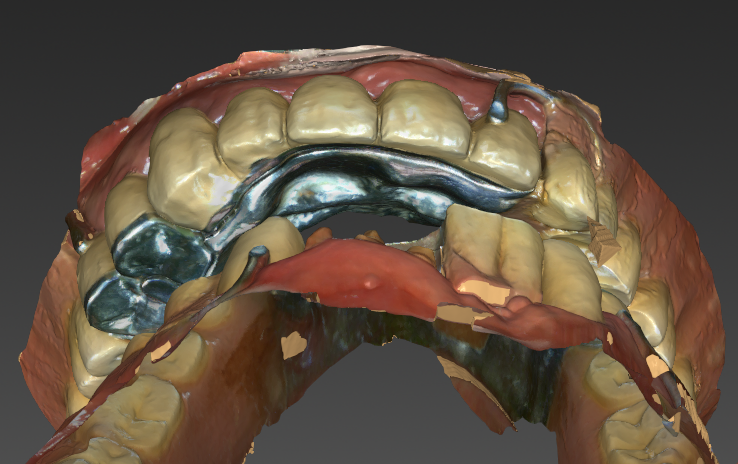
01 · Damaged dentures and reduced bite height
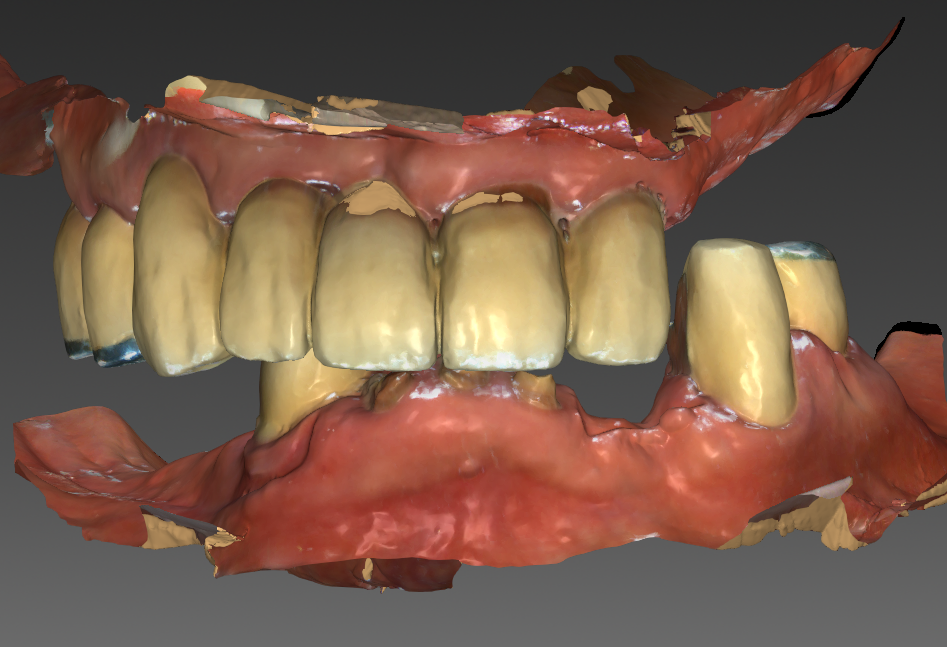
The remaining teeth were mobile. The old dentures provided a low bite height, the lower jaw sat farther back and deviated to the left, and the horizontal overlap of the front teeth (overjet) was large. Removing the dentures increased the deviation.
I planned the tooth positions, bite height and jaw relationship together, rather than simply filling the missing spaces.
02 · Twelve upper and eleven lower implants
After extracting the mobile teeth and cleaning inflamed sites, I placed 23 implants immediately after extraction: twelve in the upper jaw and eleven in the lower jaw.
I connected abutments and fitted temporary teeth on the day of surgery. Their design increased the bite height. The temporary restorations were linked in the mouth so the implants could share forces, with protection from excessive loading during healing. These were temporary teeth, not same-day definitive restorations.
03 · Digital scanning after approximately three months
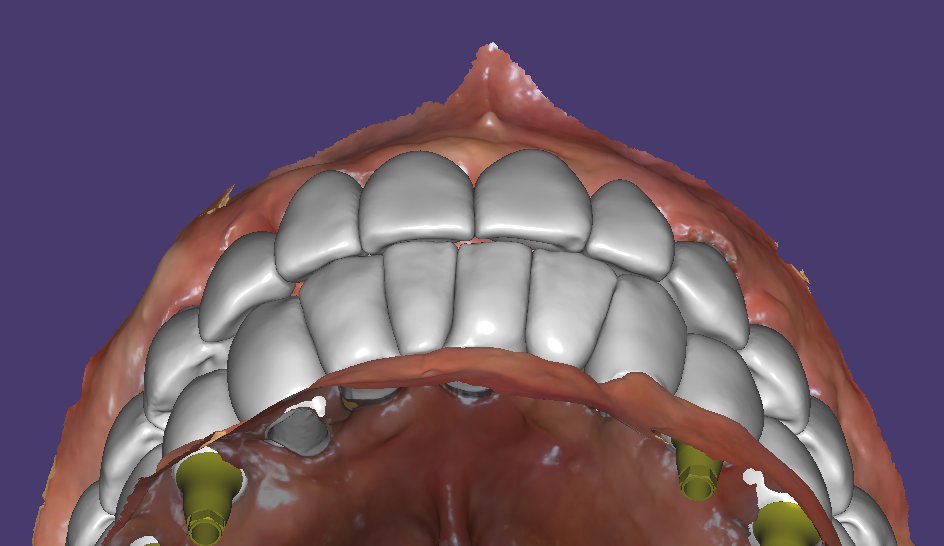
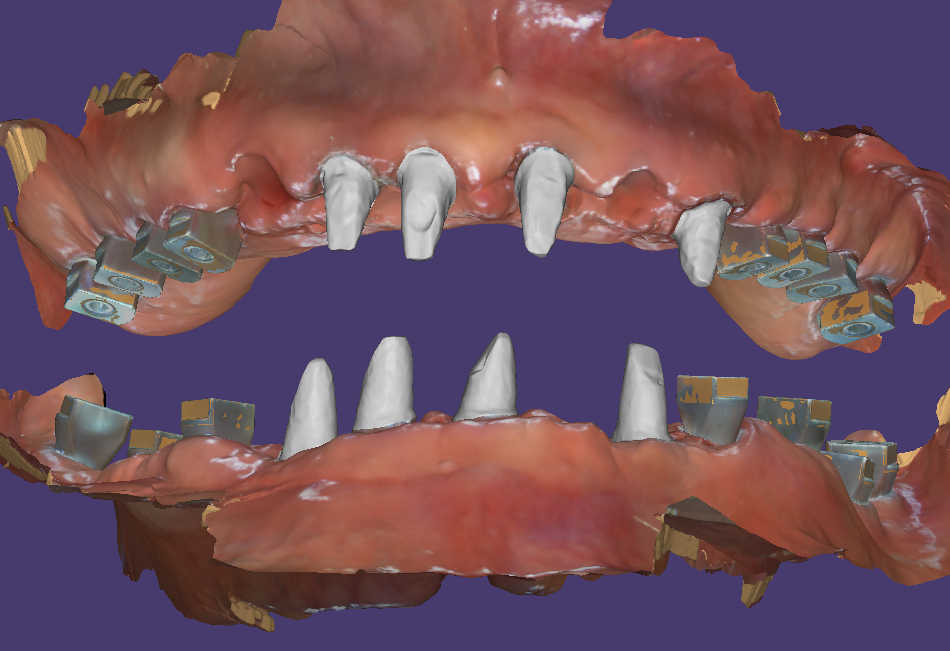
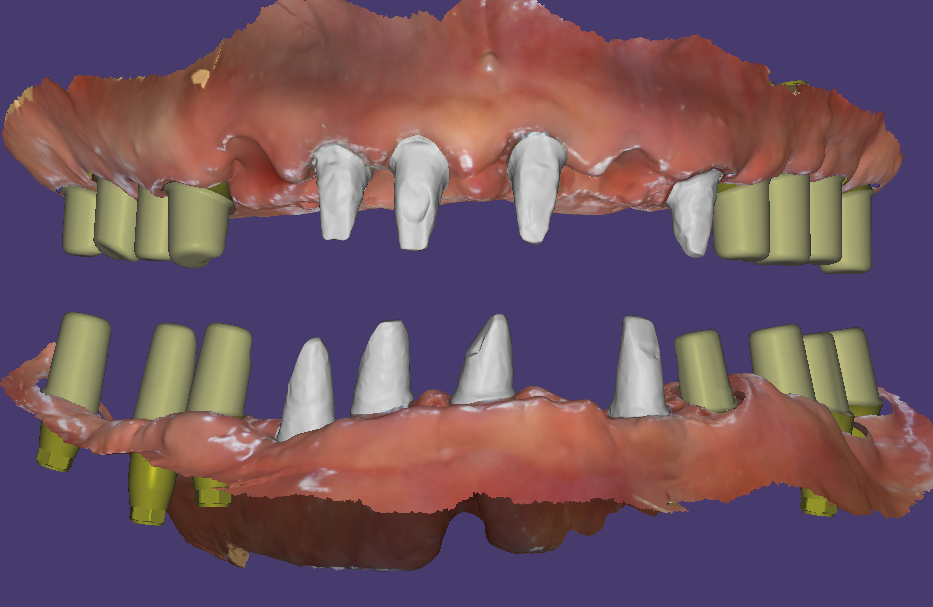
Bone conditions and primary stability were favourable in this case. At around three months I connected scan bodies to record implant positions, then designed custom abutments and zirconia restorations together.
The original case record describes roughly one day for design and machining, with fitting the following day. This was the production sequence for this patient and is not a promised schedule for everyone.
04 · Definitive zirconia bridge restorations
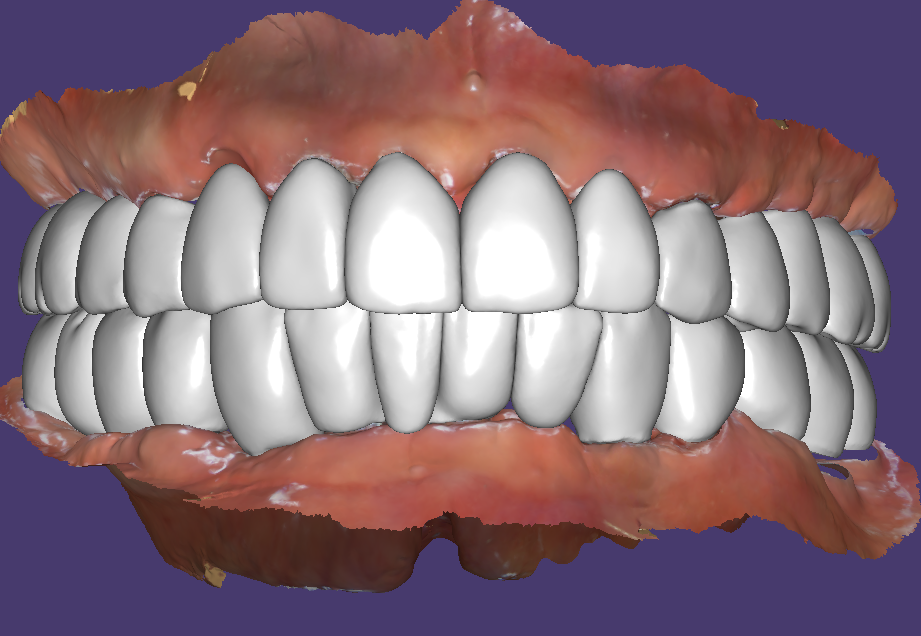
I fitted the custom abutments and bridge-shaped zirconia restorations. Implant distribution and the number placed informed tooth arrangement and restoration design.
The number of implants and the restoration structure must be selected for each patient. The photographs below show the scan bodies, restoration design and abutment design.
05 · Approximately three months and four visits
This patient completed active treatment in approximately three months over four visits. I adjusted the reduced bite height and the front-tooth relationship. Treatment duration and visit count vary with bone condition, healing and treatment scope.
Panoramic dates: before treatment 20 December 2024; after implant placement 24 December 2024; after treatment 4 April 2025. The final date is the image date and does not independently establish the exact fitting date.
06 · Checking the restorations and ongoing care
After fitting, I checked abutment and restoration connections using panoramic imaging and clinical examination. I designed access for interdental brushes and explained daily cleaning.
I advised reviews every six months, adjusted when necessary, and avoiding excessively hard foods. Daily hygiene and review of the gums and restorations remain important.

Treatment videos
Frequently asked questions
What is overjet?
Overjet is the horizontal distance by which the upper front teeth sit ahead of the lower front teeth when biting together. I consider this relationship together with the full bite, rather than assessing one measurement alone.
Can a large overjet cause problems?
Depending on its cause and extent, a large overjet may affect lip closure, appearance and injury risk. When rebuilding a bite, an excessive front-tooth gap can also affect the available back-tooth space. These effects are not identical in everyone.
Can overjet be adjusted?
Treatment depends on tooth positions, jaw shape, habits and changes after tooth loss. Orthodontics or restorative treatment may be considered after assessment. In this case, I incorporated the front-tooth relationship into the full-mouth restoration plan.