
Planning the finished shape first
Veneers for four upper front teeth
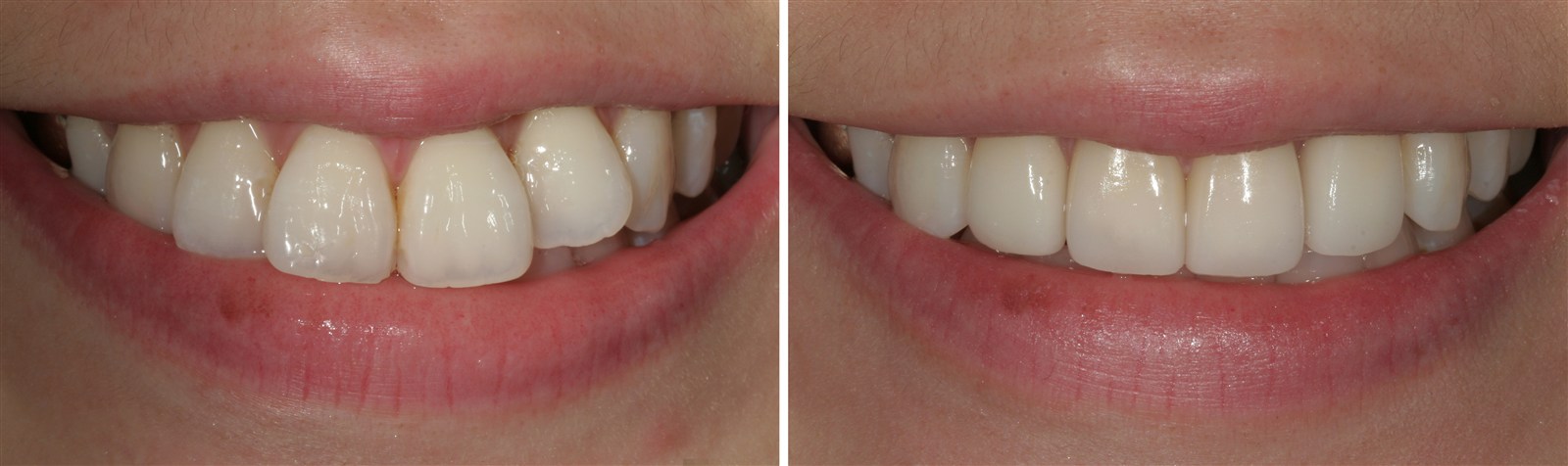
CASE SUMMARY · Four upper front veneers
Selective tooth preparation guided by a diagnostic wax-up and mock-up
- Treatment area: Four upper front teeth
- Treatment: Ceramic veneers
- Planning: Reviewing the intended shape with a diagnostic wax-up and mock-up
- Tooth preparation: Selective preparation based on the planned form
Treatment and content review: Dr. Lee Hanna
Before preparing the teeth, I examined the intended final form
This case records veneer treatment for four upper front teeth. I first planned the intended form using a diagnostic wax-up and mock-up, then selectively prepared the teeth to suit that design.
When treating front teeth, I consider each tooth as well as how it relates to its neighbors and the overall smile.
01. Planning the form with a diagnostic wax-up
A diagnostic wax-up uses wax on a dental model to design the intended shape. For this case, I planned the finished form of the four upper front teeth first.
After designing the changes, I assessed the differences between the existing teeth and the planned form.
02. Checking the plan with a mock-up
A mock-up lets us assess the proposed tooth shape in the mouth. Here, the wax-up and mock-up guided the tooth preparation.
Reviewing the intended form first helps identify where space is needed for each tooth.
03. Selectively preparing the necessary areas
The teeth were selectively prepared to accommodate the planned veneers. Rather than preparing every surface identically, I considered the intended form and its relationship to each tooth.
This case involved selective tooth preparation. It was not a no-prep treatment.
04. Considering the four front teeth together with their neighbors
The before-and-after images show the form of the four upper front teeth and their relationship to adjacent teeth. I considered length, proportions and the overall appearance of the smile.
Left: before treatment on February 14, 2006. Right: after treatment on March 9, 2006.
Why I plan the finished form first
The key was to plan the final shape with a diagnostic wax-up and mock-up, then use that plan for selective preparation. Four upper front teeth were treated in this case; the same number or amount of preparation does not apply to everyone.
Four upper front veneers: frequently asked questions
How many teeth were treated in this case?
Four upper front teeth were treated with veneers.
Why use a diagnostic wax-up and mock-up?
They allowed me to plan and assess the intended tooth shape before selective preparation.
Does selective preparation mean no preparation?
No. Selected areas were prepared as required by the planned final form. It does not mean no tooth tissue was removed.
Do front veneers always require four teeth?
No. The extent depends on the teeth, treatment goals and harmony with neighboring teeth. This is an individual case involving four upper front teeth.
Treatment methods, preparation and outcomes vary with each person’s oral condition.
Treatment and content review: Dr. Lee Hanna
Before deciding on treatment
Removed tooth tissue does not grow back. Veneers and crowns can cause sensitivity or pulp irritation, and may fracture, debond or cause gum discomfort. Further treatment or replacement may be needed. Results and treatment requirements vary.
ADA patient information on veneers
How much does this treatment cost?
Fees depend on the materials, treatment extent and condition of the teeth. The plan and total cost are explained after diagnosis.
View current standard fees →View current standard fees →The linked page shows current standard fees, not the amount paid by this patient.