
SINCE 1995 HARUE DENTAL CLINIC
When upper-jaw bone is severely deficient, I may graft first and delay implant placement. This case used an upper temporary denture initially, lower fixed temporary teeth on the first surgery day, and upper fixed temporary teeth after the later operation.
Dr. Hanna Lee
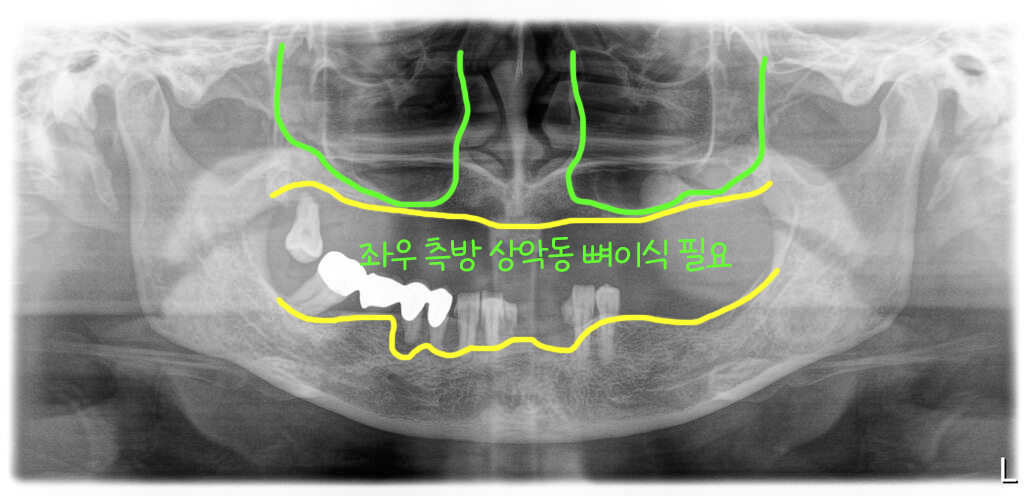
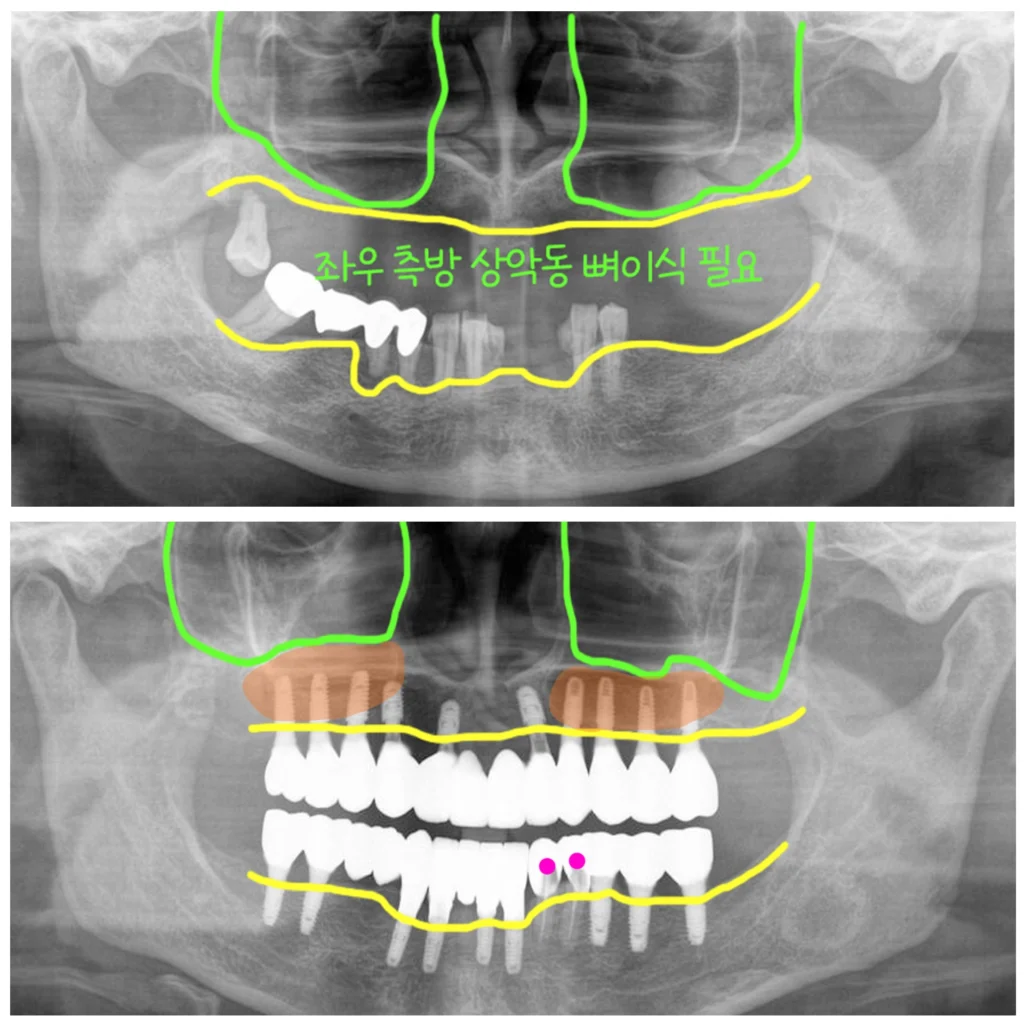
Severe upper-jaw bone loss and natural-tooth preservation
Only one posterior upper tooth remained. The sinuses were large and extended far forward, leaving insufficient bone for stable simultaneous placement. In the lower jaw, the unstable teeth beneath the right-side restoration were removed. Two left-side natural teeth with serviceable roots were retained after planned root-canal treatment.
First operation: grafting above, implants below
I removed the last upper tooth and performed extensive grafting. Because adequate fixation could not be obtained, upper implants were deferred and a pre-made temporary denture was used. Nine lower implants were placed at extraction. The two retained teeth were prepared for crowns, and a connected lower temporary restoration was fitted that day.
Later upper placement and temporary teeth
After approximately six months of graft healing, I placed ten upper implants. Their initial stability allowed immediate fixed temporary teeth. The implants were connected with a milled PMMA temporary restoration. Definitive cement was used to stabilise this temporary restoration; the temporary tooth material and cement choice are separate issues. Excess cement must be carefully removed.
Definitive restorations and follow-up
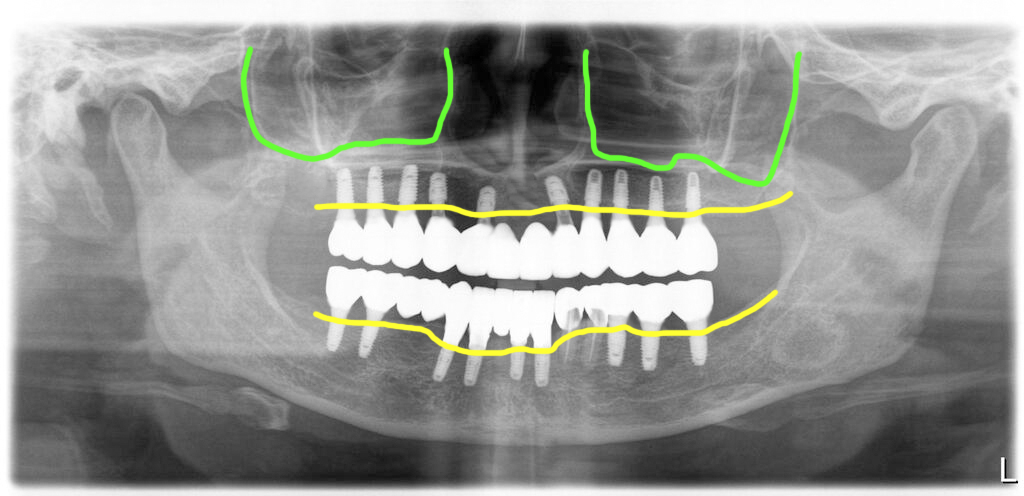
About six months after the second operation, I scanned and fitted the definitive restorations supported by ten upper and nine lower implants. The two retained lower natural teeth received crowns separate from the definitive implant restorations. The panoramic image dated 8 July 2024 is a post-treatment follow-up, not the initial fitting date.
The whole course took about one year and six appointments: two operations, two suture-removal visits, a scan and fitting. The earlier account describes regular reviews and use without notable problems around five years after treatment; it does not establish the patient's condition today.
Clinical photographs
Photographed: 2019.08.07 / 2019.10.08 / 2020.07.23 / 2024.07.08


Korean-language treatment video
Frequently asked questions
Can everyone receive temporary teeth on the day of surgery?
No. The amount and quality of bone, implant initial stability, grafting and bite must be assessed. Temporary teeth do not mean bone healing is complete, and chewing may need to be restricted.
Must all remaining teeth be removed?
I assess each tooth for periodontal support, infection, restorability and its role in the overall bite. Maintainable teeth or existing implants may be retained when appropriate.
Why are reviews needed after definitive restorations?
Reviews check the surrounding bone and gums, bite, cleaning access and restoration components. A favourable photograph at one visit does not replace ongoing maintenance.