
Harue Dental · Lower-front veneer case
When dark spaces remain between aligned teeth
This patient developed black triangles between the lower front teeth after orthodontic treatment. The teeth were prepared as needed and veneers bonded, completing treatment that day. Preparation was performed without local anesthesia in this patient. The photographs show the teeth before preparation, after preparation, and after treatment.
Before and after at a glance
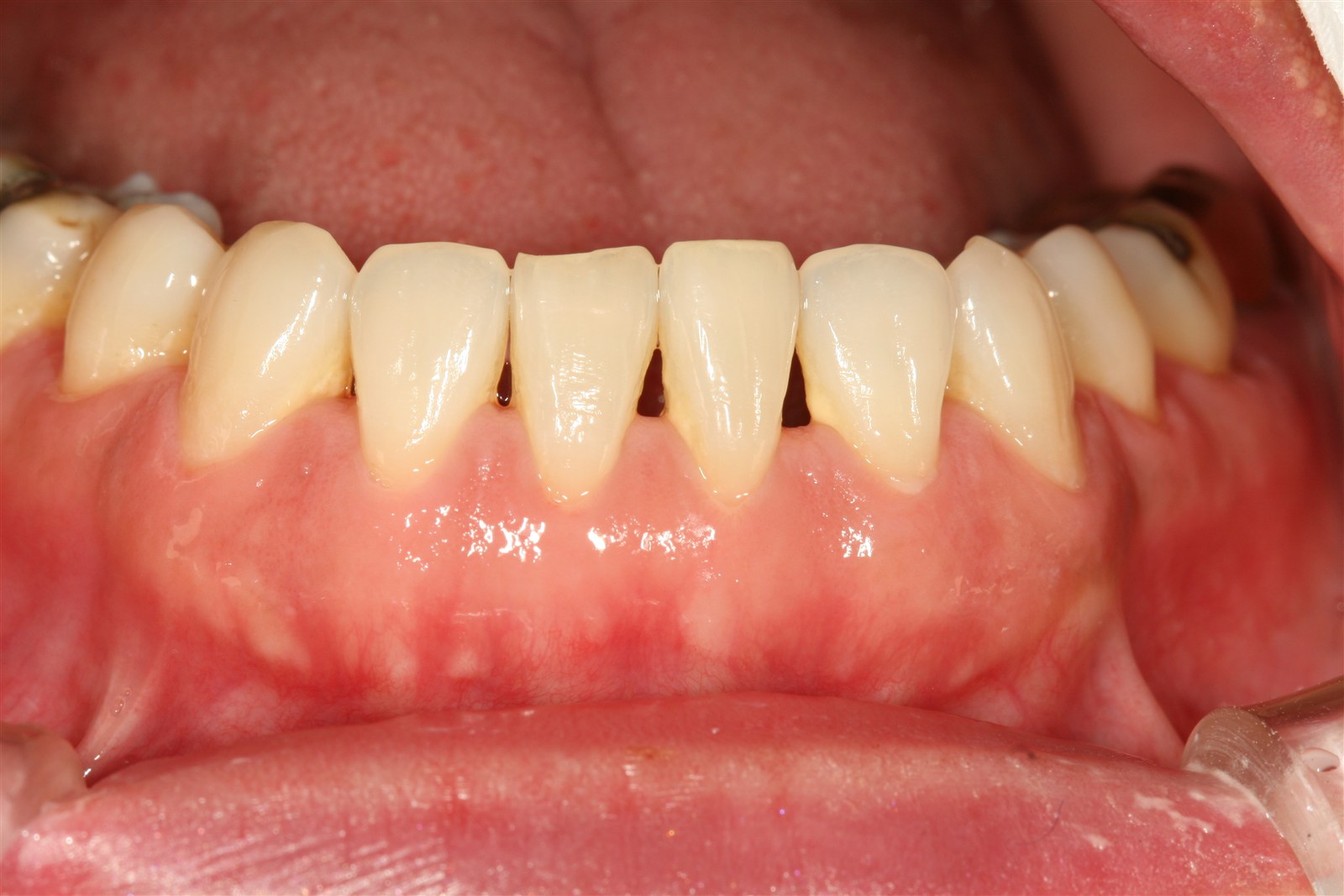
Photographed April 27, 2009
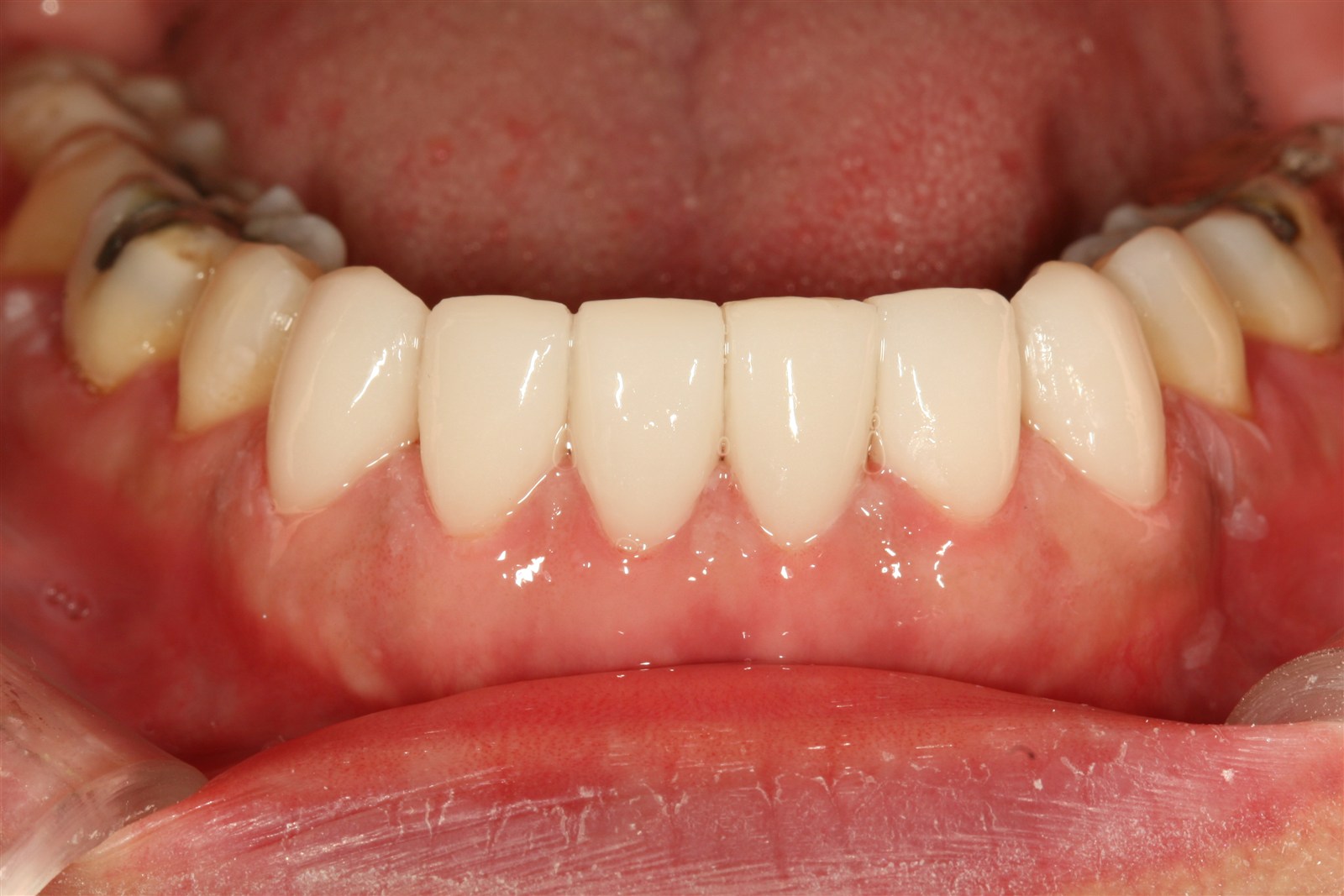
Photographed April 27, 2009
Why can black triangles appear after orthodontics?
A black triangle is a dark-looking space near the gum between teeth. Changes in alignment may reveal a previously hidden space; tooth shape, the contact position and gum condition can also contribute.
Veneers were used to restore the spaces between this patient’s lower front teeth after orthodontics. This restores the shape between teeth; it does not regrow receded gum tissue. The cause of the spaces and gum condition must be assessed before deciding the treatment extent.
Ceramic pieces and veneers: what is the difference?
Ceramic pieces to restore the spaces
Small ceramic pieces can be bonded between teeth to treat black triangles. This may suit someone seeking a more natural appearance or wishing to avoid any tooth preparation. However, closing one black triangle requires two pieces in this approach, so the cost may be higher than for veneers.
Veneers to adjust the front surfaces as well
Thin ceramic restorations are bonded to adjust both the front surfaces and the contours between teeth. This was the approach used here. The teeth were prepared with the required ceramic thickness and bite in mind.
Why ceramic was chosen instead of composite in this case
Composite resin is also an option for black triangles. If the contours or margins are not finished precisely, plaque may collect or cleaning may become difficult, contributing to gum inflammation. Staining can also become noticeable depending on diet and maintenance.
Veneers were selected here with the contours, surface finishing and future color maintenance in mind. This does not mean that composite is always excluded. Ceramic also requires accurate fit, carefully finished margins and consistent oral hygiene.
After preparation: preserving enamel matters
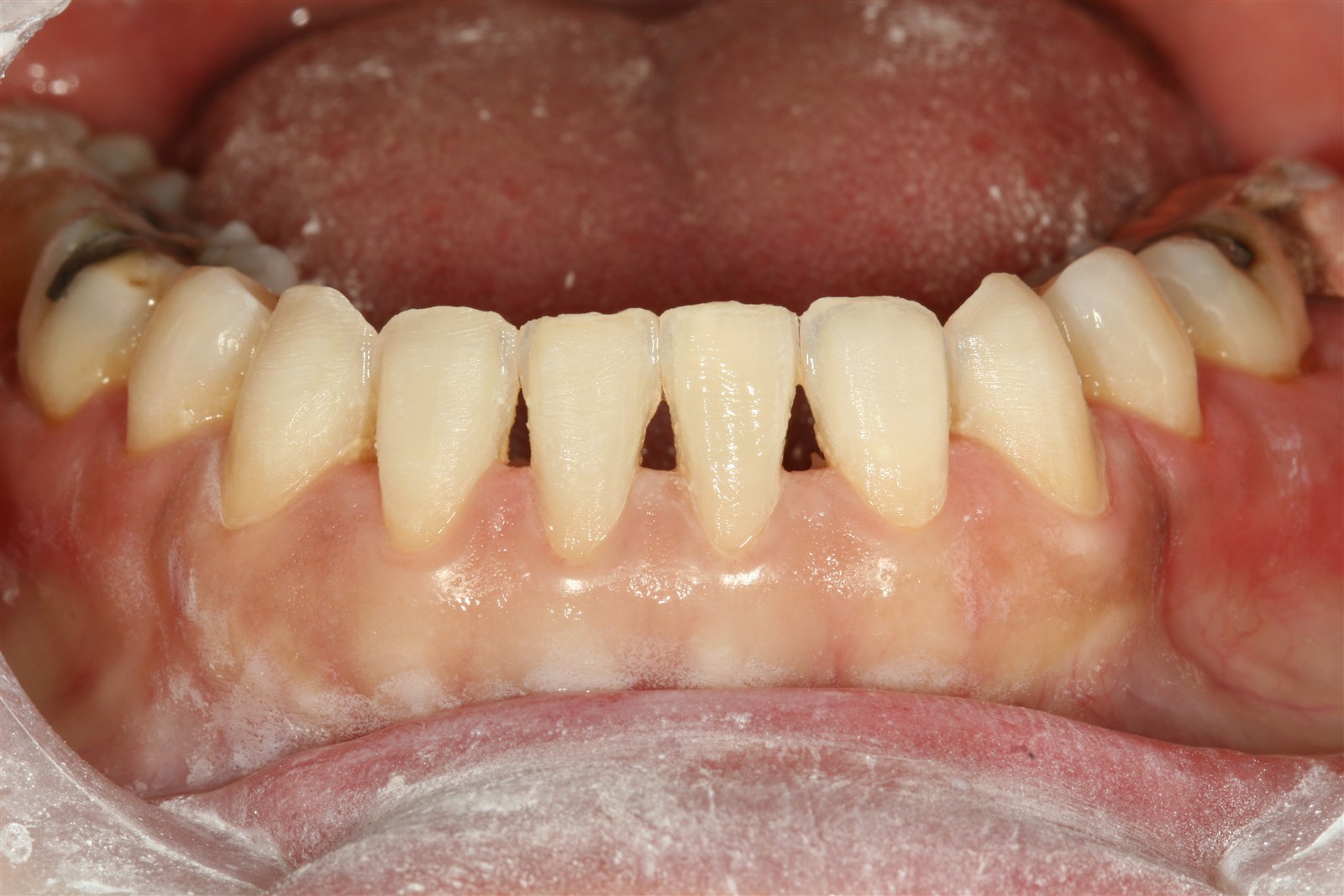
Photographed April 27, 2009
The bonding surface matters
Enamel is the hard outer layer of a tooth. While providing space for the veneers, it is important to preserve as much healthy enamel as possible and avoid unnecessary dentin exposure, as enamel bonding supports veneer retention.
The teeth were prepared without local anesthesia in this patient. That does not mean no tooth structure was removed, or guarantee freedom from later sensitivity, debonding or fracture. Anesthesia and the preparation extent depend on the teeth and the patient’s response.
Checking the contours after same-day bonding
The post-treatment photograph taken on April 27, 2009 shows reduced dark spaces between the lower front teeth. It is important to finish the contours and margins without making the areas between teeth excessively bulky.
Treatment was completed that day in this individual case.
Aftercare: cleaning between teeth and checking the bite
Brush and clean between the teeth as instructed, and have the gums and bonding margins checked regularly. Biting hard objects with the front teeth or clenching may contribute to fracture risk and should be discussed with the dentist.
Seek care for persistent sensitivity, discomfort on chewing, bleeding, swelling or movement of a restoration. If you wear an orthodontic retainer, its fit against the new tooth contours should also be checked.
Questions about black-triangle treatment
Are all spaces after orthodontics treated with veneers?
No. Gum condition, tooth shape and contact positions are examined before comparing options such as maintenance, orthodontic adjustment, composite or ceramic restorations.
Does treatment without anesthesia mean no preparation?
No. Tooth preparation was part of this case. Whether anesthesia is used and whether tooth structure is removed are separate questions.
Can treatment be finished in one day?
It was completed that day for this patient. Gum treatment, additional examinations or fabrication requirements may change the number of visits and treatment time.
Which option is suitable for my tooth spaces?
Treatment planning considers the visible spaces together with gum health, remaining enamel and the bite.
How much does this treatment cost?
Fees vary with materials, treatment extent and tooth condition. The treatment plan and total cost are explained after diagnosis.
View current veneer fees →View current veneer fees →These are current reference fees, not the actual fee paid by this patient.
References for general information
Clinical study on enamel preservation and veneer outcomes
Clinical study on composite restoration of black triangles
These references explain general treatment principles; they do not independently verify this patient’s outcome.