
Dr. Hanna Lee · Harue Dental · Minimal-preparation veneer case
When the central front teeth look fine, but the neighboring teeth affect your smile
Hello, I am Dr. Hanna Lee of Harue Dental. Today I would like to show you a case in which rotation of the lateral incisors—the second teeth from the center—and canines—the third teeth—affected the appearance of the smile.
We carefully prepared only the necessary areas and dried the surfaces to check that enamel remained on the bonding surfaces. We then completed scanning, direct design, fabrication and veneer bonding on the same day.
Before and after at a glance

The central front teeth alone do not show the whole balance of a smile
When you smile, the neighboring teeth are visible too. Rotation of a lateral incisor or canine changes the width of its visible front surface and the direction in which light reflects, which can make the flow of the smile look uneven.
This patient’s central front teeth looked acceptable, but the direction of the lateral incisors and canines was a concern. I planned the veneers while considering the shape and transitions of all the teeth visible in the smile.
Orthodontic treatment moves teeth to correct their rotation. Veneers instead modify the surface contours, so we consider the degree of rotation, the bite and the preparation required when choosing treatment.
01 · Before treatment
We identified which tooth directions affected the smile
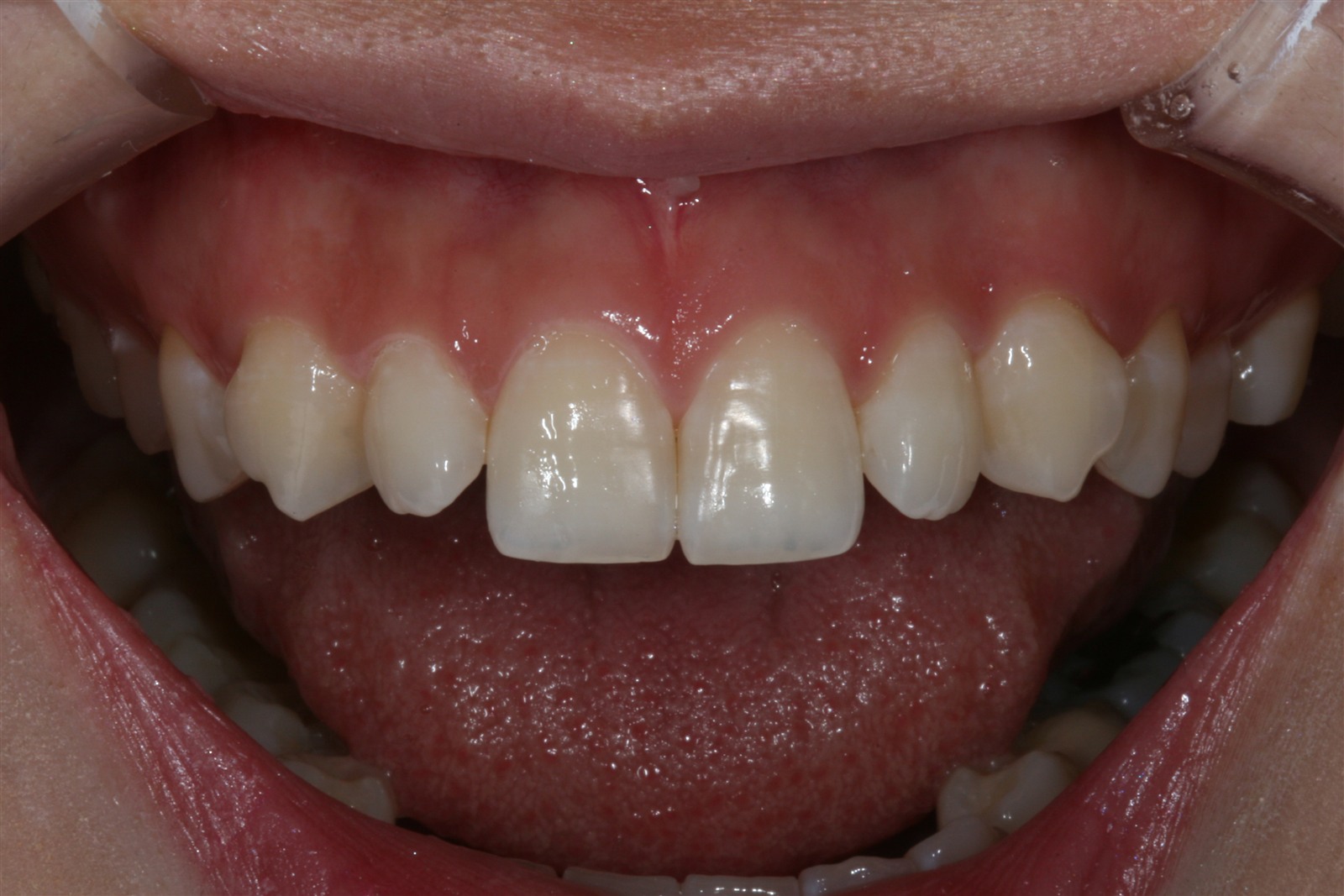
We distinguished the areas that appeared prominent from those to be built up with veneers, looking at how the central teeth connected visually with their neighbors.
02 · Minimal preparation
We carefully trimmed only the areas needed
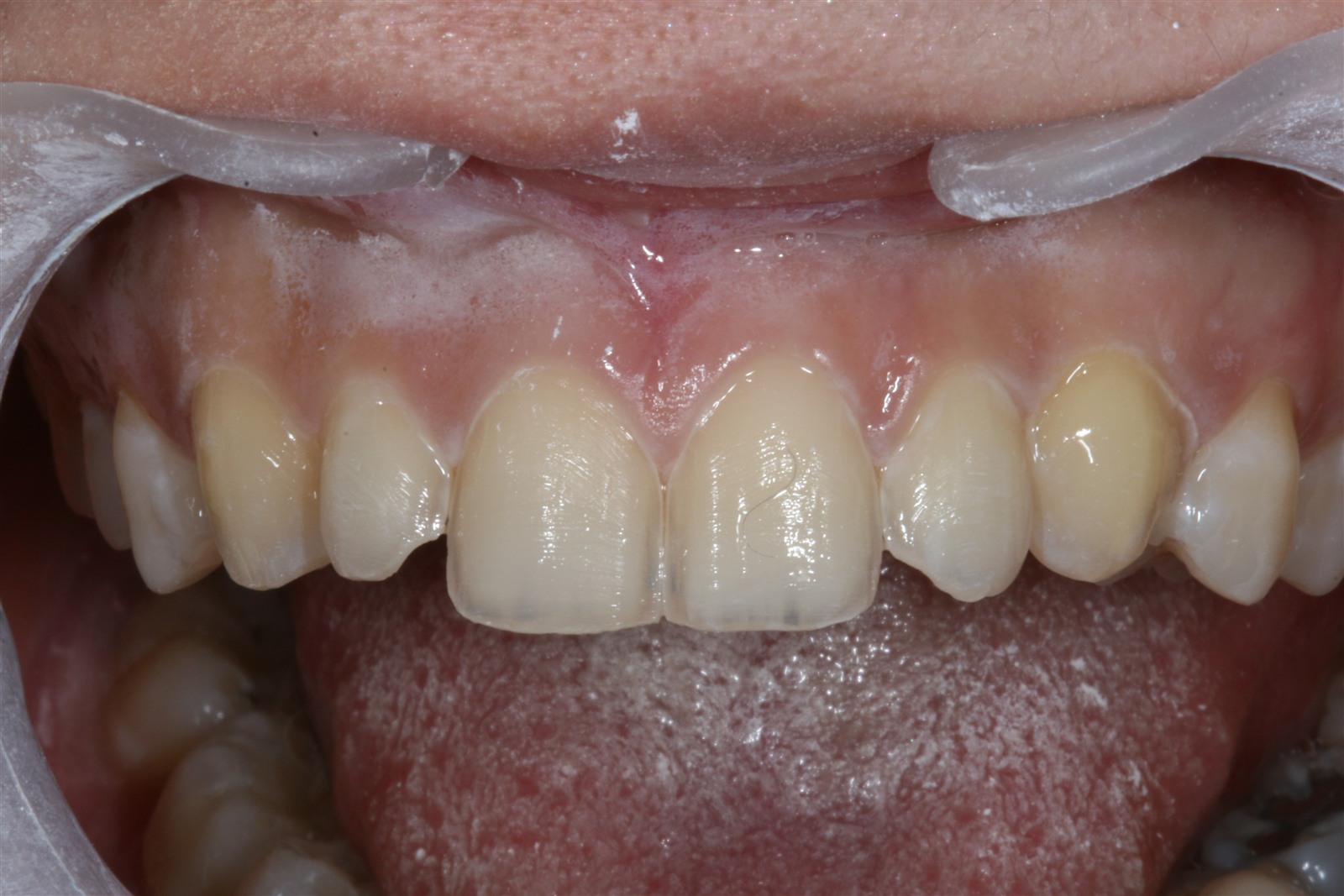
We did not approach the rotated teeth by simply cutting them down extensively. Preparing only what was necessary for the planned contours was an important principle in this case.
03 · Checking enamel
We dried the surfaces to check enamel preservation
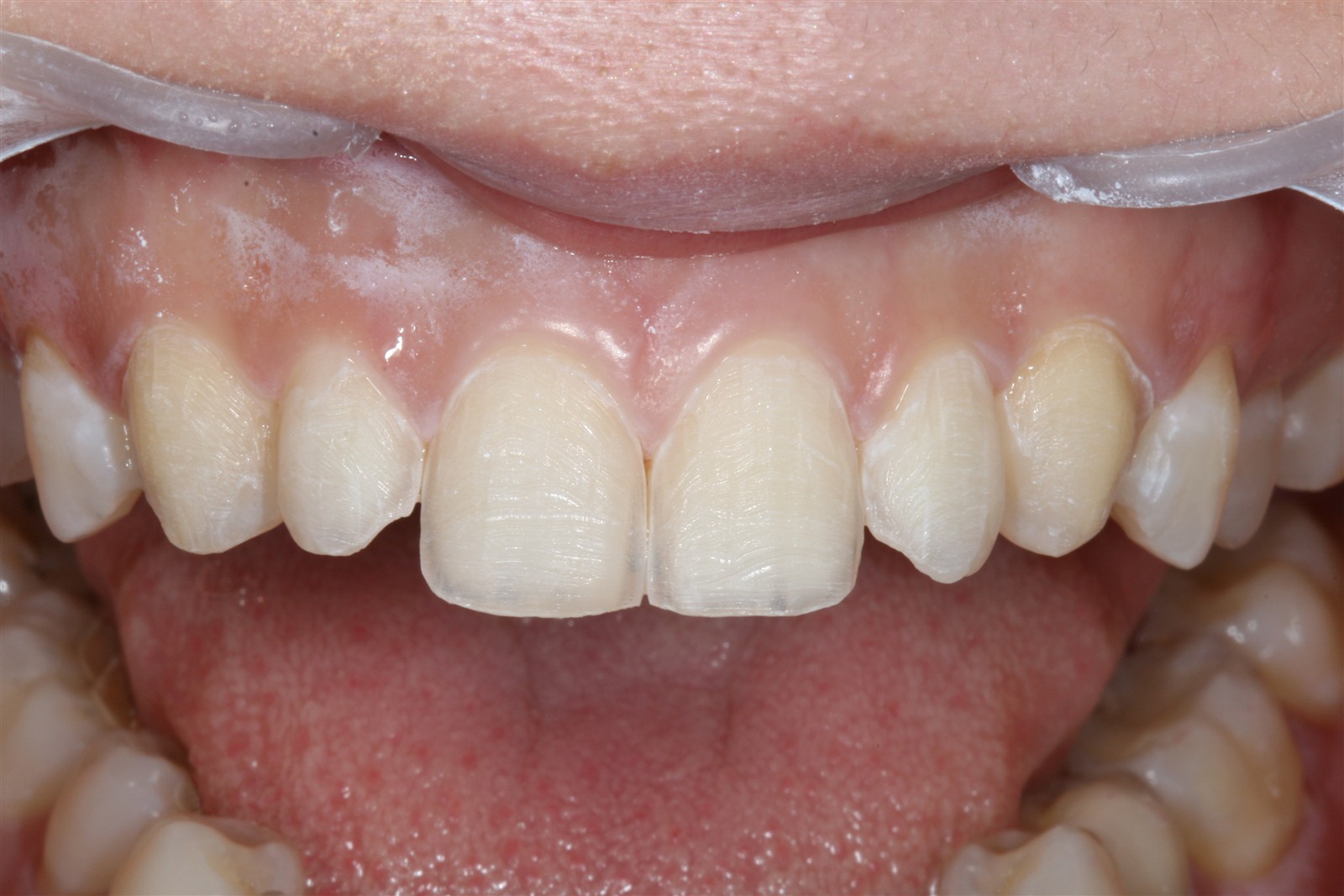
After preparation, I did not finish the assessment with the surfaces still wet. I dried and examined them to confirm that enamel remained on the surfaces where the veneers would bond. Minimal preparation involves checking both the remaining tooth surface and the final contours.
04 · Same-day fabrication and bonding
We scanned, designed, fabricated and bonded the veneers that day
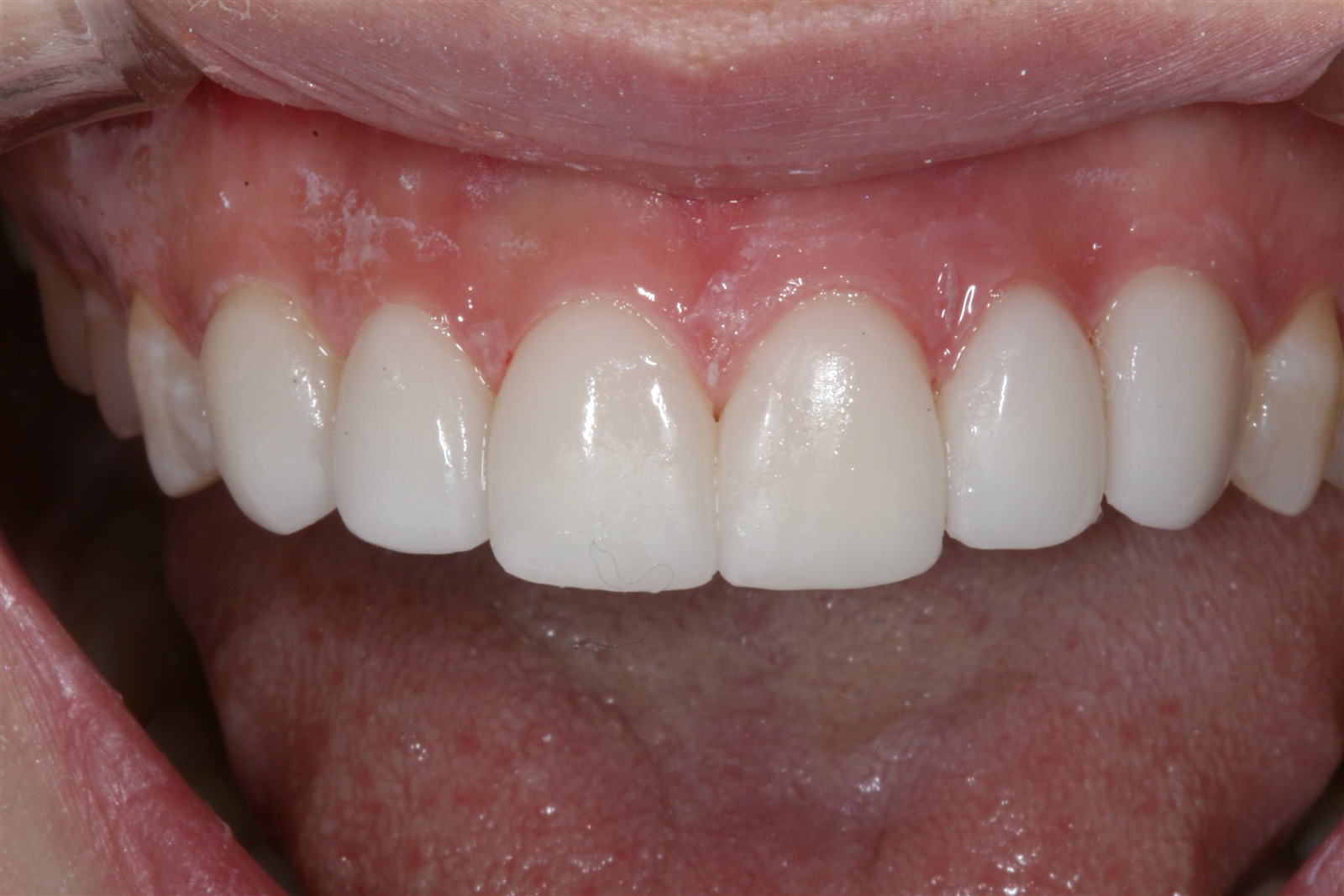
I scanned the prepared teeth, designed the contours myself, and fabricated and bonded the veneers that day. Findings from the examination and the appearance of the smile could be reflected directly in the design. This photograph records the immediate bonding stage, when residual cement is visible on the tooth surfaces and around the gums.
Comparing the immediate bonding photographs with follow-up makes the differences easier to see

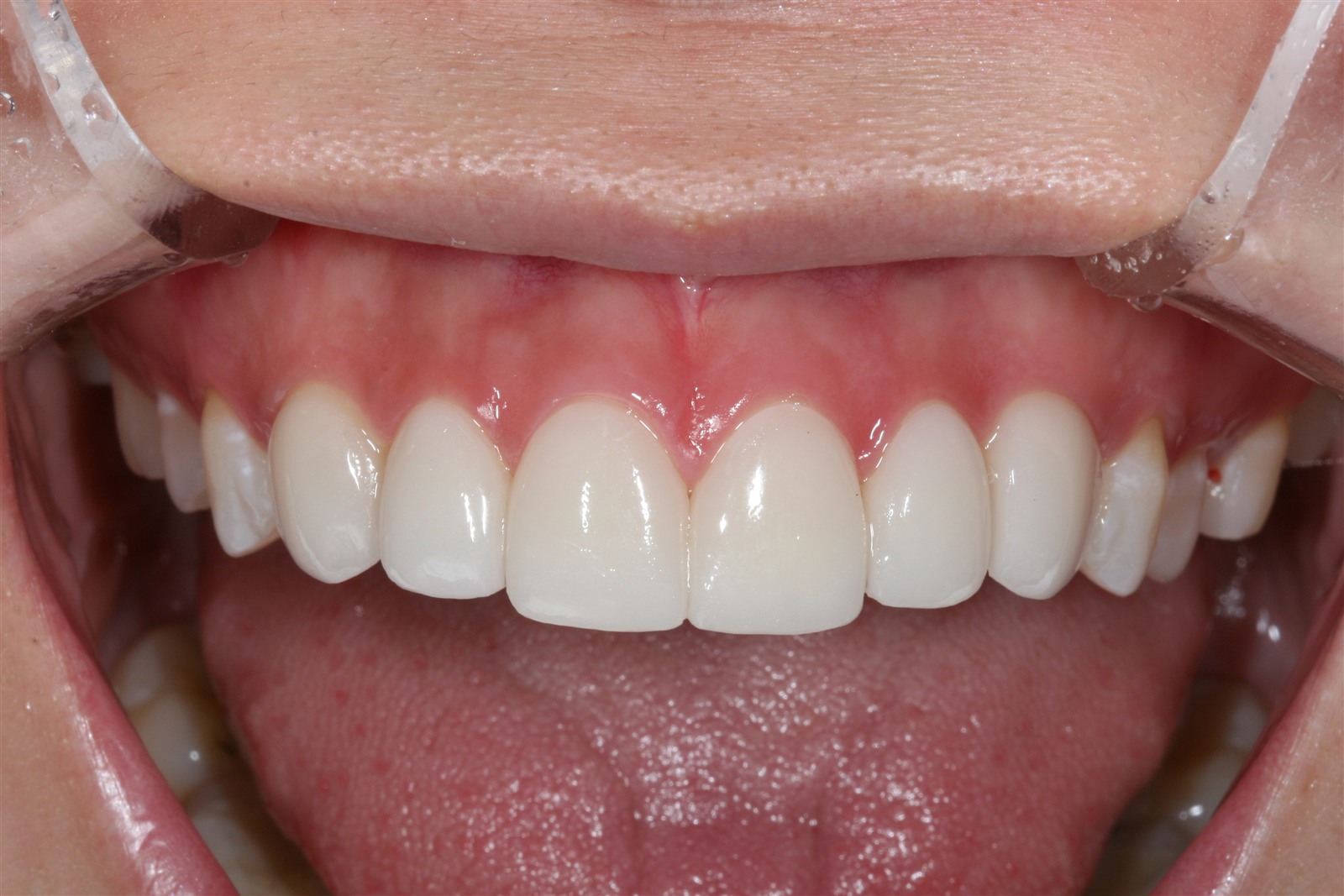
Residual cement is visible in the immediate photograph. At the return visit, the tooth surfaces and margins appeared clean, without visible residual cement.
This does not mean waiting for cement to disappear by itself. Cement removal, the spaces between teeth and the areas around the gums should be checked during treatment and follow-up.
As the visible contours of the neighboring teeth became more orderly, the smile’s transitions from the central teeth toward both sides also changed. I consider how naturally the whole smile fits together.
Same-day treatment still follows the necessary checks
Same-day fabrication allows scanning, design, milling and bonding to proceed as one connected workflow. Because I examine the teeth and design the veneers myself, clinical findings can feed directly into the decisions about the contours.
Not every rotated tooth should be treated in the same way. If extensive preparation would be needed, or tooth position and bite require adjustment, we first consider alternatives such as orthodontics.
Sensitivity, chipping or debonding, staining at the margins and gum inflammation can occur after veneers. Cleaning between the teeth and regular checkups remain important.
Questions patients often ask
Can veneers correct every rotated tooth?
It depends on the degree of rotation, the bite and the preparation required. If the teeth need to move, orthodontic treatment should be considered. We distinguish this from cases in which surface contours can be modified.
Why check enamel even with minimal preparation?
We need to assess the bonding surface as well as the amount prepared. In this case, we dried the teeth after preparation and checked that enamel remained.
Is another visit unnecessary after same-day bonding?
The margins, bite and cleanliness should still be checked. This patient also returned for assessment of the tooth surfaces and surrounding gums.
Related veneer information
How much does this treatment cost?
The total fee depends on the treatment extent, tooth condition, goals and complexity. A treatment plan and individual estimate are provided after assessment.
View standard veneer fees →View standard veneer fees →These are the clinic’s general reference fees.
General treatment information: American Dental Association veneer guide