
TEETH WHITENING · Yellow teeth and staining
Being concerned about yellow teeth does not mean whitening should always come first. We first assess whether the issue is staining or tartar on the surface, or a darker color within the teeth themselves. Brushing is fundamental, but hardened tartar needs professional removal, and brushing alone is unlikely to change intrinsic tooth color.
This article explains the difference between tartar removal and whitening and presents a case involving ten whitening treatments in 2006.
These are before-and-after whitening photographs of the same patient. Results and the number of treatments needed vary with the cause of discoloration and tooth condition. Sensitivity and gum irritation can occur during or after treatment, and photographic conditions can also affect how color appears.
01 · A question patients often ask

Photographed 2006.03.06

Photographed 2006.04.20
1. Can careful brushing make yellow teeth white?
It can be frustrating when teeth look yellow despite diligent brushing. However, clean teeth and a bright tooth shade are not the same thing.
Daily care can reduce plaque and some surface staining, but brushing cannot remove hardened tartar or color originating inside the tooth. Rather than brushing harder, it is better to establish why the teeth look yellow.
02 · Removing deposits from teeth
2. How do tartar removal and whitening differ?
Before whitening, we first check basic oral cleanliness. If tartar or surface staining is present, scaling and appropriate stain removal help clean the tooth surfaces.
The photographs above show a separate case before and after tartar removal. Removing attached tartar can make teeth look cleaner, but its purpose differs from whitening the teeth’s own color.
Spaces between teeth may become visible where tartar was removed, and temporary sensitivity can occur. Additional gum treatment may be needed depending on gum condition.
03 · Surface staining

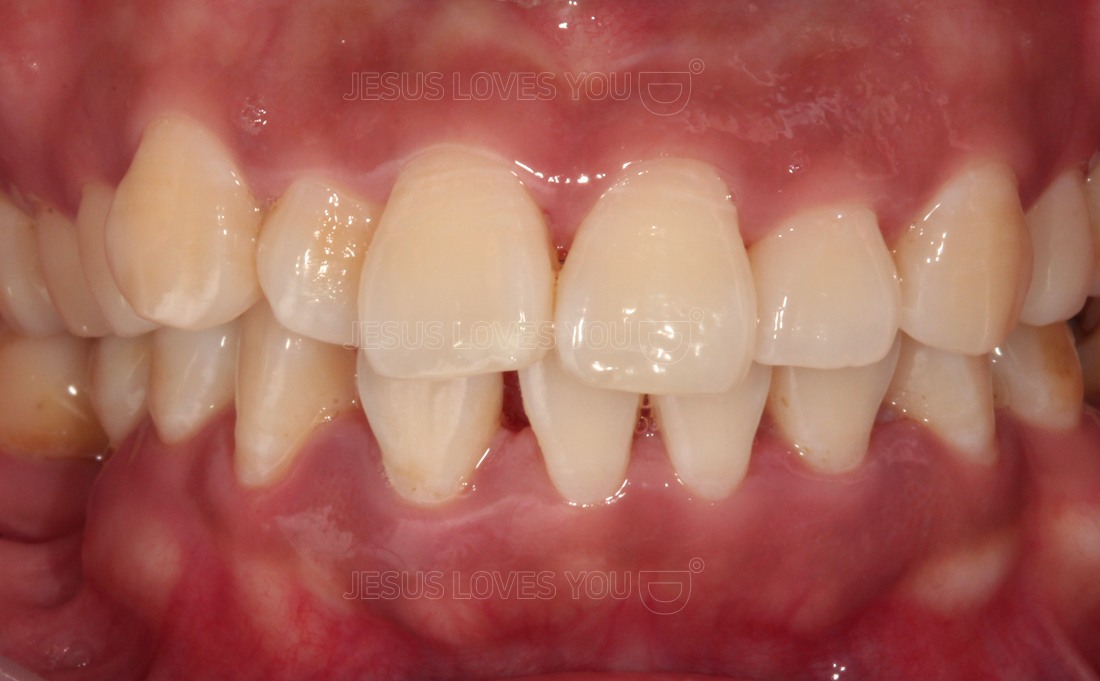
3. Stains associated with coffee, tea and smoking
Pigments from coffee, tea or smoking can accumulate on tooth surfaces. In these situations, daily cleaning and any necessary professional cleaning come first.
Scaling mainly removes tartar, while polishing or air polishing may be used to manage surface stains. The appropriate method depends on the deposits and gum condition.
04 · The teeth’s own color
4. When teeth look yellow even though they are clean
Natural tooth shade, age-related changes, medication or trauma can make teeth appear darker. Brushing alone is unlikely to resolve this type of discoloration.
Whitening uses an agent to brighten natural teeth. Responses vary with the type and degree of discoloration, so we discuss the desired shade and the possible extent of change before starting.
05 · An actual whitening case
5. A case involving ten whitening treatments
The smile photographs near the top show a patient before and after ten whitening treatments. The before-treatment photograph was taken on March 6, 2006, and the after-treatment photograph on April 20, 2006.
The photographs show the change in tooth color. Ten was the actual number of treatments in this case; it does not mean every patient needs ten treatments.
We continue to assess color change, sensitivity and the patient’s desired brightness when deciding whether more whitening is needed. Rather than setting a fixed number in advance and repeating treatment, it is important to proceed according to tooth condition and response.
06 · When other treatments are considered
6. Does severe discoloration always require veneers?
Yellow teeth do not always require veneers. We first assess how much improvement is possible through cleaning and whitening.
If tooth shape or existing restorations need adjustment as well as color, composite, veneers or crowns may be considered. Decisions should also account for tooth preparation, bonding conditions and the possibility of fracture or detachment.
07 · Everyday care
7. Is long-term use of whitening toothpaste enough?
Whitening toothpastes mainly help reduce surface staining. They are different from professional whitening that changes color within natural teeth.
Follow product instructions and avoid scrubbing too forcefully. Brushing with fluoride toothpaste, cleaning between teeth with floss or interdental brushes, and regular checks are fundamental. Review how a product is used if sensitivity or gum irritation develops.
8. Frequently asked questions about yellow teeth and whitening
Does scaling make teeth white?
Removing tartar and surface stains can make teeth look cleaner, but this differs from whitening the teeth’s natural shade.
Do I have to receive ten whitening treatments?
No. Ten treatments was this patient’s treatment record. The number needed varies with the cause of discoloration, treatment response, sensitivity and the desired brightness.
Will crowns and composite fillings become whiter too?
Existing crowns, veneers and composite restorations do not whiten in the same way as natural teeth. We assess them before treatment because whitening can create a color difference from nearby teeth.
What if just one tooth is especially dark?
We need to investigate the cause, including any trauma or root canal treatment. Depending on the condition, internal bleaching or restorative treatment may be considered. Color alone does not determine the treatment.
9. Start by finding an approach suited to your teeth
Whether you need tartar removal, whitening or assessment of existing restorations depends on your dental condition. It is best to identify the cause and begin with the necessary care.