
CASE SUMMARY · Overseas patient
This case at a glance
Patient and initial condition
Man in his mid-70s living in Texas
Damaged teeth beneath a long upper bridge
Lower teeth preserved where feasible
Implants and same-day temporary teeth
13 upper and 4 lower implants: 17 in total
Abutments connected to 10 upper implants for same-day temporary teeth
No same-day temporary teeth on the lower molar implants
Trips to Korea and treatment schedule
Two trips to Korea
Returned home after suture removal 10 days after surgery
Returned 10 months after surgery for the final restorations
Two trips to Korea do not mean only two dental appointments. Treatment combined full-arch upper implants with some lower implants and crowns on natural teeth. The approximately four-year postoperative review mentioned in the original article refers to the examination recorded at that time.
Treatment and content review: Dr. Hanna Lee
01. Initial condition and preserving natural teeth
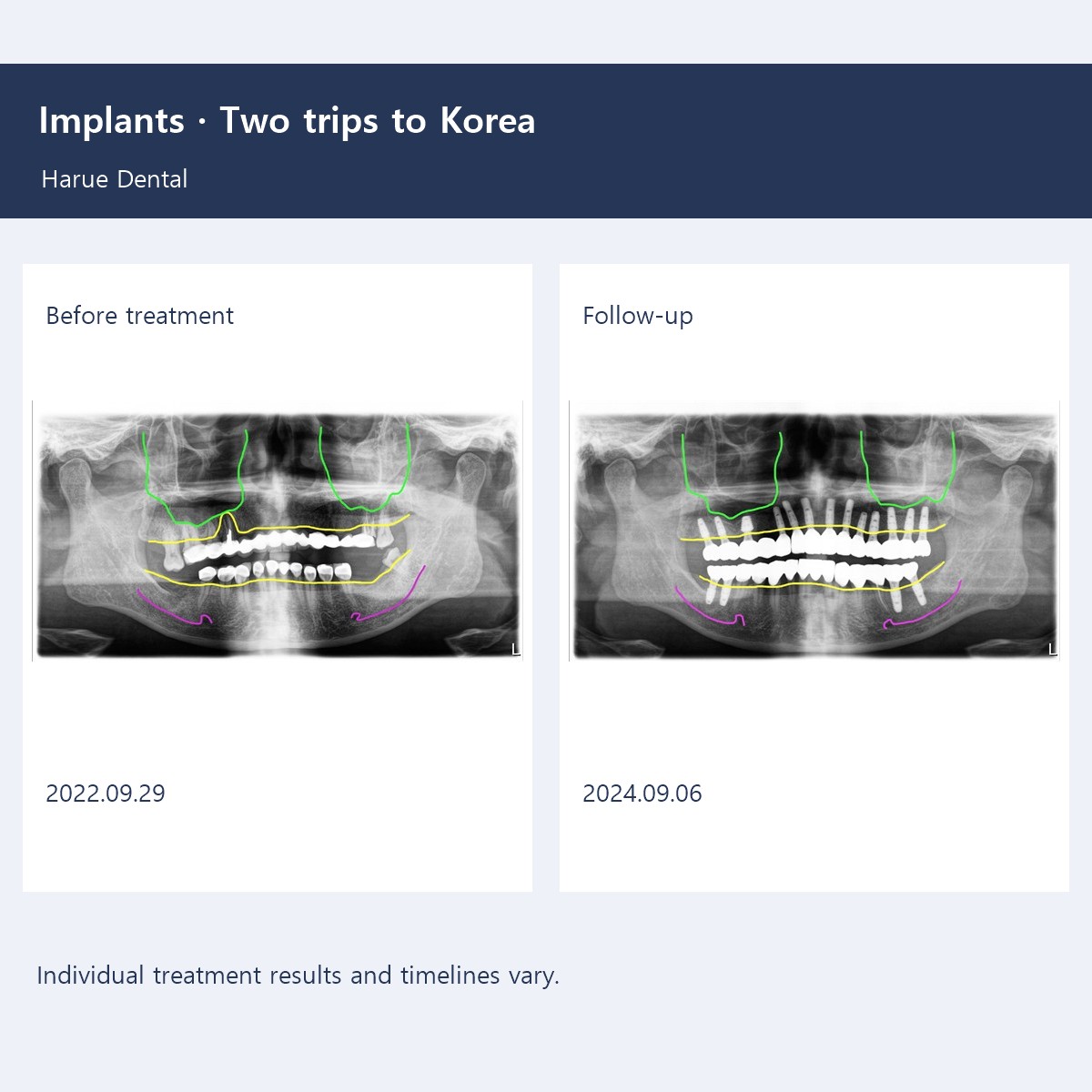
A man in his mid-70s from Texas attended on an acquaintance's recommendation. A long bridge had been used in the upper jaw, where several teeth were missing.
Upper jaw: examination after bridge removal
Most teeth under the bridge were damaged. The original record describes extracting these teeth and an over-erupted remaining tooth on the right that could not be used effectively.
Lower jaw: using preservable teeth
The teeth beneath the lower restorations could be preserved, so new crowns were planned. Implants were planned in the molar areas where needed.
02. Thirteen upper and four lower implants, with same-day temporary teeth
Bone condition and initial stability allowed placement at extraction. Thirteen upper implants were placed, avoiding one severely inflamed site; four lower implants were placed in the molar areas on both sides.
Same-day upper temporary teeth
Of the 13 upper implants, abutments were connected to 10 implantsfor temporary teeth fitted on the day of surgery.
Extent of lower temporary teeth
Temporary teeth were fitted to the natural teeth after removal of the old restorations. The lower molar implants did not receive same-day temporary teeth.
Return home after the first trip
Sutures were removed 10 days after surgery and the patient returned to the USA. This timing is the individual record of this patient's care.


03. Final restorations on the return trip 10 months later
Finishing treatment was possible from about four months after surgery, but the patient returned to Seoul at 10 months to fit his schedule in the USA.
Checking integration and scanning
At the return visit, all implants were recorded as well integrated. Scan bodies were connected to record implant positions.
Designing abutments and teeth
The scan information was used to design and fabricate the abutments and final restorations. The material below illustrates scan bodies and abutment design.
Ten months was this patient's actual return interval, not a waiting period recommended for everyone. Overseas travel plans must be coordinated with the clinic.


04. Completion over two trips and subsequent review
Two trips to Korea completed the full upper arch, some lower implants and crowns on natural lower teeth.
Restoration structure
Abutments connect to the implants beneath the restorations. The material below shows these supports and the completed prostheses.
Examination recorded about four years after surgery
The original article describes a review roughly four years after surgery, following maintenance in the USA and a return to Korea. It reported a satisfactory condition at that examination.
Trips into Korea and dental visits during a stay are different. The treatment plan, length of stay and recovery vary with the individual and travel schedule.



Immediate-loading full-mouth implant care since 2000
Full-mouth implantsFAQ
In this case, surgery and temporary teeth were provided during the first trip, and the final restorations during the second. Two trips to Korea do not mean two dental visits. Several appointments for consultation, surgery and review may be needed during each stay.
The number of trips and length of stay depend on bone condition, treatment extent and recovery. Agree on a plan before departure.
Consultation and tests may take place first, or surgery may follow consultation depending on the condition and schedule. This patient's sutures were removed on day 10 before returning to the USA.
Sutures are generally removed around two weeks after surgery; absorbable sutures may be used when appropriate. Coordinate the individual stay and reviews before booking flights.
Treatment commonly takes about three to six months, depending on bone condition and healing. This patient could proceed after month four but returned after 10 months for travel reasons.
Ten months reflects this patient's schedule, not a recommended wait for every patient. Discuss temporary-tooth use and the return date in advance, and continue regular reviews after treatment.