
Harue Dental · Dr. Hanna Lee · Upper full-arch implant case
Only loose front restorations remained in the upper jaw, and the entire upper dentition needed rebuilding. Existing restorations were removed, and extraction, implant placement and bone grafting were carried out together.
Initial stability was checked before connecting temporary teeth on the surgery day. Two implants in grafted sites with weak initial stability were left out of the temporary restoration. Custom abutments and final zirconia restorations were completed about six months later.
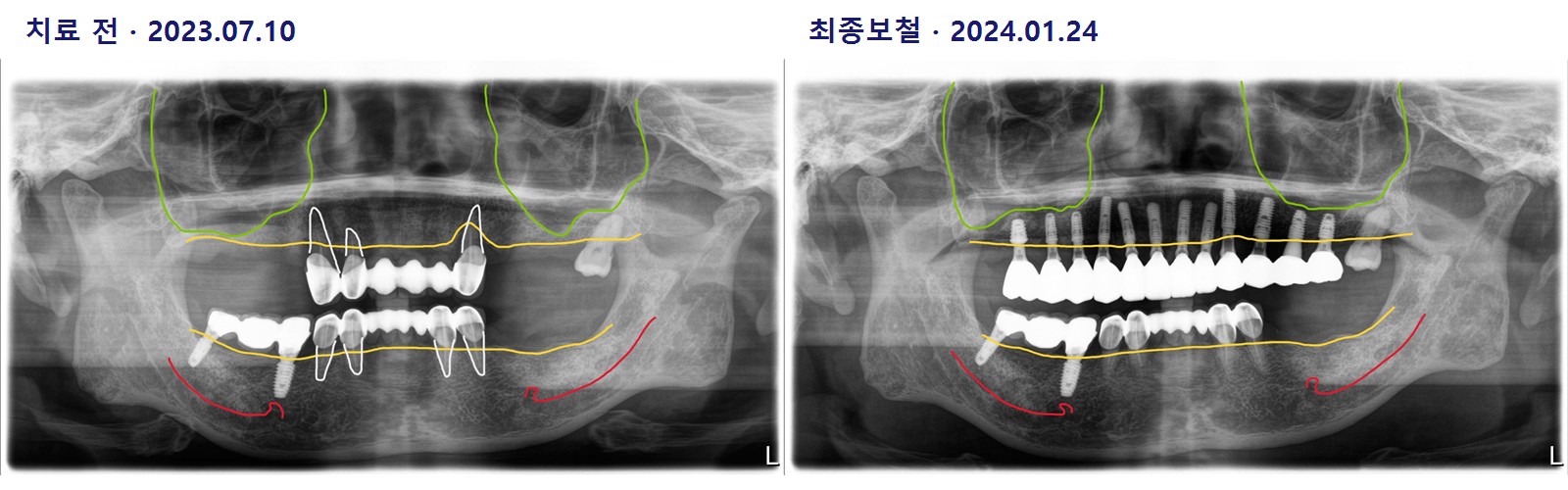
Before and after upper-jaw treatment. Select the image to enlarge it.
1. Only Loose Front Restorations Remained
Chewing with the upper back teeth was difficult, and the front restorations were loose. They could not continue supporting the functions of the entire upper dentition, so we planned full-arch implant rehabilitation.
This treatment involved the entire upper jaw. The lower restorations visible in the photographs are separate from this treatment.
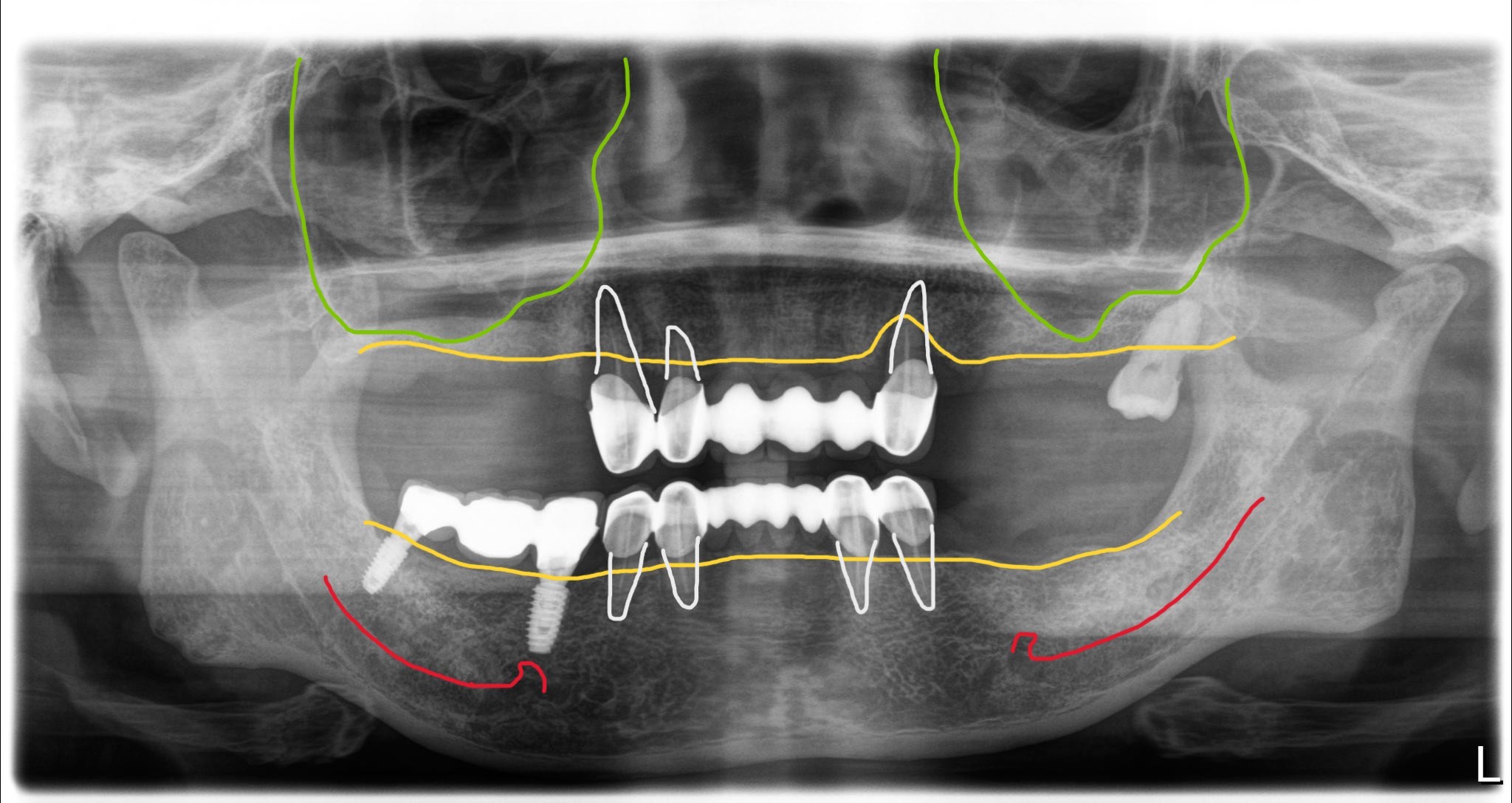
2. Removal, Extraction, Implant Placement and Grafting Together
After removing the old restorations and extracting teeth that were difficult to maintain, implants and necessary bone grafts were placed during the same surgery.
We assessed each implant’s stability before fitting temporary teeth that day. Among the grafted sites, two implants with weak initial stability were excluded from supporting the same-day temporary restoration. The other implants supported the temporary teeth while these two sites were protected from immediate loading.
Fitting temporary teeth does not mean hard food can be chewed immediately. Follow the prescribed diet while the implants and bone heal.
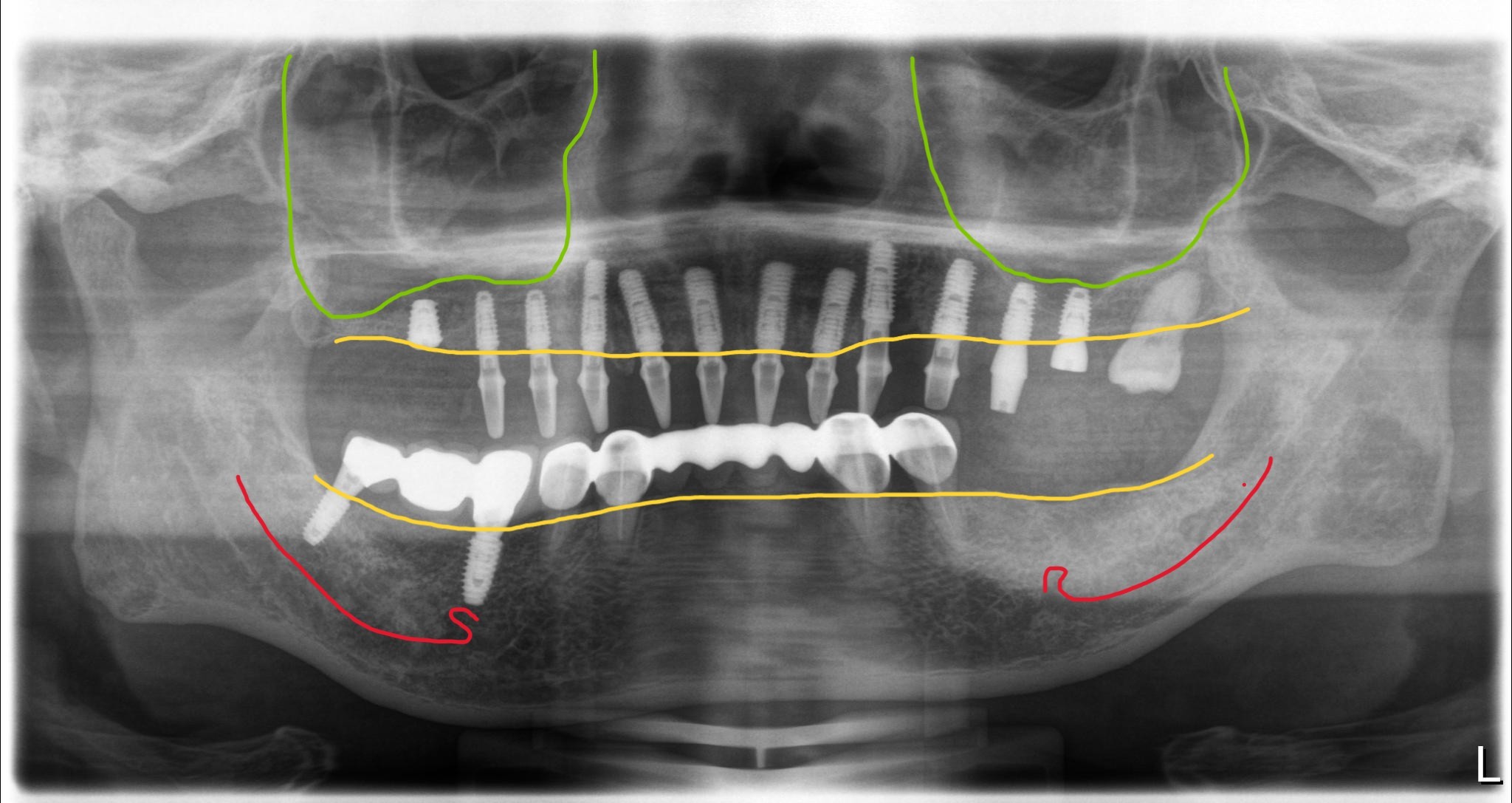
Stage before completion of the final zirconia restorations.
3. Planning Support Where the Teeth Would Be
At that time, I aimed to place implants at the intended tooth positions where possible, to reduce long unsupported spans of zirconia that might fracture.
The same-day temporary teeth needed support, and I also wanted to avoid long gaps between supports beneath the final zirconia restorations. I called this full-arch approach “Power Arch,” reflecting the aim of providing sufficient support at the required positions.
What “Power Arch” Means in This Case
It is the name I used for my approach at that time: supporting the upper full-arch restoration on multiple implants. Implant numbers alone do not determine the result.
Placement, connections, bone and the bite all matter. Providing sufficient support does not eliminate fracture risk; maintenance and checks remain important.
4. Custom Abutments and Zirconia after About Six Months
After healing, custom abutments designed for this patient’s restoration and the connected zirconia restorations completed the upper arch.
An abutment is a post emerging above the gums to support the artificial teeth. This case used custom abutments with zirconia restorations. Surgery to final restoration took about six months.

The upper jaw restored with custom abutments and zirconia
5. Titanium-bar Support Is Another Approach I Use More Recently
More recently, I have also used titanium-bar support within restorations, sometimes planning fewer implants. This current approach is distinct from the custom-abutment/zirconia method used for this patient.
In this case, sufficient implants were planned for same-day temporary support and to reduce zirconia fracture risk. I continue to consider the support system that fits the patient’s bone and restoration design first, then decide implant positions and numbers.
6. Fees Were Not Added Implant by Implant
Placing sufficient implants can raise concerns about increasing fees. At that time, I applied an agreed full-arch fee rather than adding a separate amount for each implant placed.
I wanted adequate support for the same-day temporaries and final zirconia without increasing the patient’s fee simply because more implants were placed. My aim was to plan the required care while limiting financial burden.
This describes the fee arrangement when this patient was treated. Current scope, included items, additional procedures and fees are explained according to each individual diagnosis and plan.
7. Caring for the Restoration and Gums
Even with a connected full-arch restoration, clean around implants and beneath the teeth. Learn suitable interdental cleaning and attend regular reviews of gums, the bite and restoration connections.
Peri-implant inflammation, restoration fracture and screw loosening can occur. Seek care for bleeding, swelling, looseness or discomfort when chewing.
8. Questions about Upper Full-arch Implants
Why were two implants excluded from the same-day temporary teeth?
They had weak initial stability in grafted sites, so we avoided applying immediate forces to them. Not every implant placed was connected to the temporary restoration.
What does “Power Arch” mean?
It is Dr. Hanna Lee’s name for this approach of providing support at intended tooth positions for a full-arch restoration. This case used custom abutments and final zirconia.
Does every full-arch case finish in about six months?
About six months was this patient’s treatment period. Grafting, healing and implant stability influence the timing of final restorations.
Did more implants increase this patient’s fee?
At that time, the agreed full-arch fee was used rather than adding costs per implant. Current fees and included treatment are explained during individual planning.
Related Articles and Consultation
Full-arch restorations and maintenance casesImplant maintenance guideUpper full-arch consultation · 1544-0208Treatment and explanation: Dr. Hanna Lee, Harue Dental · Article revised: 2026.11.16