
The patient attended to replace old front restorations. One front tooth was very mobile with a short root, so it was extracted and replaced with one implant. The neighboring restorations were remade as ceramic crowns.
In this treatment, gum lines and the color of the supporting post beneath the crown were considered so the implant tooth would suit its neighbors.

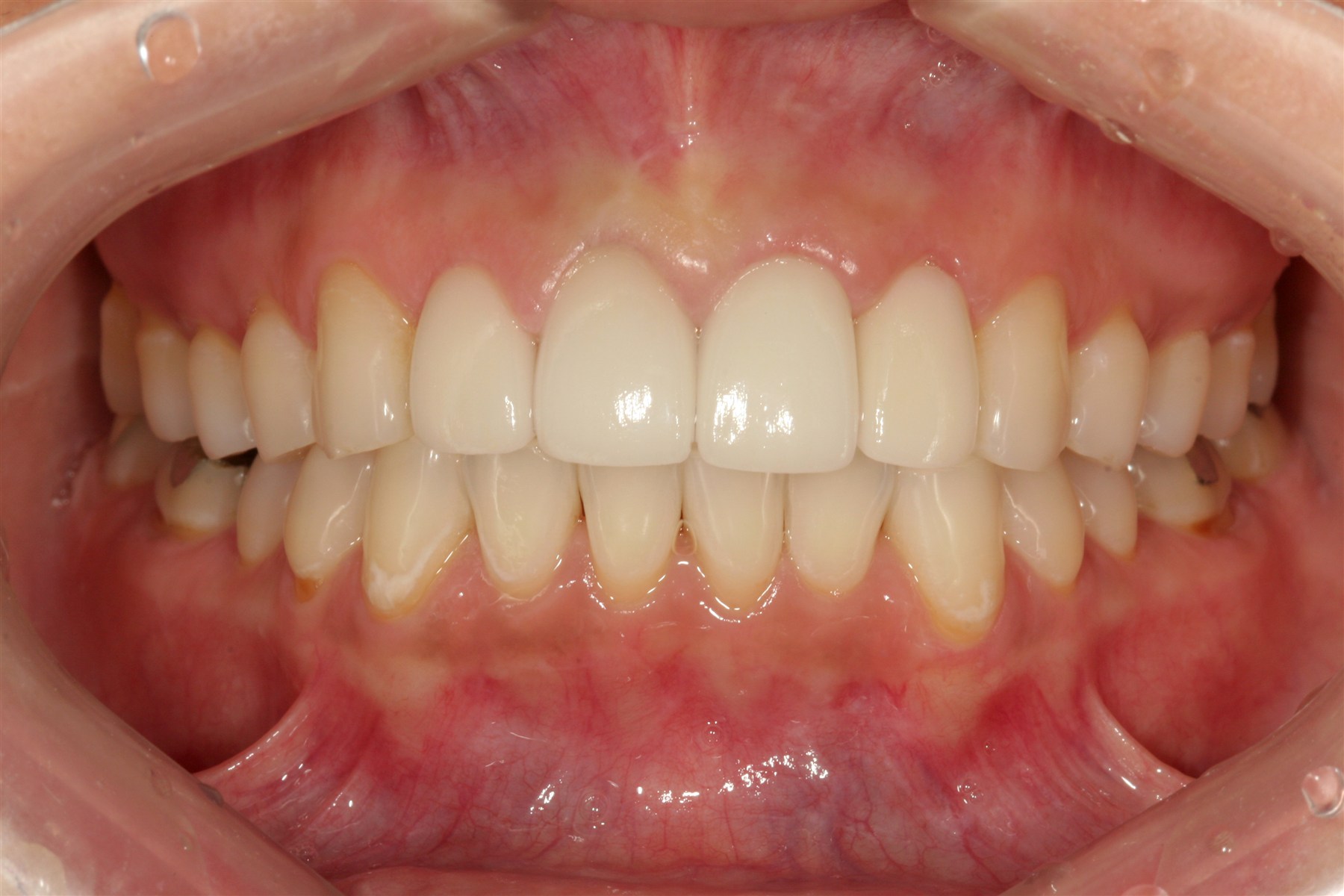
1.  Old Restorations and a Mobile Front Tooth
The old restorations were PFM crowns, with tooth-colored porcelain over metal. Before replacement, we assess whether the teeth beneath can support new restorations as well as their visible shape and shade.
One tooth was very mobile and short-rooted. It was planned for extraction and an implant; neighboring teeth were planned for ceramic crowns.
Treatment was chosen for each tooth’s condition rather than treating every front tooth the same way.
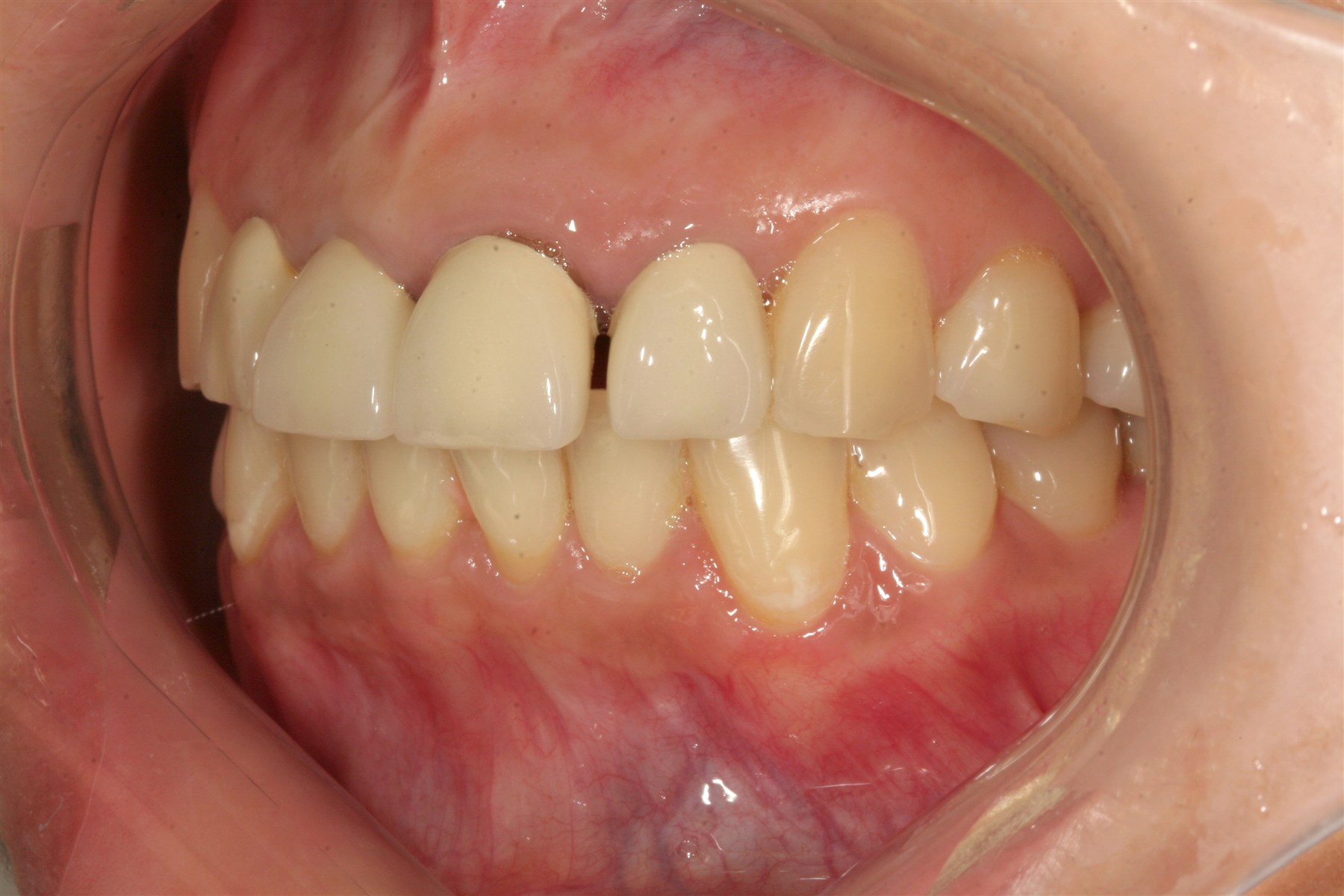
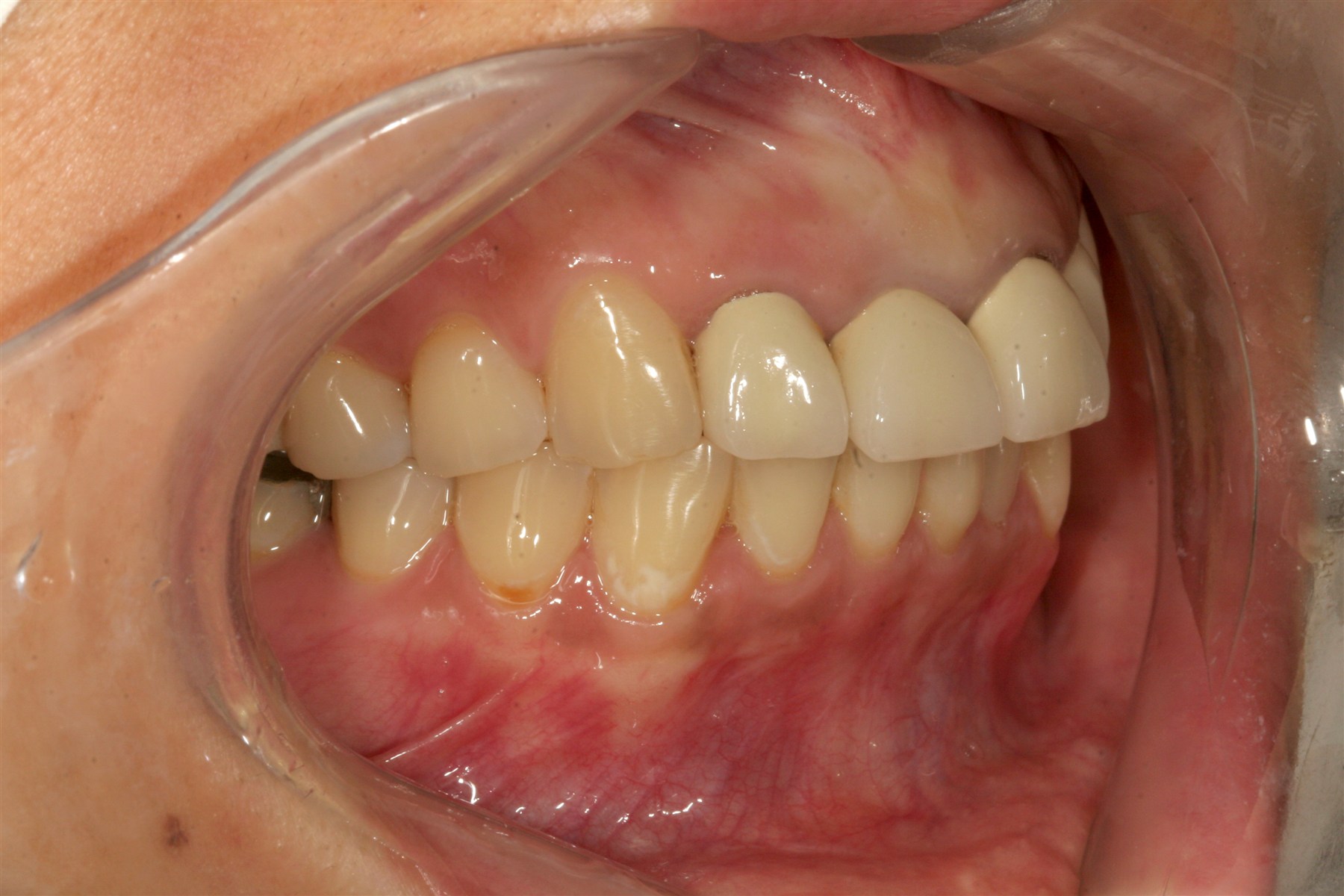
2. A Tooth-supported Temporary Bridge during Implant Healing
Temporary teeth were prepared so the patient would not have an open front-tooth space during healing. Neighboring teeth were already prepared for replacing their old restorations and could support a temporary bridge.
This case therefore did not use an abutment and temporary tooth directly on the implant on the surgery day. The adjacent teeth supported the temporary restoration during healing.
I considered the suitable way for this patient to wait, alongside what could be done on the surgery day. An abutment was connected about two months after implant surgery, followed by final restorations.

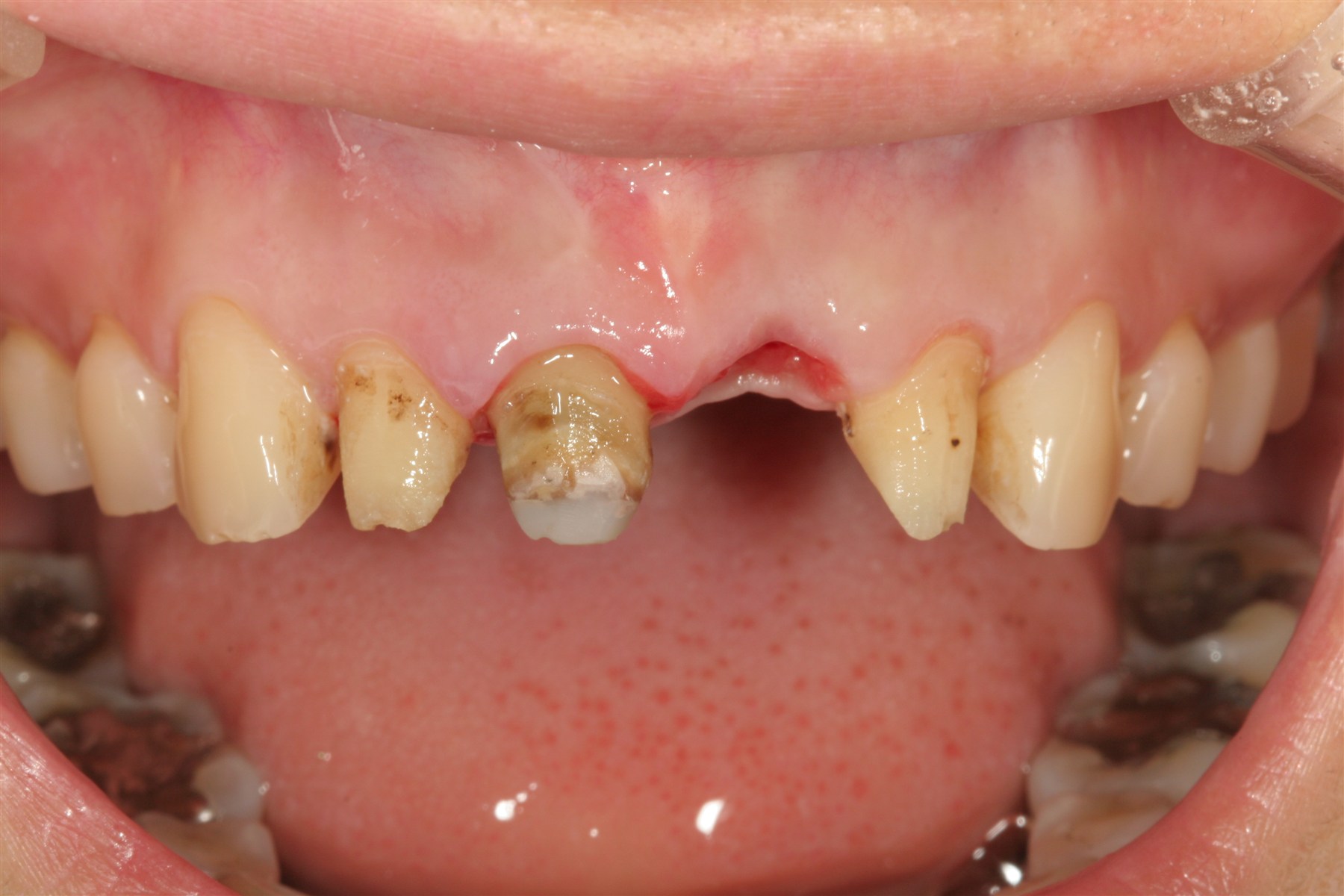
3. Choosing a White Cercon Abutment
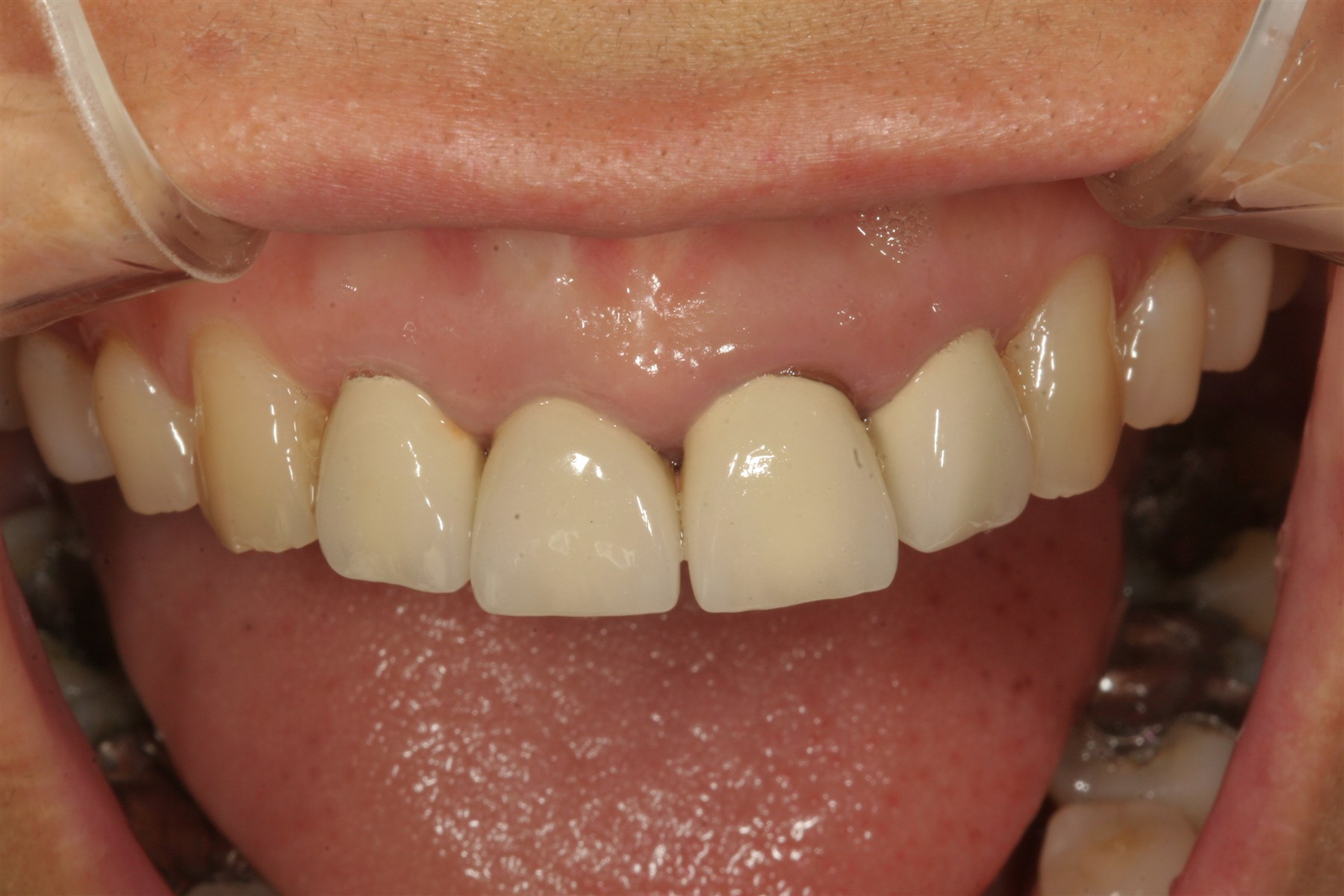
An abutment connects the implant in bone to the visible crown. The white post can be seen in the photographs before final crown fitting.
This patient received a Cercon zirconia abutment to reduce dark underlying color and harmonize with the neighboring teeth.
Front-tooth treatment goes beyond matching crown color. We assessed the gum line, emergence contours and the color of the supporting abutment together.
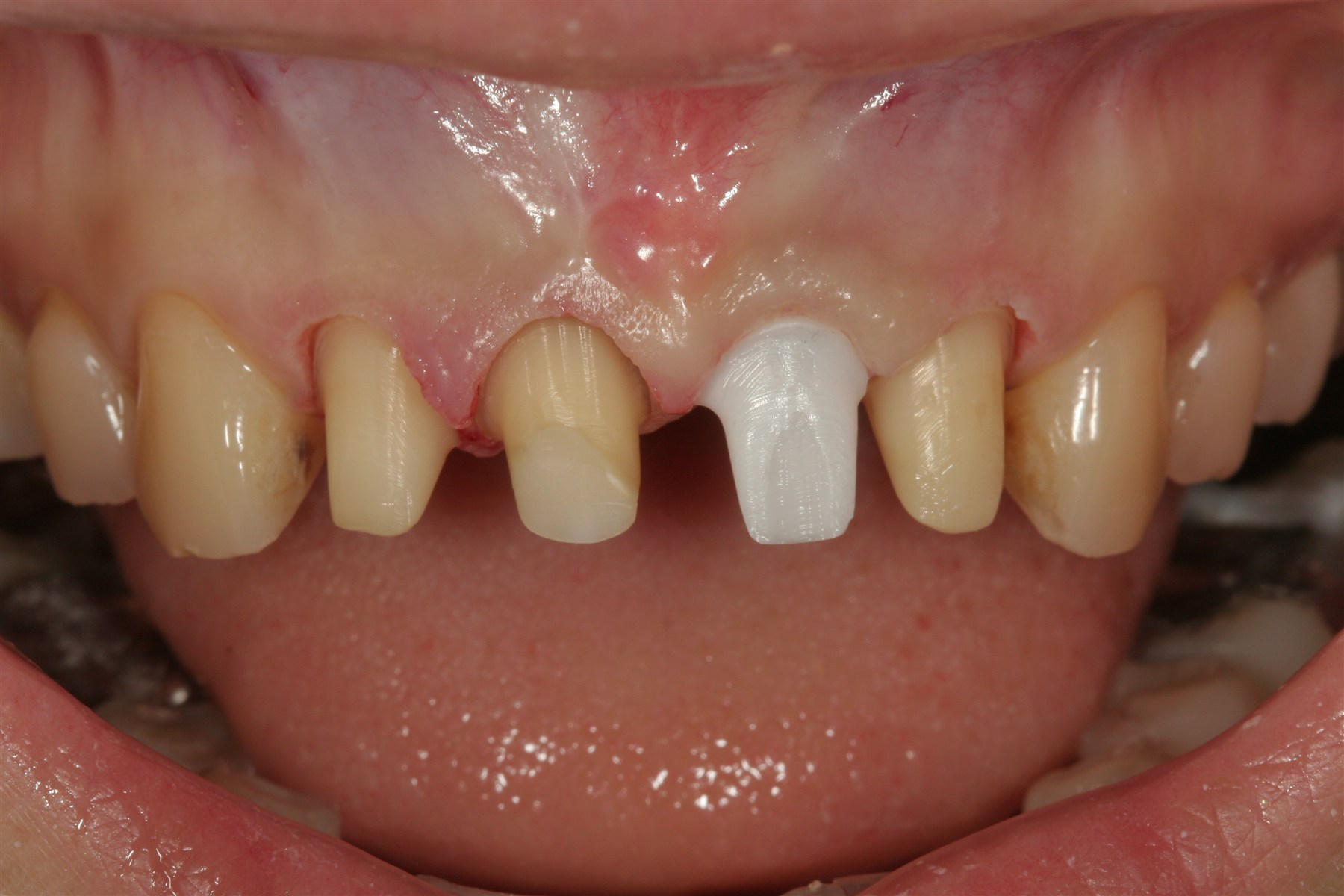
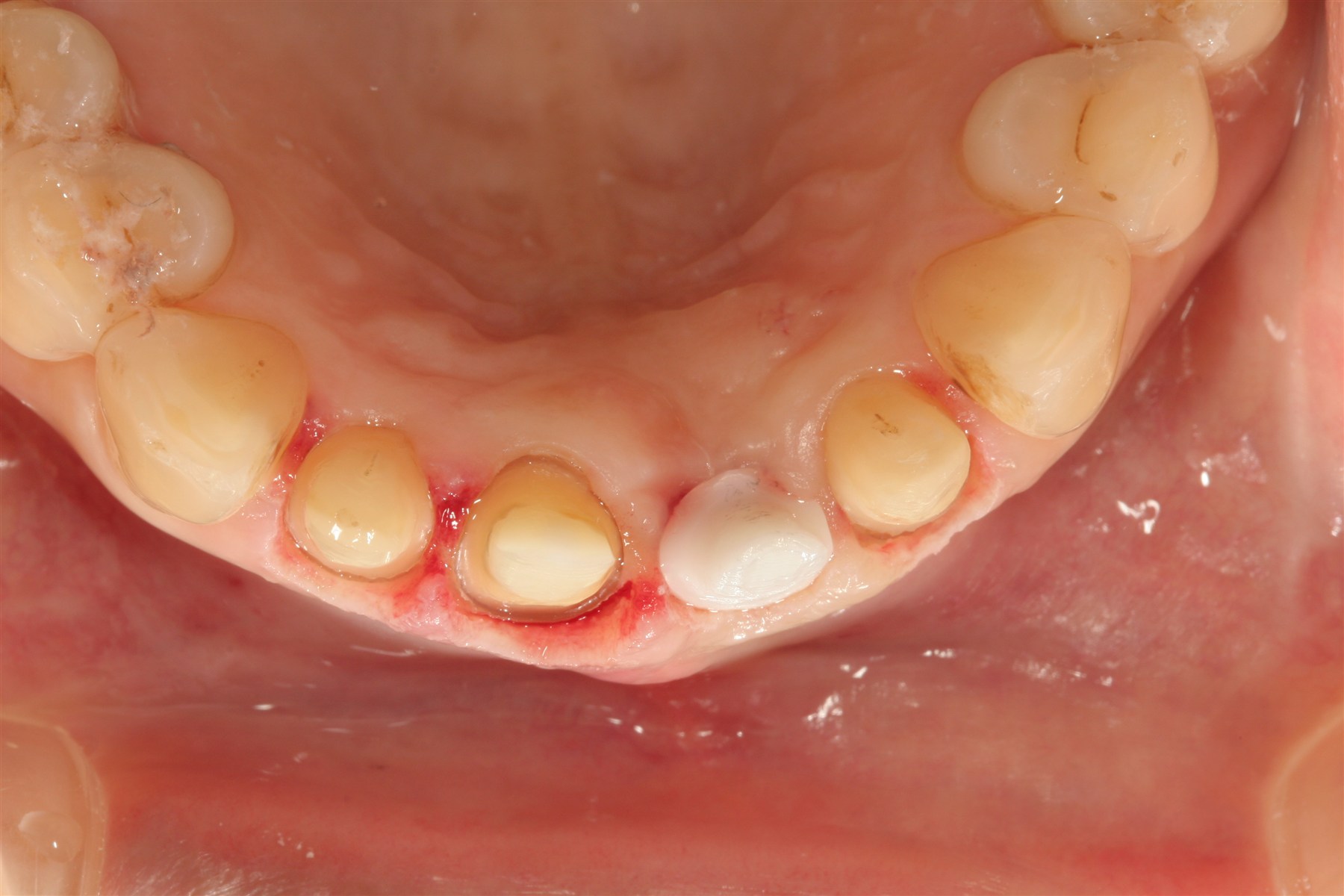
4. Front Teeth Remade with Ceramic Crowns
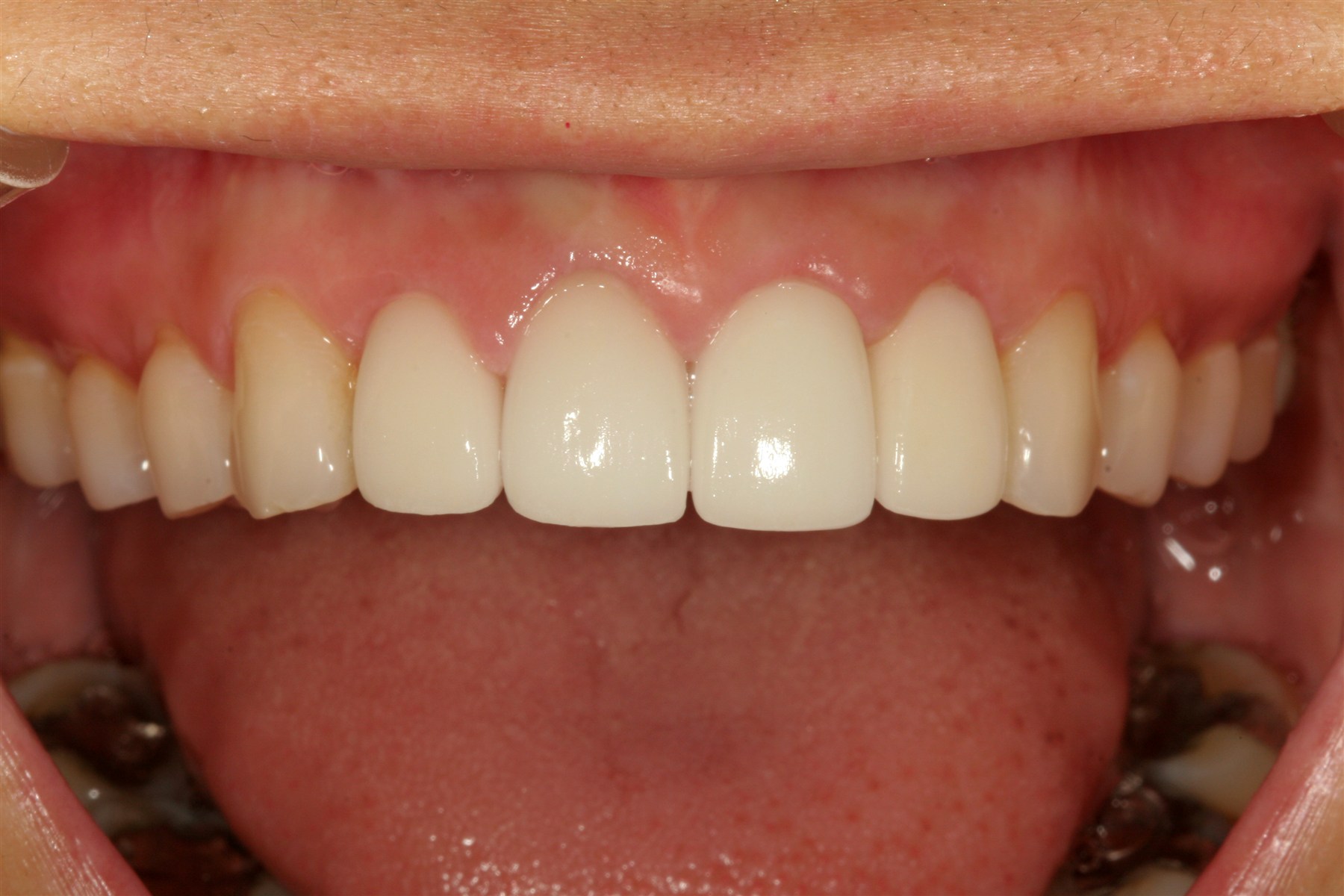
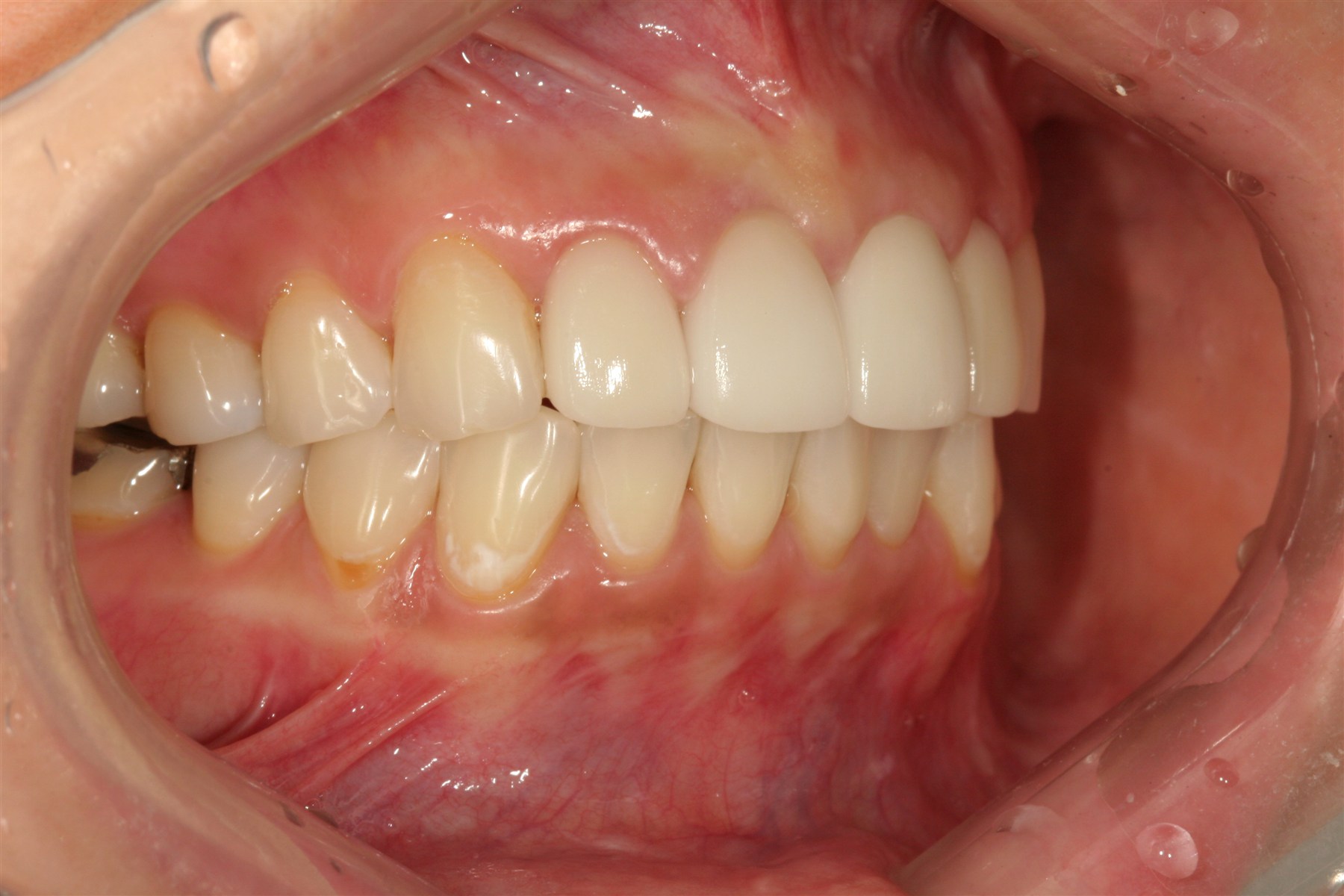
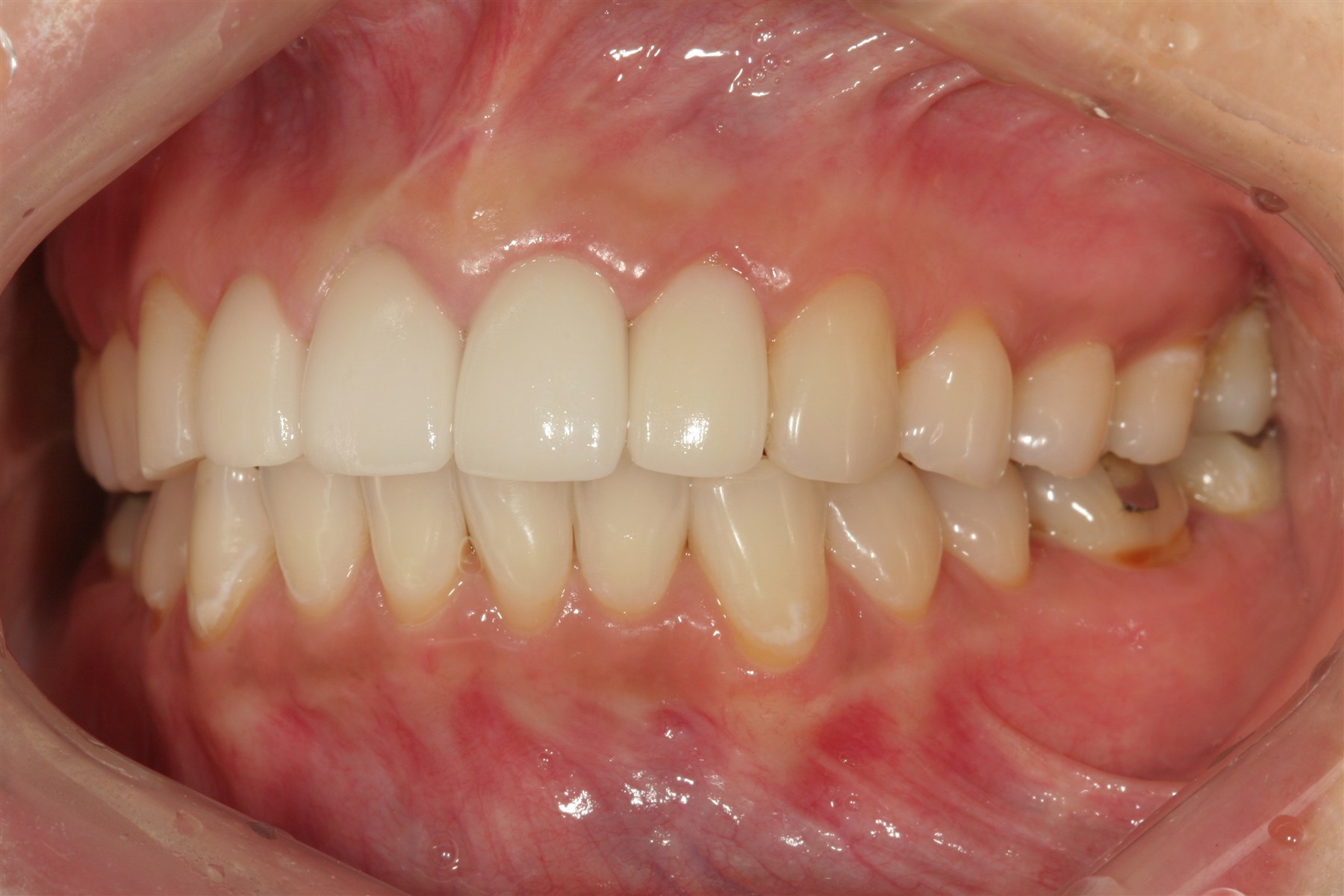
The implant crown and neighboring crowns were completed together. We assessed length, width, transitions and gum margins.
The photographs show changes in light transmission and surface expression compared with the old PFM restorations. These are differences observed while replacing this patient’s restorations.
PFM remains a clinical option. The word “ceramic” does not determine the outcome; underlying tooth shade, space, gums and the bite all matter.
5. The Smile and Ongoing Care
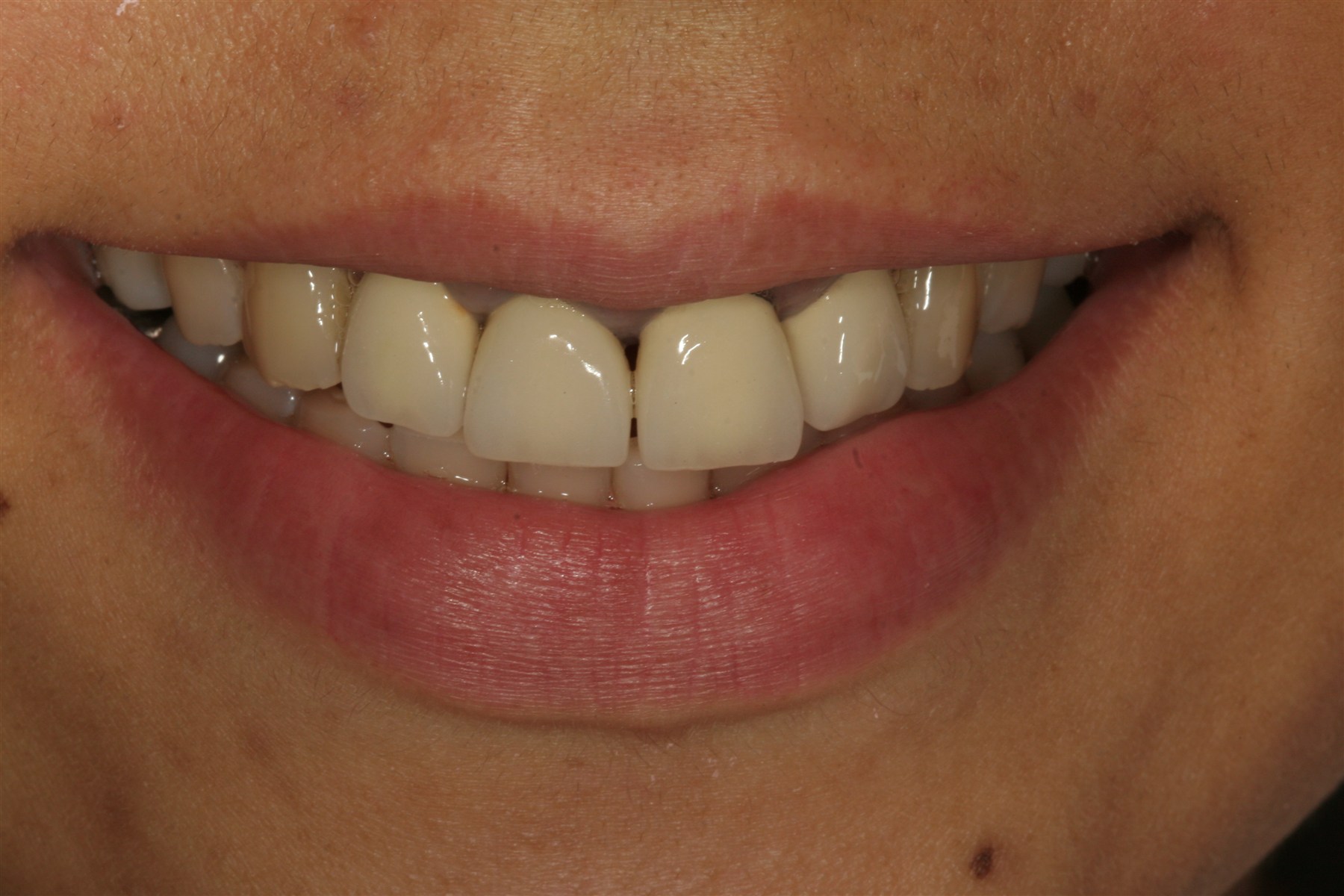
Alongside retracted views, compare the front teeth within the smile. The photographs below show before treatment and later follow-up.
Clean carefully at gum margins and between the implant crown and natural-tooth crowns. Learn appropriate floss and interdental-brush use, and attend regular gum and bite reviews.
Ceramic restorations or abutments can fracture, screws can loosen and peri-implant inflammation may occur. Seek prompt care for looseness, pain or bleeding gums.

6. Frequently Asked Questions
Do all front implants receive temporary teeth on the surgery day?
This depends on stability, bone, gums, the bite and adjacent teeth. Here, a temporary bridge on prepared neighboring teeth was used; the implant abutment was connected about two months after surgery.
Does a white abutment always create matching tooth and gum colors?
Abutment color is one factor. White Cercon was chosen here with the underlying shade in mind, but gum thickness, implant position, crown thickness and material also affect appearance.
Must old PFM crowns always be replaced with ceramic crowns?
Assess the current restorations and concerns first. Here, preserved teeth received new ceramic crowns, while one very mobile tooth received an implant. The same method is not applied to everyone.
7. What to Assess before Replacing Front Restorations
Start by checking the teeth beneath old restorations. Distinguish teeth that can be kept from sites needing implants, and plan temporary teeth, final contours and gum lines together.
Consultation · 1544-0208Front implant case using titanium abutments and PFMTypes of implant restorationsGeneral abutment references · Cercon clinical guide · Clinical research on abutments and surrounding gum color