
At the first visit, this patient was a man in his fifties. He had worn a lower denture for years, and eight upper front teeth remained. Severe periodontal disease had reduced supporting bone almost to the root tips, leaving marked mobility.
The remaining upper teeth were extracted for upper and lower full-arch implants. After assessing general health and surgical conditions, surgery was carried out on the consultation day, and fixed temporary teeth were connected in both jaws that day.
Second scan · final fitting
Later abutment replacement and reviews counted separately
Used while preparing final restorations
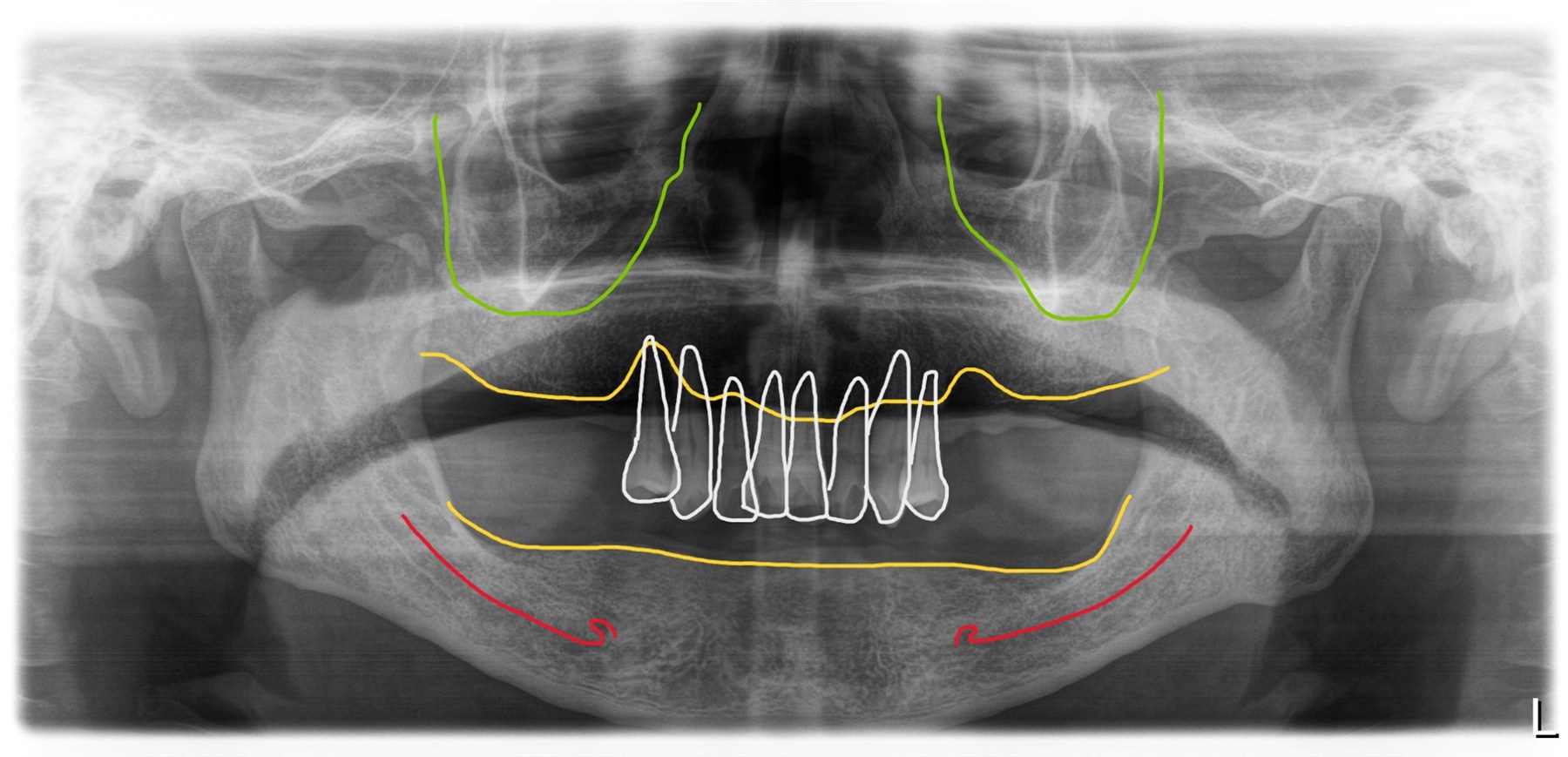
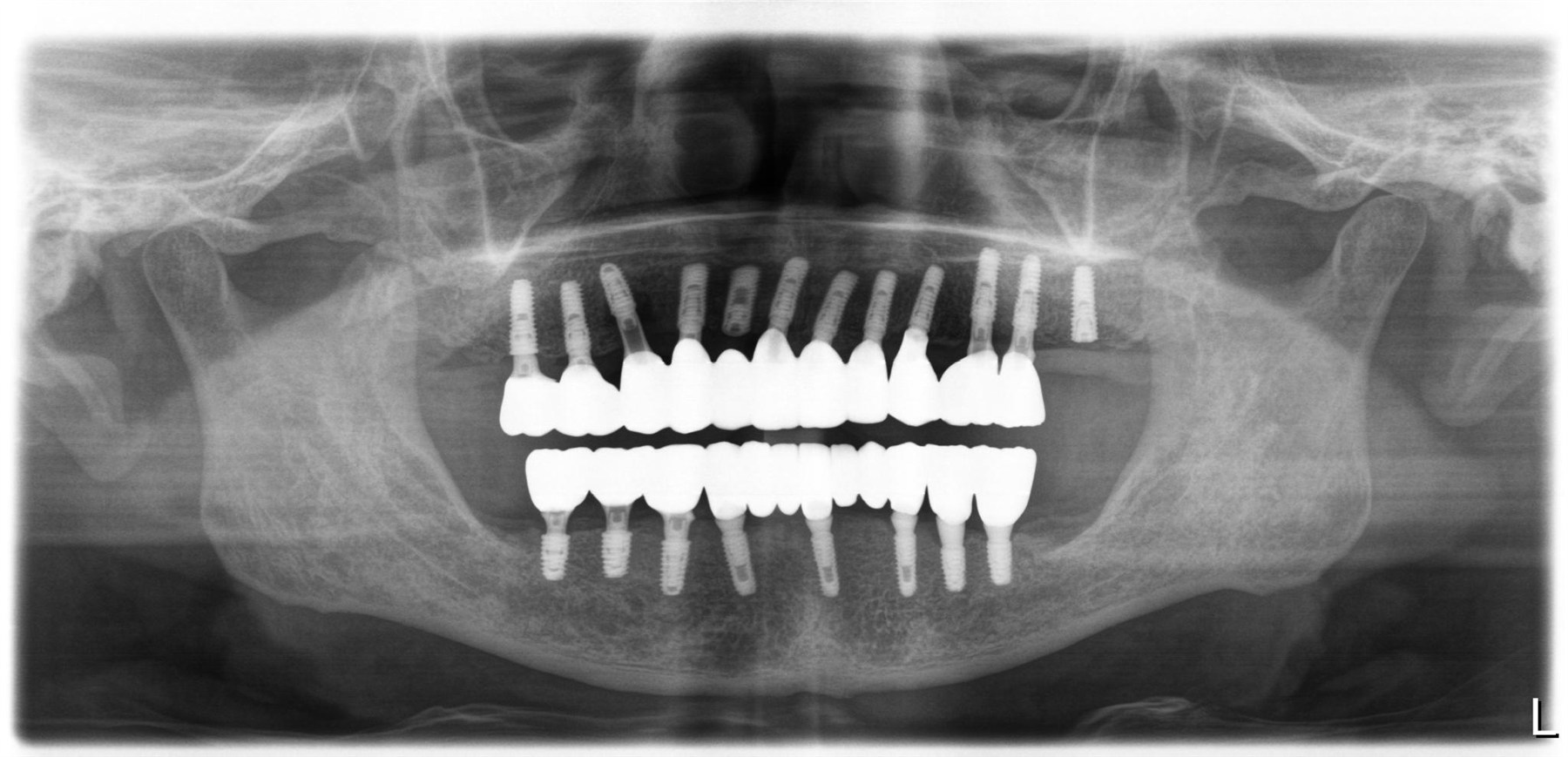
1.  Bone Conditions Differed between the Jaws
The eight remaining upper teeth had severe periodontal bone loss. Their mobility and support led to a plan for extraction and full-arch rehabilitation.
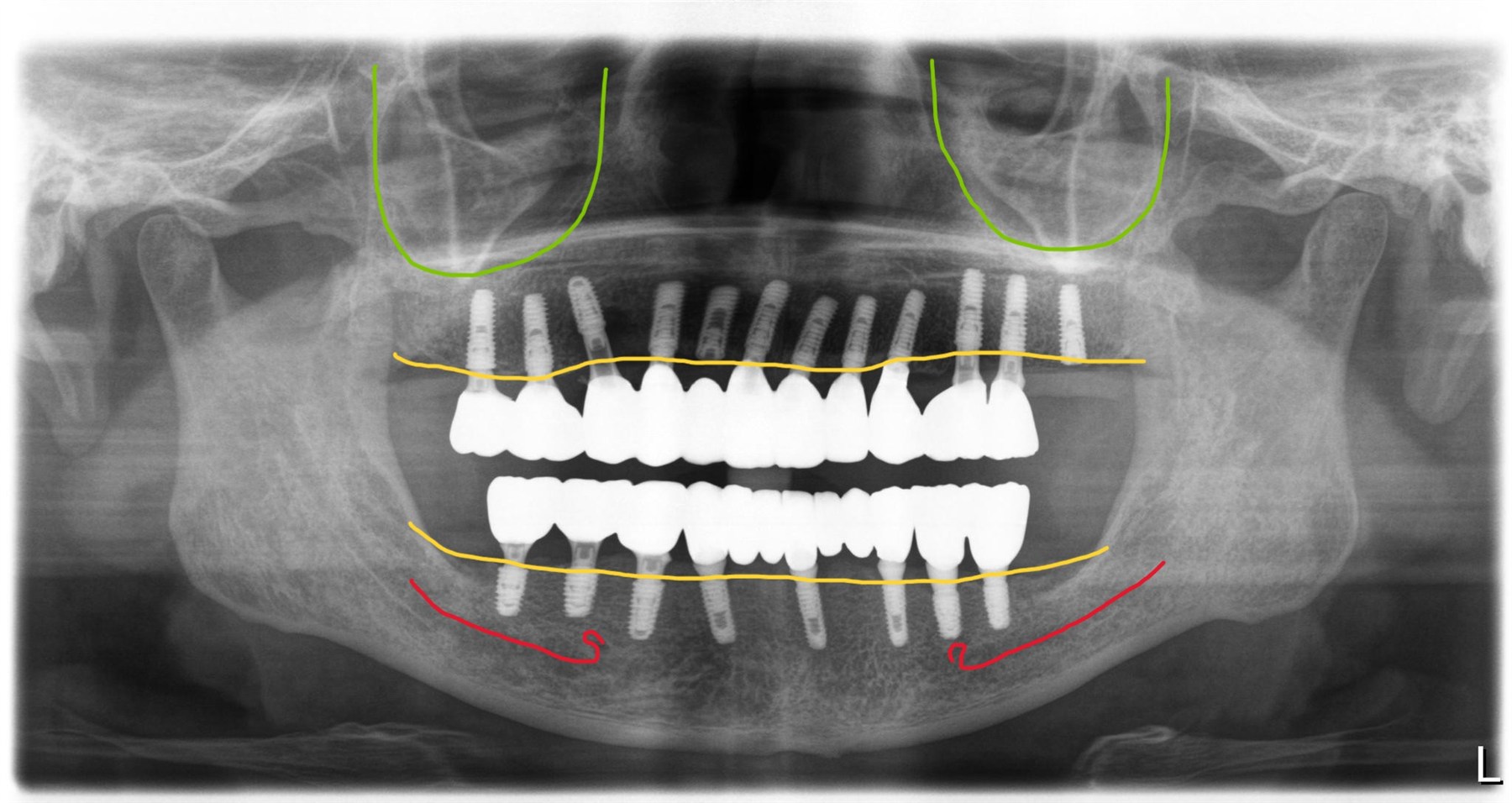
Upper posterior bone below the sinuses was sufficient for placement without additional grafting.
The lower jaw had resorbed after long-term tooth loss and denture use. In particular, limited bone height above the mandibular nerve canal needed consideration.
2. Lower Implant Positions Planned around the Nerve Canal
Rather than extending to the very back of the lower jaw, treatment reached the first-molar regions. Position and direction were planned according to remaining bone and the nerve canal.
Deciding where implants can be placed within available bone matters alongside their number. This patient received twelve upper and nine lower implants.
Lower-jaw surgery involves a risk of nerve injury and altered lip/chin sensation. We carefully assessed depth and extent to protect the nerve.
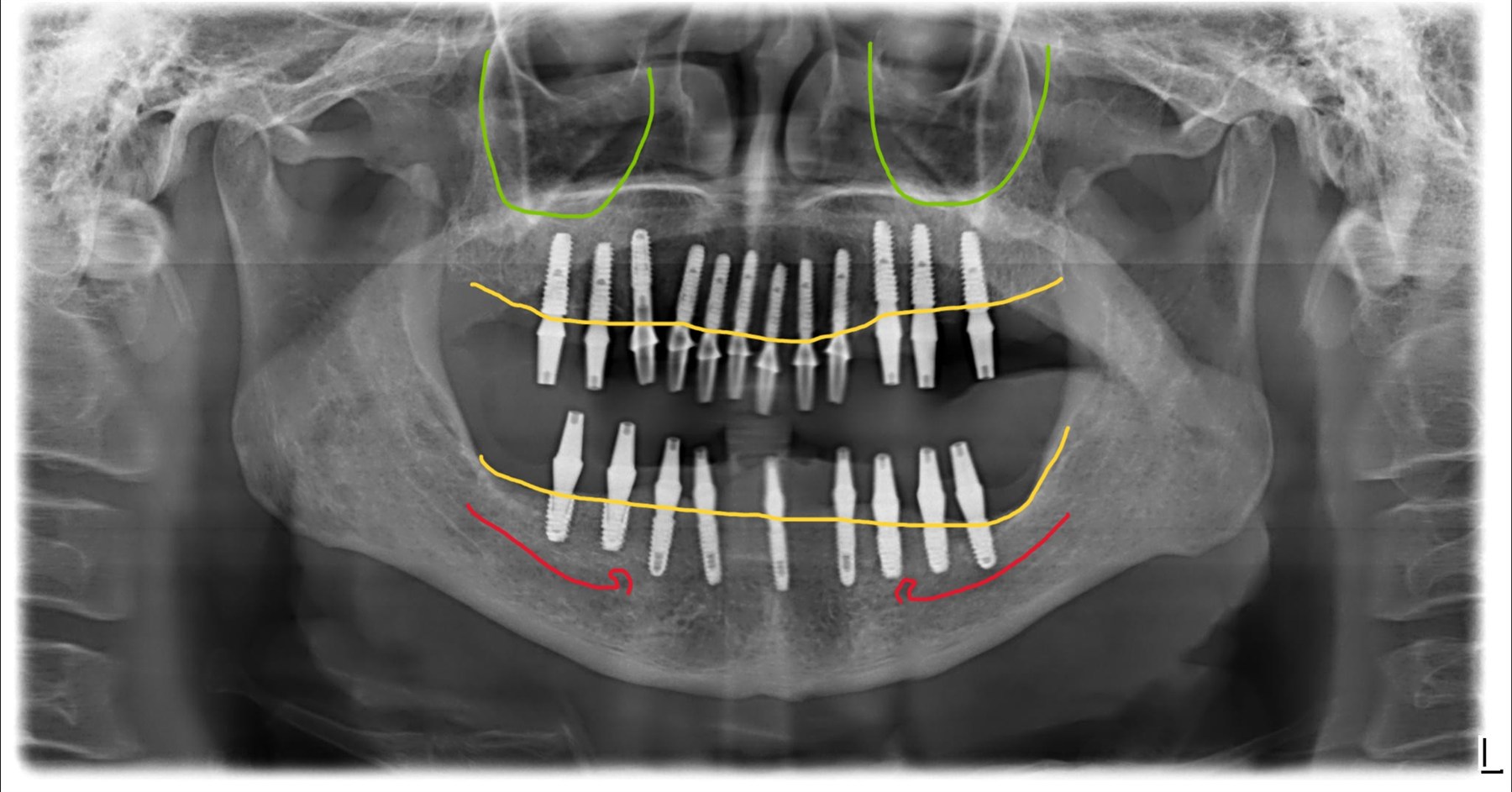
3. Fixed Temporary Teeth in Both Jaws on the Surgery Day
The remaining upper teeth were extracted and twelve upper and nine lower implants placed. Abutments were connected to all implants, with fixed temporaries in both jaws. Unlike removable dentures, these stayed fixed in the mouth.
The bone was relatively firm and initial fixation was strong. After assessing this, ordinary meals were allowed for this patient, with instructions to avoid hard or tough foods.
Same-day fixed temporaries and permitted eating depend on bone, gums, initial stability and the bite. Recovery diets must follow the treating team’s instructions.
4. Two Scans for Final Restorations after About Four Months
Final fabrication began about four months after surgery. At that time, I used custom zirconia abutments to reduce visible anterior metal. An abutment connects the implant in bone to the visible restoration.
The first scan was used to make the custom abutments. After connecting them in the mouth, a second scan recorded the information for the final restorations.
The sequence was surgery → suture removal → first scan → second scan → final fitting: five visits for initial treatment, with about four months from surgery to final restoration.
5. Retreatment after Anterior Restoration and Abutment Fracture
About two and a half years after completion, the anterior zirconia bridge fractured. Removal showed fracture of the custom zirconia abutments beneath it as well.
I considered strong biting forces a possible contributor. The six anterior abutments were replaced with custom titanium abutments, and the anterior bridge was treated again.
The patient had not requested zirconia abutments; I had chosen them to improve appearance. For that reason, no additional fee was charged for this patient’s abutment replacement and anterior retreatment.
This does not happen to every zirconia-abutment patient. Material properties, contours, connections, forces and the bite all need consideration, with plans adjusted to the course of use.
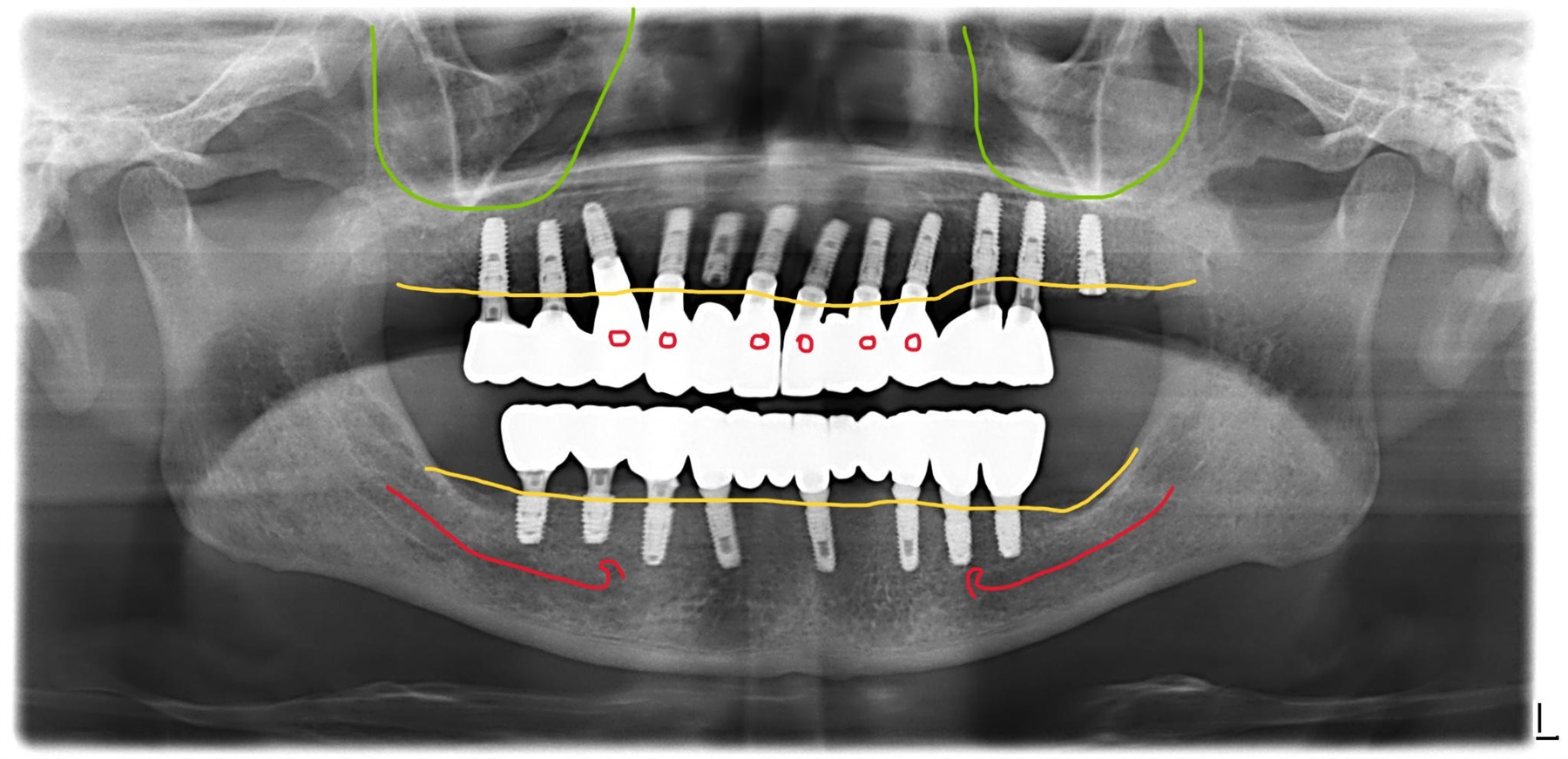
Red circles on the 2022.12.08 image mark the six anterior implant sites where custom zirconia abutments had been used.
6. Margins above the Gums for Cleaning
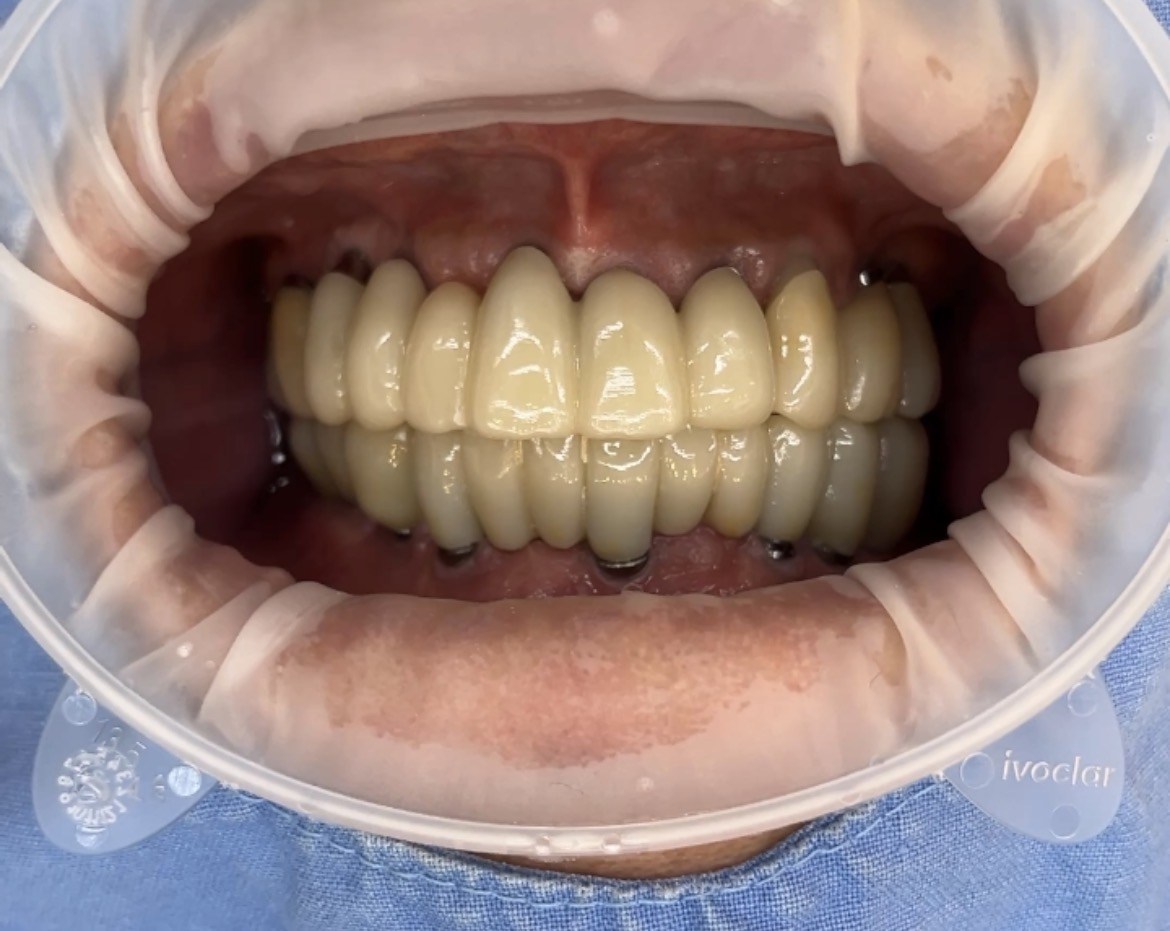
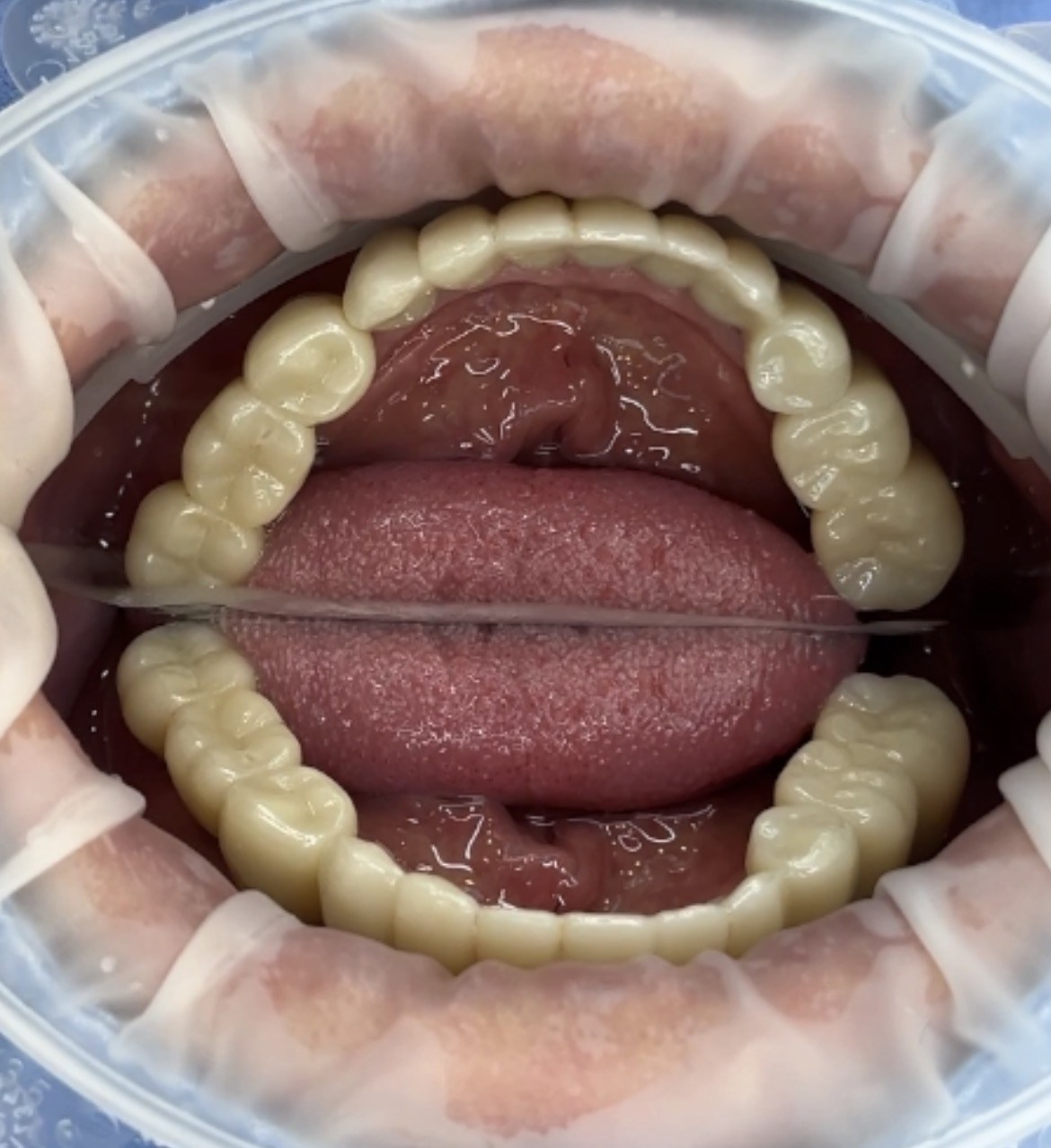
Retracted photographs show metal margins where restorations meet the gums because the restoration margins were placed above the gum line.
For patients who lost teeth to periodontal disease, hygiene after full-arch treatment is especially important. The design aimed to make margins accessible and limit plaque accumulation.
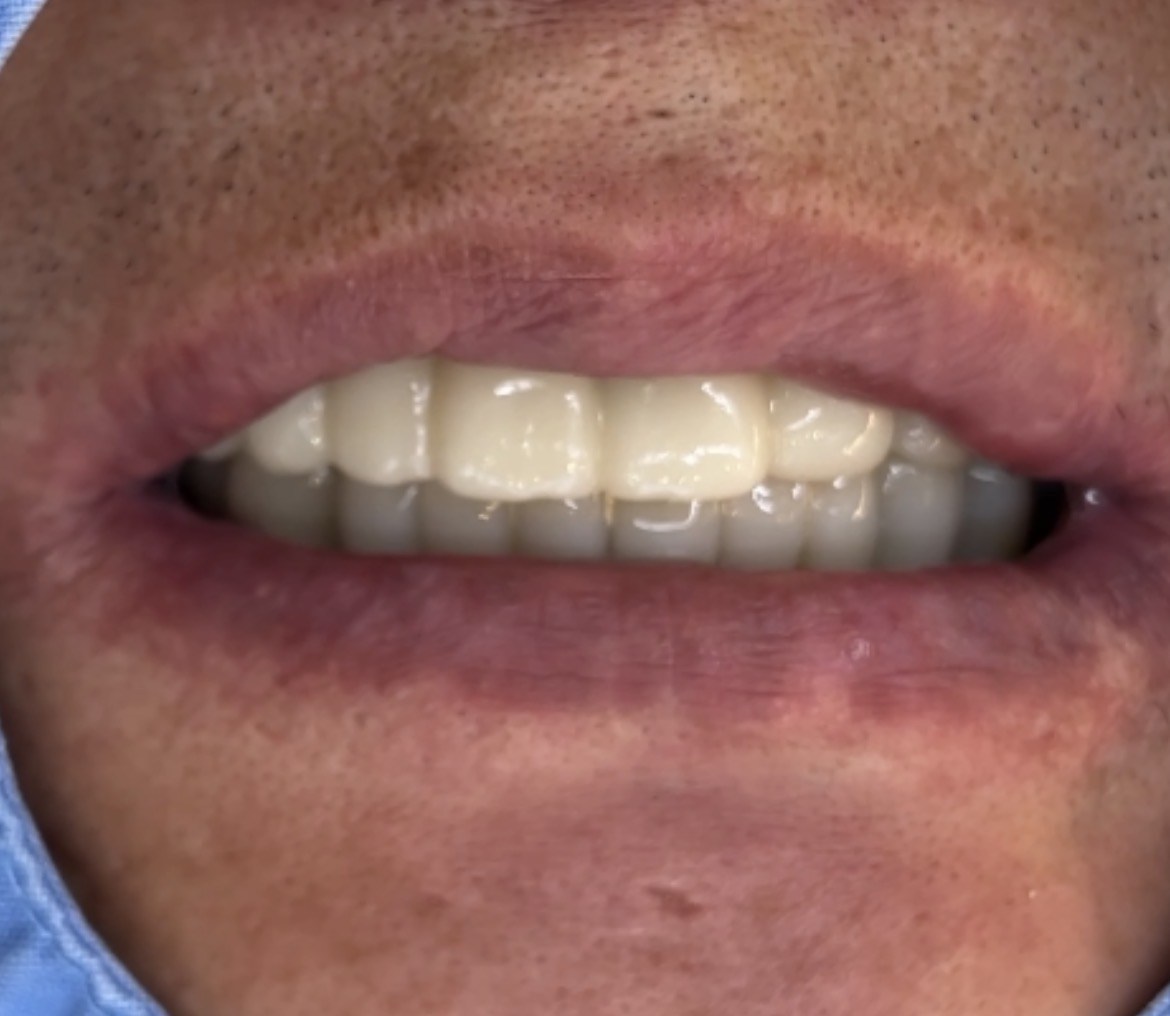
In this patient, gum margins were not exposed during smiling, so the metal lines visible in retracted views were not prominent in the smile. Compare the two views.

7. Regular Reviews Continue about Six Years Later
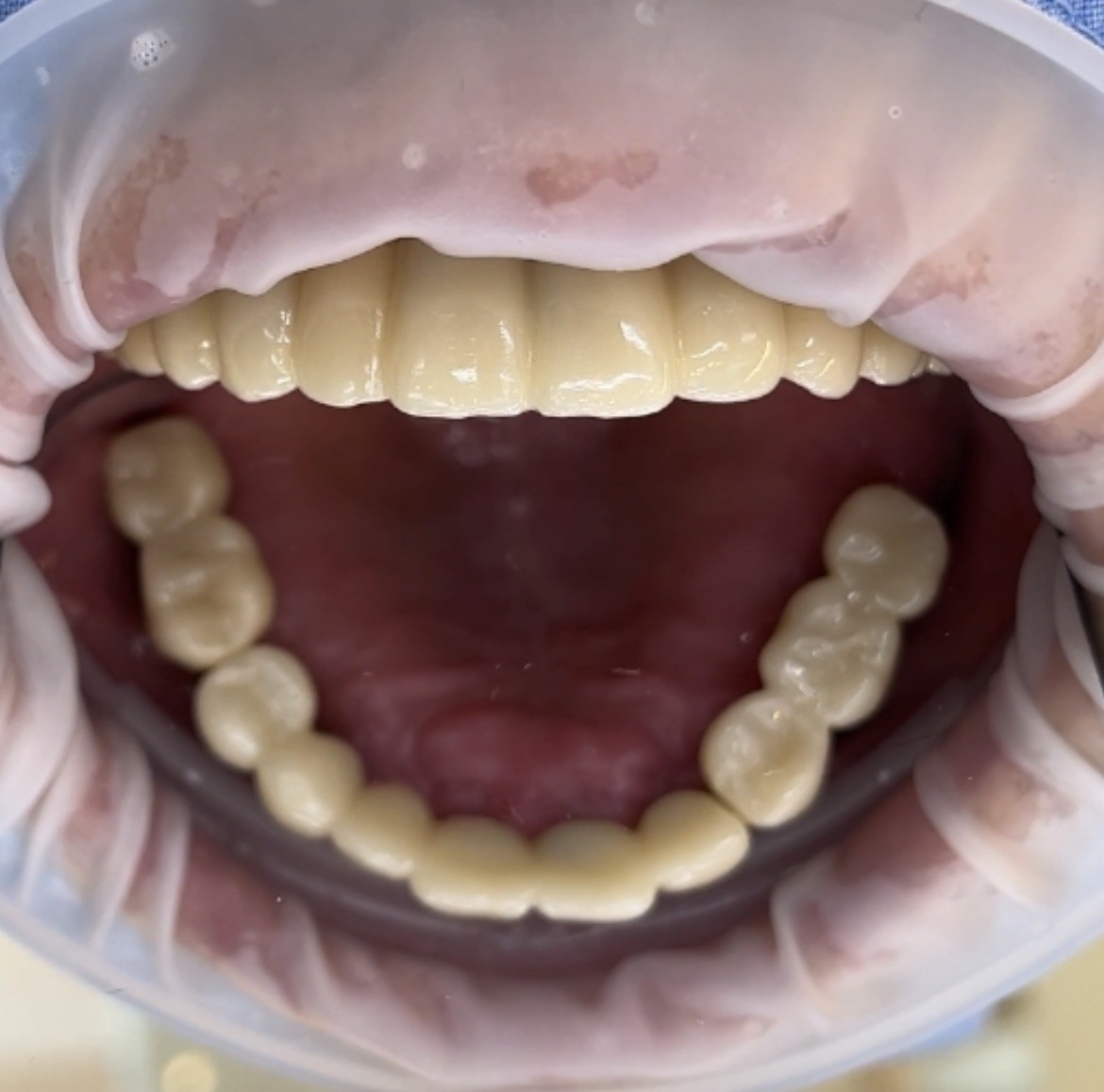
Panoramic and intraoral photographs were taken on 19 November 2026, about six years after surgery. The patient continues regular reviews and reports no particular discomfort.
Anterior restoration and abutment retreatment had occurred during that period. I see full-arch treatment as ongoing care for changes during use, beyond the day the final teeth are fitted.
Learn cleaning around implants and beneath restorations. Reviews assess bone, gums, connections and the bite. Inflammation, fracture and screw loosening can occur, so seek care before the next review for looseness, pain, bleeding or a changed bite.
8. Frequently Asked Questions
Can everyone complete full-arch treatment in five visits and four months?
Those figures describe this patient’s initial treatment. Grafting, stability, healing and fabrication affect the schedule. Later anterior retreatment and regular reviews were not included in the five visits.
Does long-term denture use always require grafting?
We assess bone position, height and width, nerves, sinuses and the restoration plan. Here, upper sinus-region bone was sufficient without grafting; lower extent was limited by bone above the nerve canal. Implant-supported removable dentures and conventional dentures are alternatives in suitable conditions.
Do all zirconia abutments fracture?
No. Here, six anterior abutments were changed to titanium after bridge and abutment fracture, considering forces and the bite. The material alone does not determine the outcome; individual conditions and follow-up matter.
9. Planning Full-arch Implant Care
If long-used dentures and mobile teeth concern you, start with remaining teeth and bone. We plan surgical extent, temporary teeth during healing, cleanability of final restorations and long-term care together.
Consultation · 1544-0208More full-arch implant casesTypes of implant restorationsGeneral treatment references · ITI: loading timing for fixed restorations in edentulous jaws · EFP: prevention of peri-implant diseases
Treatment case post #8314