
Harue Dental · Minimal-preparation veneer case
When front teeth overlap or rotate slightly, minimal-preparation veneers may improve how evenly they appear aligned. Unlike orthodontics that moves the tooth roots, this treatment adjusts the visible contours at the teeth’s existing positions. When irregularity is mild and the bite is suitable, we can consider the advantages of an approach that does not move teeth.
A frontal comparison before treatment and immediately after veneer bonding. Camera angles and lighting differ, and outcomes vary with the teeth, gums and treatment extent.
Even minimal preparation removes tooth structure irreversibly. Sensitivity, veneer fracture or detachment, or decay at the margins may make repair or replacement necessary.
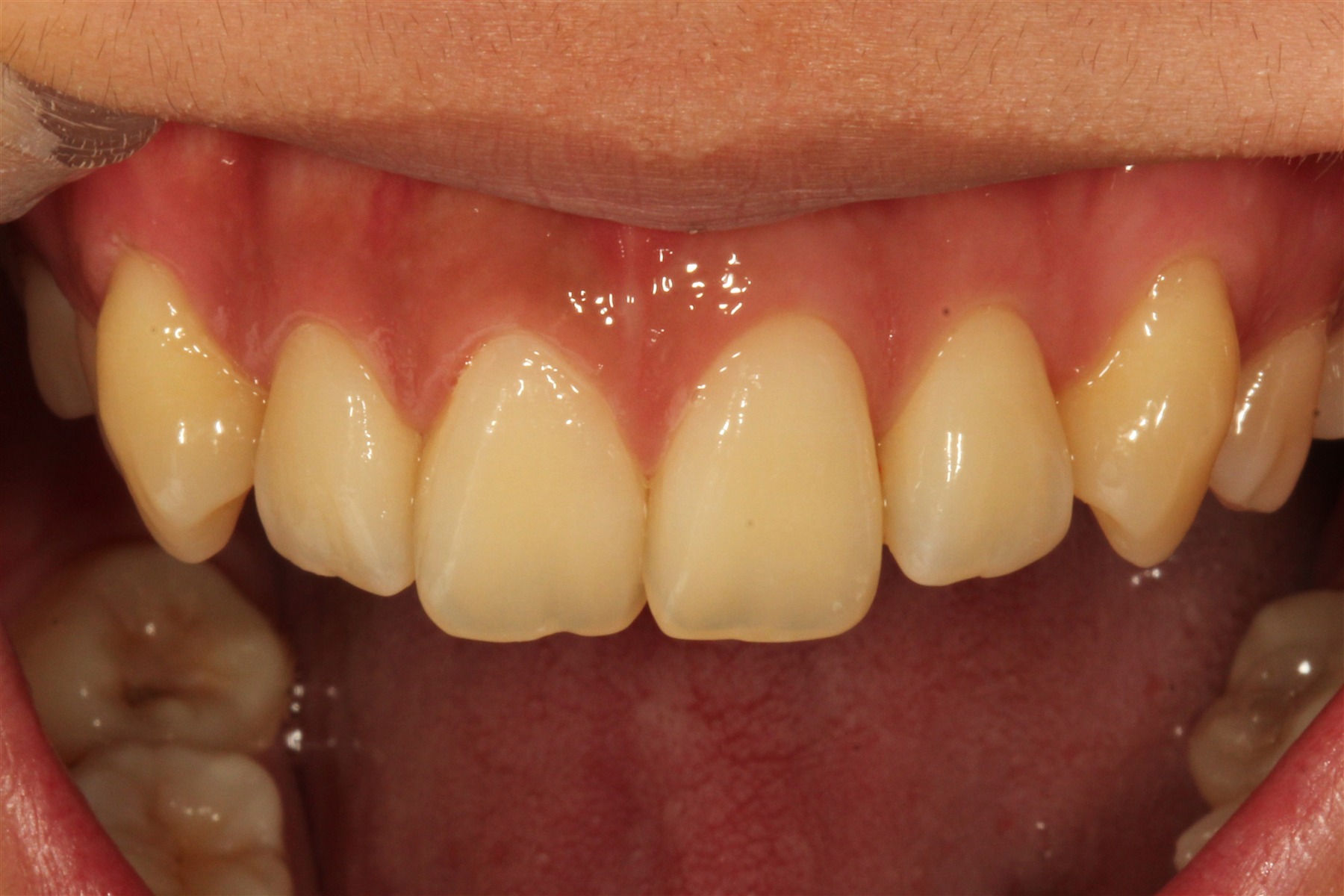
Photographed 2012.03.09
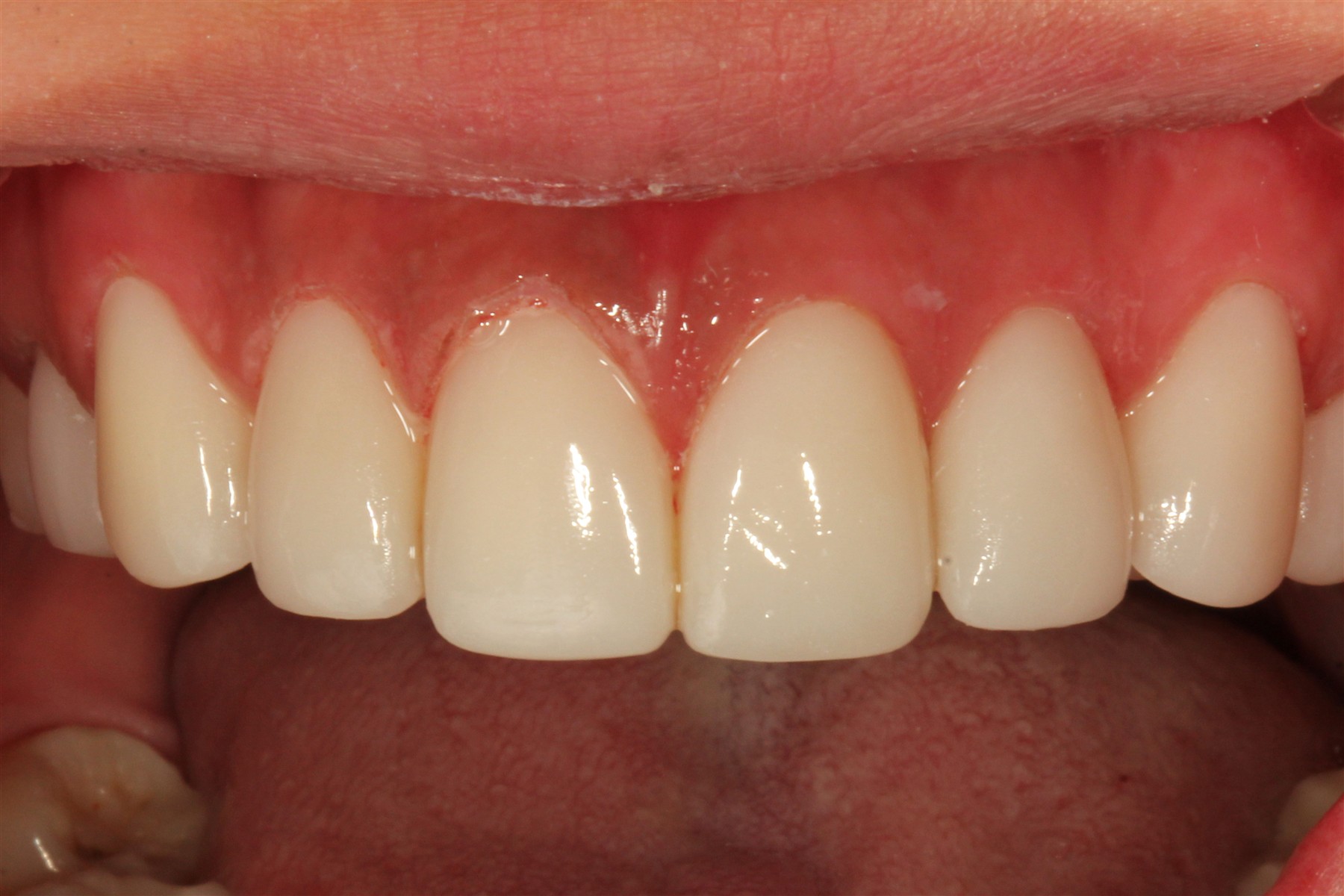
Photographed 2012.03.09
1. What needs to change when front teeth are slightly crooked?
Before-treatment photographs show the upper front teeth facing slightly different directions and overlapping. We first assess whether their positions need to change, or whether adjusting visible surfaces and contours can achieve the goal.
Orthodontics changes tooth positions, root positions and the bite. Veneers bond thin restorations to the front surfaces to adjust shape, color and the appearance of alignment. In this case, minimal-preparation veneers refined the front-tooth contours, together with gum contouring.
2. Can aligning teeth orthodontically make the front teeth appear more prominent?
Space is needed to straighten overlapping teeth. The teeth themselves do not become wider, but enough room is needed to accommodate their widths without overlap. If space is created by tilting the front teeth outward, the dental arch perimeter increases, and the front teeth may appear more prominent.
Orthodontics does not inevitably cause protrusion. Results depend on the way space is created—such as limited reshaping between teeth, molar movement or extractions—and the direction of front-tooth movement. The useful comparison is less the treatment name and more what changes are planned for these particular teeth.
3. Occlusal views make the difference easier to understand
Occlusal view after minimal preparation
Occlusal view after veneer bonding
An occlusal view looks at the teeth from above or below. It helps distinguish rotation remaining in the teeth themselves from the outer contours refined with restorations.
Because veneers are bonded while the teeth remain in their original positions, there is no need to greatly increase the arch perimeter to straighten out every overlapping tooth. With mild irregularity, this difference can allow a plan to improve visible contours without moving the front teeth forward.
Veneer thickness still changes the outer contours. We must prepare prominent areas as needed and build up recessed areas while controlling the final thickness and volume toward the lips. Simply adding material can instead make the teeth appear bulky.
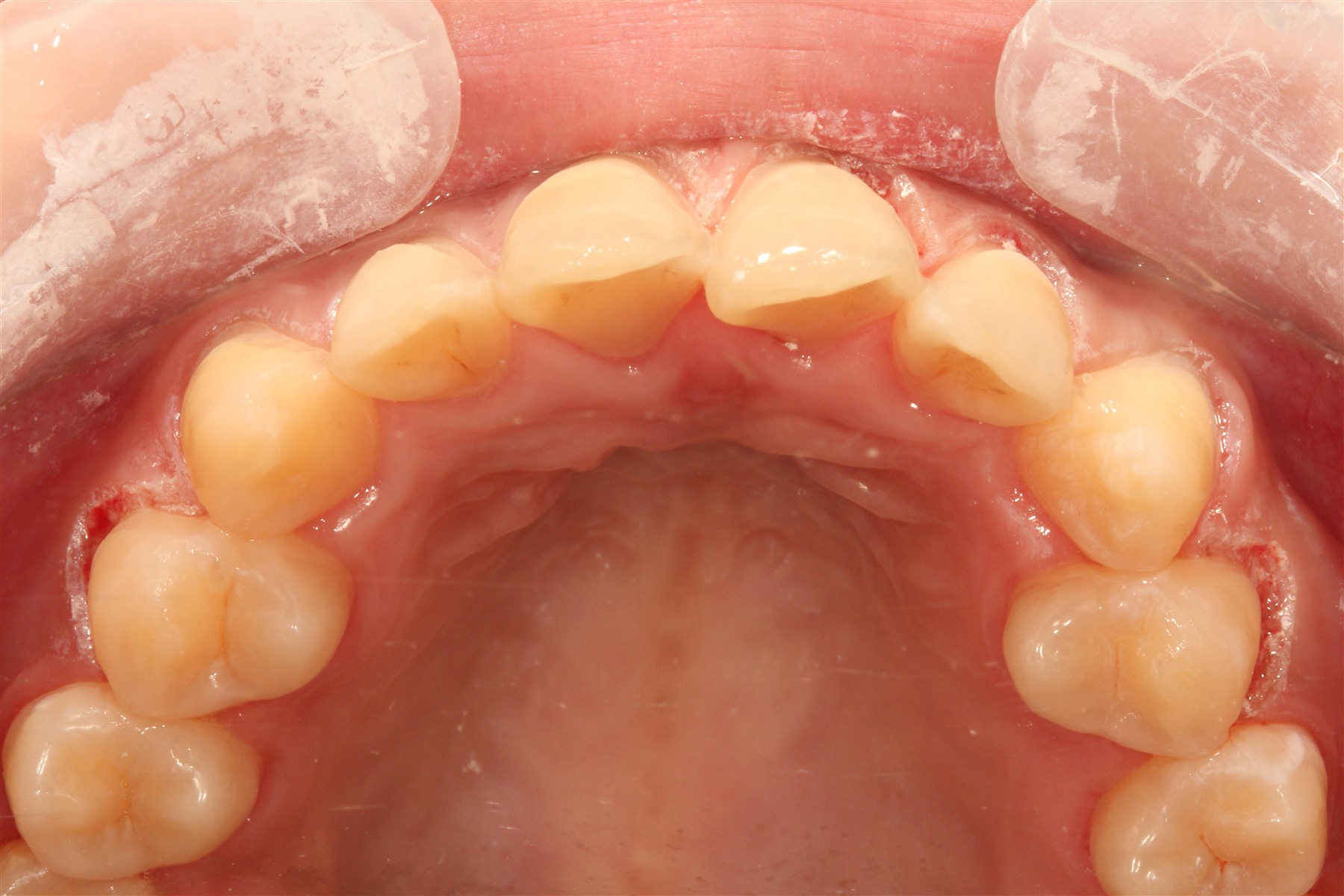
Photographed 2012.03.09
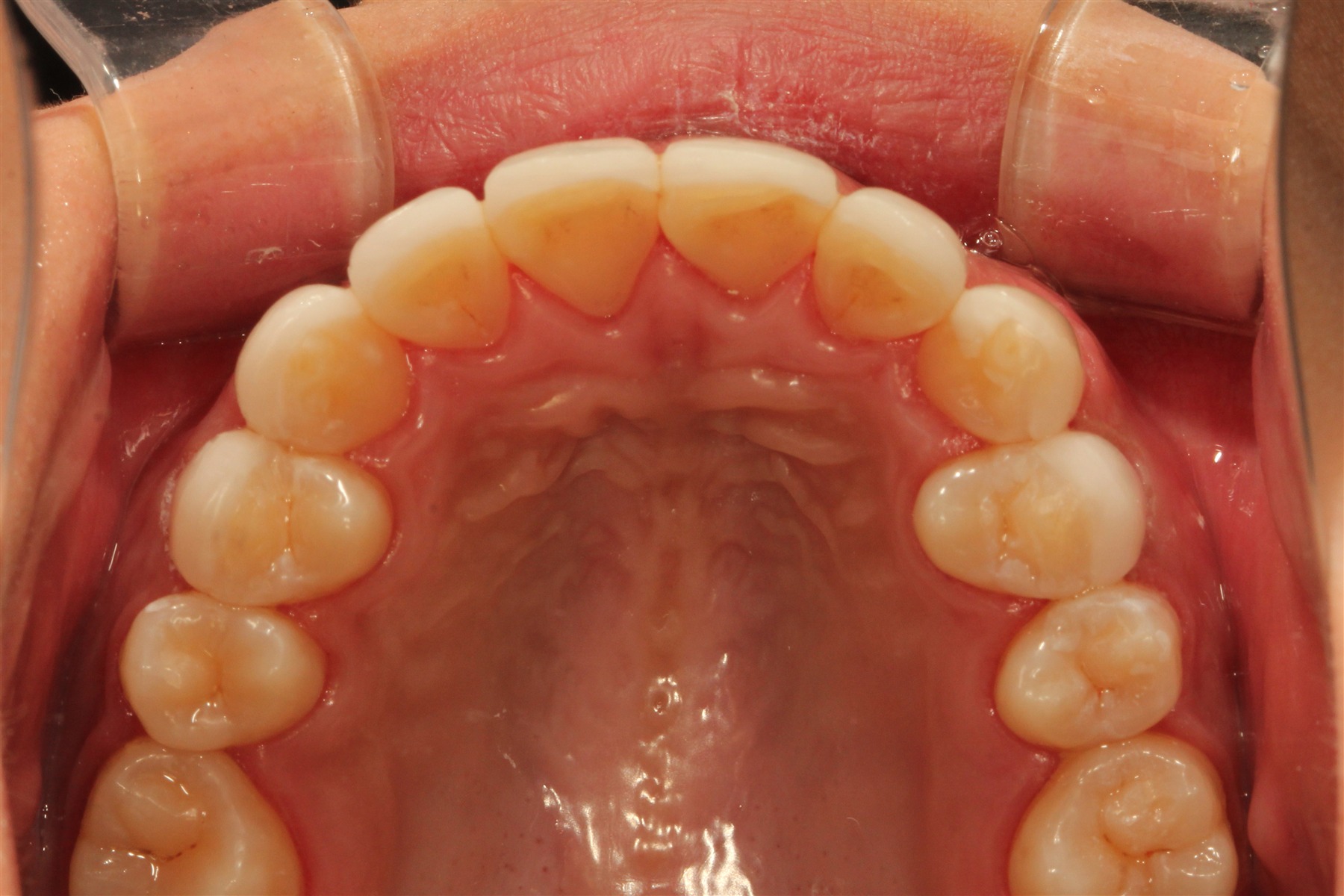
Photographed 2012.03.09
4. Stability after tooth movement also matters in adults
Teeth are not fused directly to the bone. Between the root and bone, a tissue called the periodontal ligament supports the tooth and cushions chewing forces. Orthodontics moves teeth by using changes in this tissue and the surrounding bone. Time for stabilization and care to maintain the new alignment are needed.
For mild front-tooth irregularity in adults, we consider both the benefit of changing contours and whether tooth movement is necessary, along with its later maintenance demands. If veneers alone can achieve the goal under suitable conditions, avoiding tooth movement—and the associated tissue changes and retention process—may be one reason to choose them.
After orthodontics, teeth can move again if retainers are not used as instructed. Adults should understand the long-term retention plan before treatment. However, the possibility of relapse does not mean teeth remain loose for life. Increased mobility after orthodontics has been reported to decrease over time; it is not appropriate to generalize that adult orthodontics permanently removes the firmness of the periodontal ligament.
Rather than deciding by age alone, we assess gum and bone support, existing mobility, the bite and the amount of movement required. Veneers do not treat loose teeth or periodontal disease either.
5. Frontal views of the treatment process
Preparing only the areas needed
The direction of prominence and overlap differs from tooth to tooth, so the necessary adjustment also varies. Minimal preparation aims to preserve natural tooth structure within what is needed for the final contours.
Checking front-tooth contours after bonding
Along with frontal alignment, we check occlusal thickness, margins between teeth and the bite. When gum contouring is performed, healing and the gingival margins also need checking.
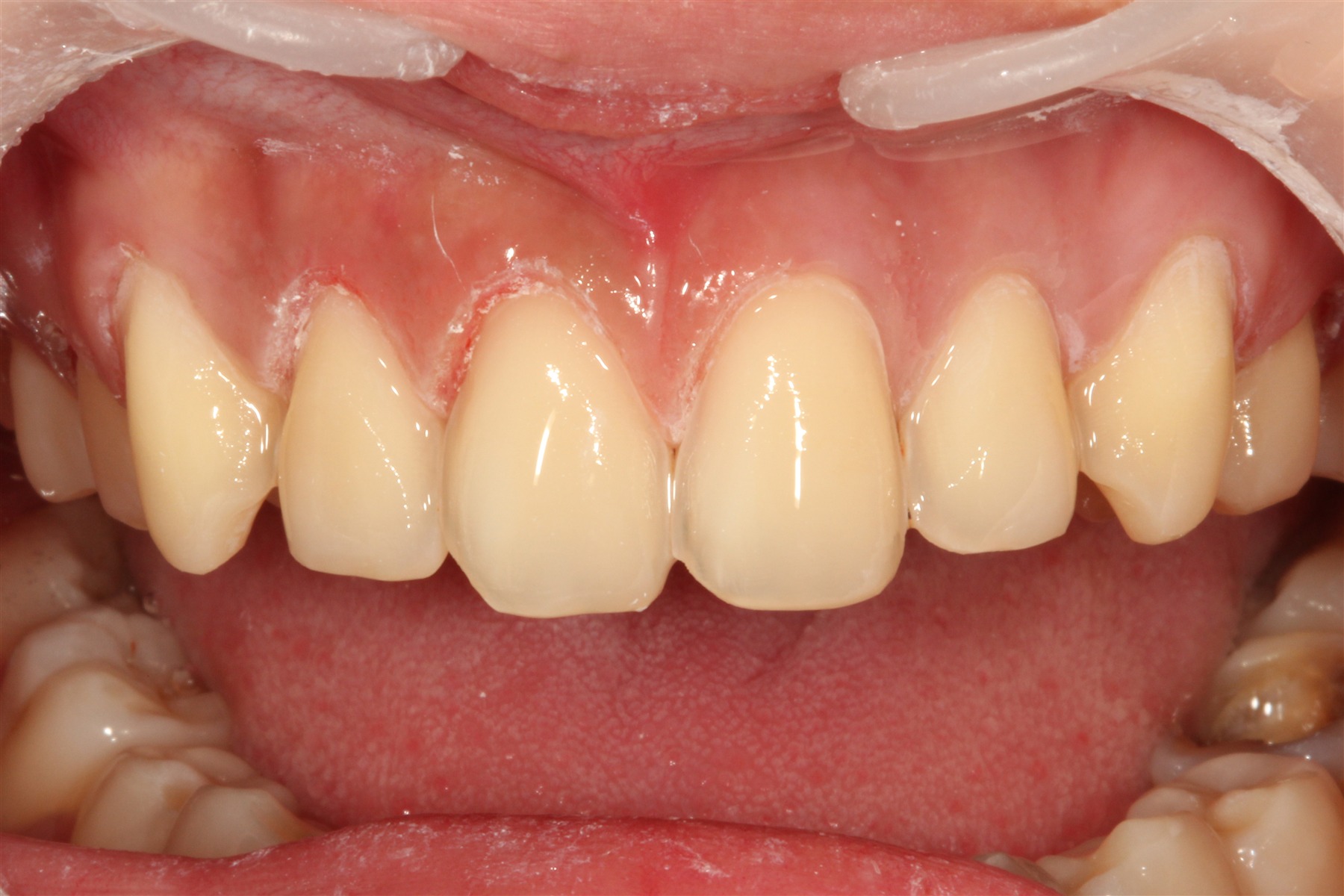
Photographed 2012.03.09
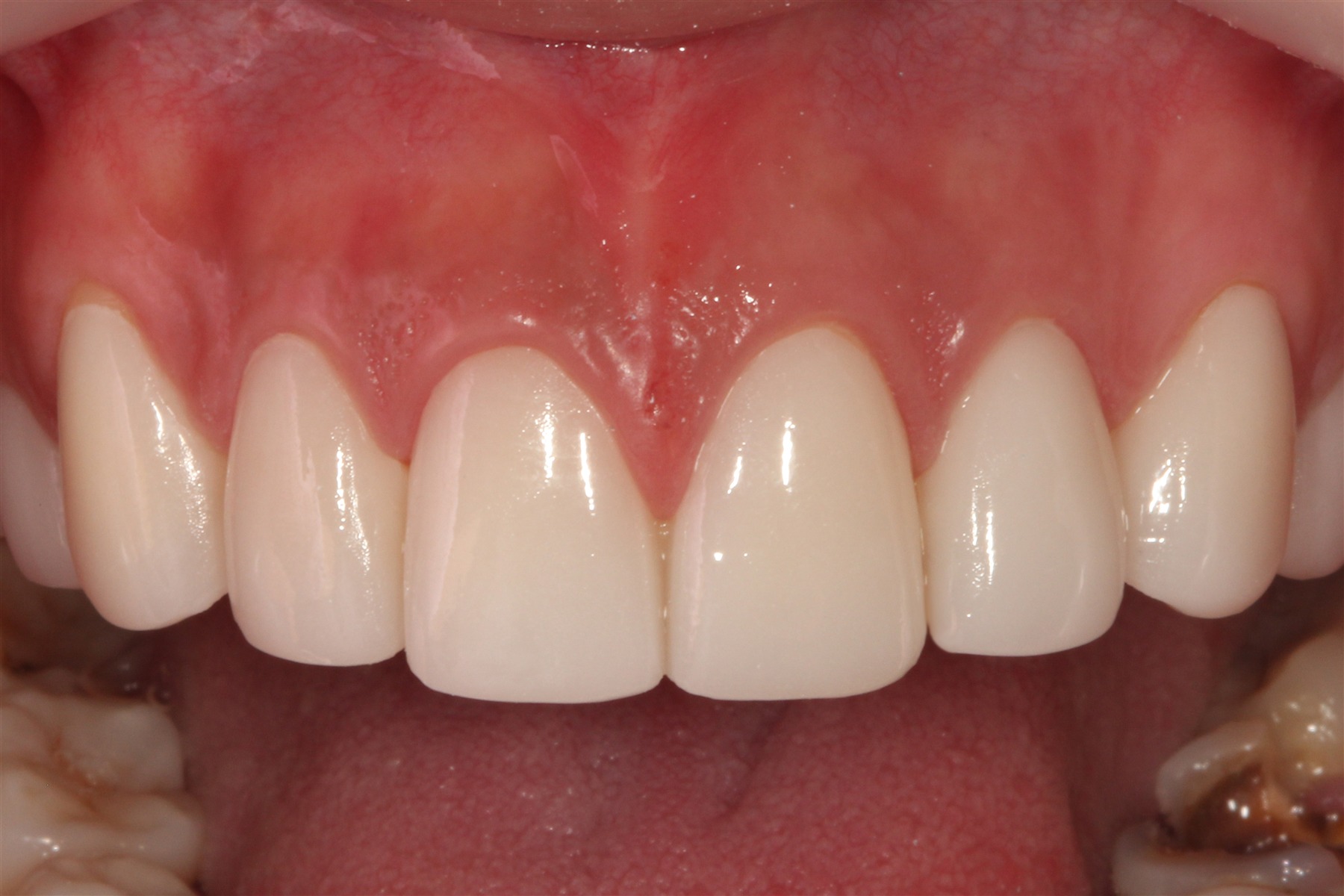
We assess front-tooth width and length, the transitions between teeth and the gumline together.
6. Conditions suitable for minimal-preparation veneers
They may be considered when overlap and rotation are mild, the desired contours can be achieved while preserving healthy tooth structure, and the bite and gums are stable. For severe crowding, marked protrusion, jaw discrepancies or problems requiring changes to roots and the bite, orthodontics may take priority. Composite restorations may also be considered for small contour differences.
After treatment, clean the margins with brushing and flossing, and avoid biting hard objects with the front teeth. If clenching or grinding is present, assess whether a protective appliance is needed. Veneers do not guarantee lifelong tooth position or longevity, so bonding and the bite require regular review.
7. Frequently asked questions
Can veneers straighten crooked teeth?
Mild irregularity may be made to look more even. Veneers work differently from orthodontics that moves roots, so we first diagnose whether positions and the bite need to change.
Will veneers make my front teeth stick out more?
It depends on restoration thickness and the existing tooth positions. We control outer volume by building up recessed areas and preparing prominent areas as needed. Avoiding tooth movement alone does not guarantee that the teeth will not look more prominent.
If I only have veneers, can I avoid wearing an orthodontic retainer?
If teeth have not been moved orthodontically, an appliance to retain that movement is generally not part of the treatment. If you have a previous orthodontic history or another need for retention, follow the prescribed retainer plan.
Does minimal preparation mean there is no tooth damage?
No. Removed tooth structure does not regenerate. Treatment decisions weigh the structure that can be retained, the adjustment needed and the possibility of future repairs or replacement.
8. Start by identifying the changes your front teeth need
The same treatment is not suitable for every mildly irregular smile. We assess whether tooth movement is necessary or contours can be adjusted at the current positions, planning tooth preservation, final contours and aftercare together.
9. References
- British Orthodontic Society: Retainers after orthodontics
- Hwang et al. Longitudinal measurement of tooth mobility after orthodontic treatment. Korean Journal of Orthodontics. 2010;40:34–39.
- Duncan et al. Changes in lower-incisor position and arch dimensions with crowding relief in non-extraction orthodontics. Angle Orthodontist. 2016.
- American Dental Association: Veneer treatment and care
Clinical photographs: before treatment, after preparation and immediately after bonding, 2012.03.09 / post-treatment check, 2013.12.24
Text and photograph editing: 2026.11.13