Dr. Hanna Lee:
A slightly different path
From treating teeth to designing and making restorations myself
A journey from clinical practice in 1994 through wax-ups, ceramics and digital dental fabrication

01. Why did I begin making restorations myself?
I did not originally set out to do dental laboratory work. I wanted to express the tooth shapes I envisioned more precisely and improve how I made teeth for patients. That led me from wax-ups to veneers, digital fabrication and implant restorations.
Dentists diagnose and plan treatment; technicians fabricate restorations to that plan. Within this collaboration, I wanted to communicate shape and proportion more clearly. Designing and making restorations myself grew out of challenges I encountered in daily practice.
This is not a story about taking pride in doing everything myself. I want to share the questions that led me to wax, then ceramics and digital fabrication.
02. My first steps as a dentist — 1994–1995
I graduated from Pusan National University School of Dentistry in 1994. After a year as an associate dentist in Ulsan, I moved to Seoul and opened Lee Hanna Dental Clinic in January 1995, when the television drama Sandglass was airing.
In Ulsan, I watched a dentist across the street do remarkably precise laboratory work himself. I no longer remember his name, but this was before today’s digital equipment, and I was impressed.
I did not immediately decide to follow his example; I knew how much time and effort laboratory work required. For several years after opening, I provided general root canal and restorative treatment.
03. Exploring implants and new approaches — 1998–2000
I began implant treatment in 1998. I studied implants over several years and received substantial guidance from Professor Choi Yong-chang in the Implantology Department at The Catholic University of Korea’s graduate dental school.
In 2000, I began immediate-loading full-arch implant treatment. Immediate loading means using a restoration connected relatively soon after implant placement. Suitability depends on factors including initial stability and the condition of the jawbone.
In 2003, I provided free implant treatment for older adults living alone.
My practice developed along two paths: implants and aesthetic dentistry. While learning each technique, the same principle remained—planning care around the patient’s condition.
04. Picking up wax to create the teeth I envisioned — 2002
Aesthetic dentistry was not a predetermined career choice either. A graduate-school lecture sparked my interest, and I began practicing it in earnest in 2002.
The results did not always match what I imagined. I talked extensively with technicians and described the desired shapes in laboratory prescriptions, but words alone could not convey everything.
Frustrated, I made the desired shapes in wax and sent them with the request, “Please make them in this shape.” I wanted to express the length, width, proportions and curves first.
From 2002, I began doing each wax-up myself. The laboratory turned those forms into restorations, helping me develop my approach to tooth design.
05. Preserving natural teeth before pursuing beauty
Through wax-ups, I noticed forms that harmonized with facial proportions. I also came to believe that preserving tooth tissue while creating natural shapes required planning the finished form first.
I made an index guide from the wax-up to assess the preparation needed. Rather than reducing every surface uniformly, I checked where space was needed for the restoration.
This took time, but I did not perform aesthetic treatment without a wax-up then. I planned preparation with the wax-up and index and sent the model with the impressions to communicate the desired result.
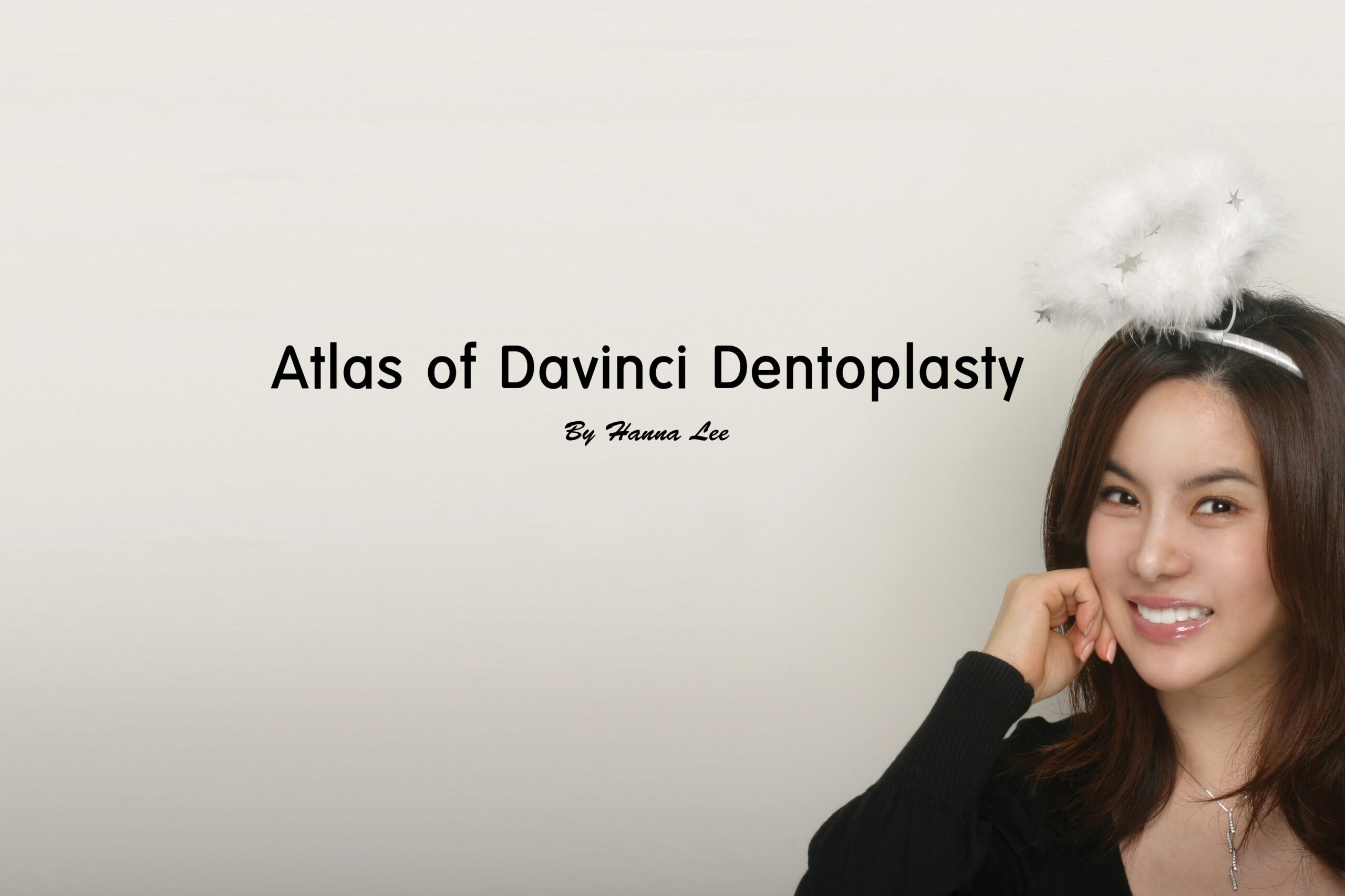
I collected these ideas and work in Atlas of Davinci Dentoplasty, published in 2006. I wanted beauty and preservation of tooth tissue to remain connected.
As my aesthetic treatment and design work became known, I also encountered difficulties. Some people criticized dentists practicing aesthetic dentistry at the time. Although I applied what I had learned in graduate school, the experience was not always easy.
Removed tooth tissue cannot be restored to its original state. No-preparation or minimal-preparation treatment depends on tooth position and color, remaining tissue, occlusion and the space needed for a restoration.
06. Beginning ceramic fabrication myself — 2005
At one point, restorations from the laboratory began differing from my wax forms. I learned that the technician who had worked with me for years had left.
I tracked down technician Shin Jae-wook and established an in-house laboratory so we could work together. When he later left for a time, technician Yoon Sang-hee took over.
In 2005, I sent Yoon for overseas training with ceramic material company Ivoclar. Fabrication fell about a week behind during that period, and I finally began making ceramics myself.
Years of wax-ups and the hands-on laboratory training I had received at school helped me take part in finishing. This brought me into the process all the way from planned form to completed restoration.
Laboratory work is demanding, but those who have done it may understand its absorbing concentration. I sometimes became so focused that the work brought a sense of calm.
07. Meeting aesthetic dentists and technicians overseas
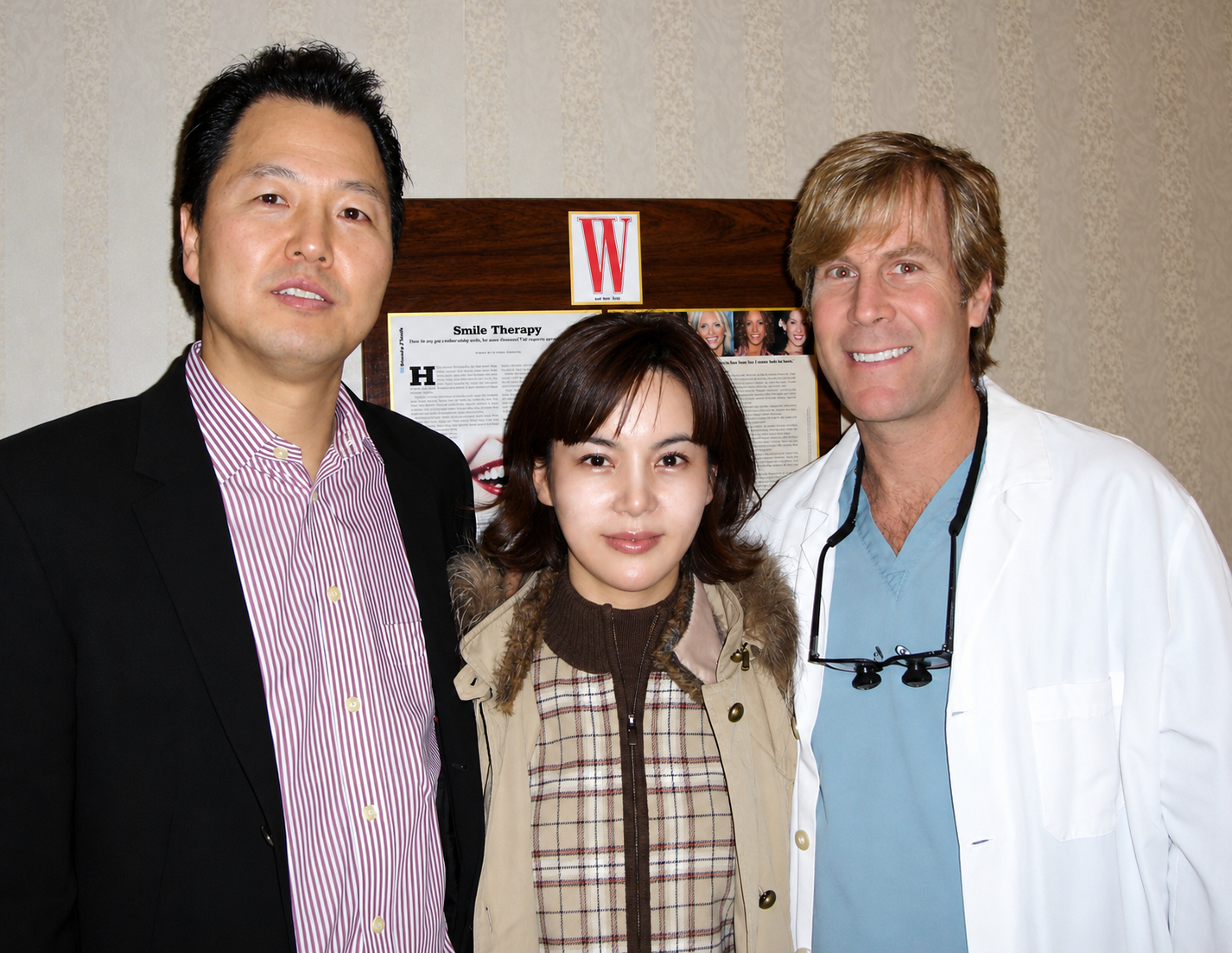
In New York in 2005, I met aesthetic dentist Gregg Lituchy and technician Jason Kim. Their approach led me to reconsider the harmony between tooth form and the face.
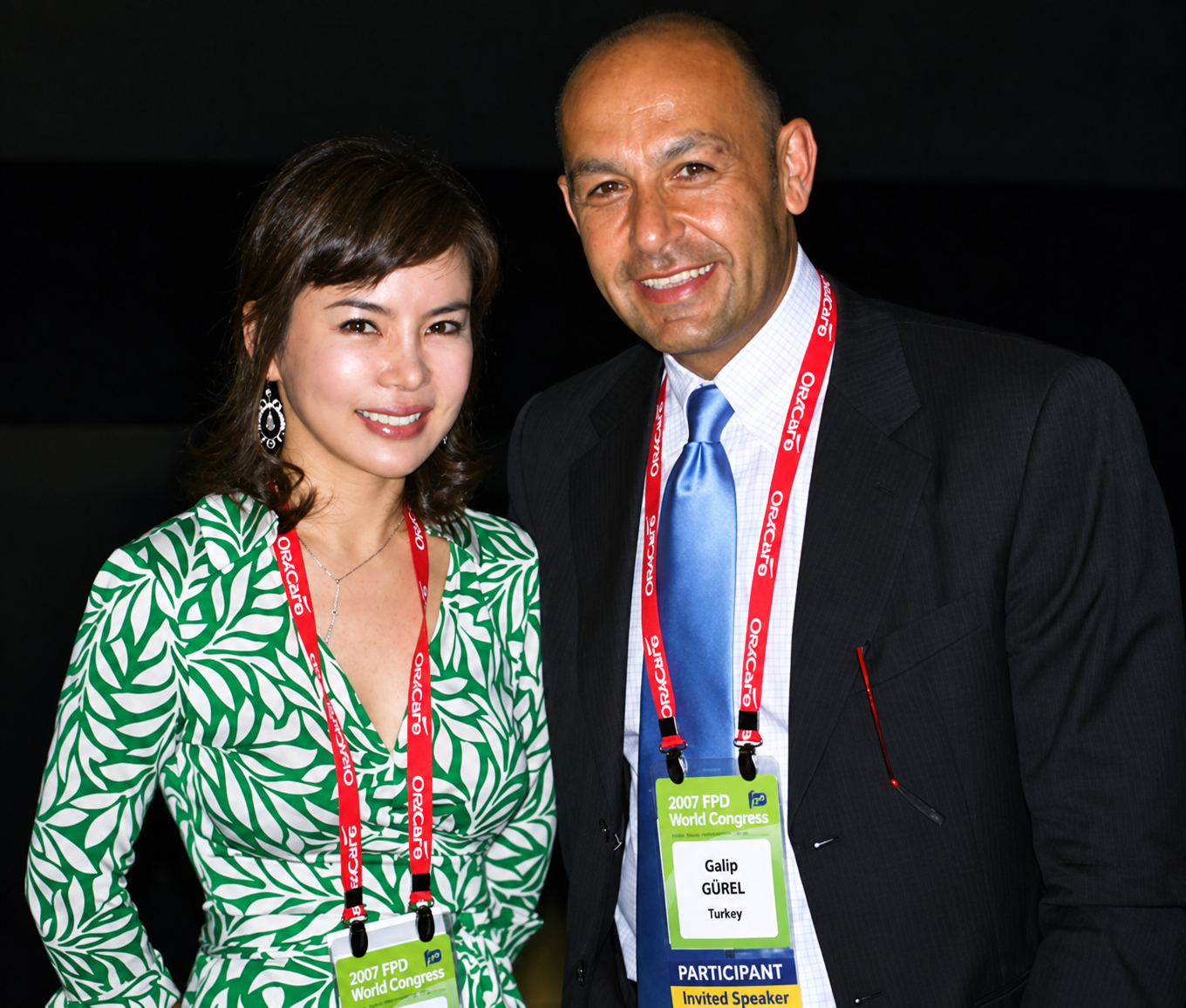
On Jason Kim’s recommendation, I read Dr. Galip Gürel’s The Science and Art of Porcelain Laminate Veneers. It broadened my understanding of veneers and inspired my philosophy of pursuing natural beauty alongside preservation.
I attended Dr. Gürel’s lecture during his visit to Korea in 2007 and was grateful that he shared his experience. Looking back, questions arising from making restorations by hand connected with the ideas I encountered overseas.
08. Dentist by day, ceramist by night
After Yoon left, Shin returned to work with us. In early 2007, he also left to open his own laboratory.
I then took responsibility for the final wax work and finishing. With many aesthetic patients at the time, I treated patients during the day and worked in the laboratory at night. It was exhausting.
Designing tooth forms and processing materials into completed restorations were connected. Alongside diagnosis and treatment as a dentist, I was also doing the work of a ceramic artist.
I use “ceramidentist,” combining “ceramist” and “dentist,” to describe this connection between design and fabrication in my work.
09. From analog to digital — introducing CEREC in 2007
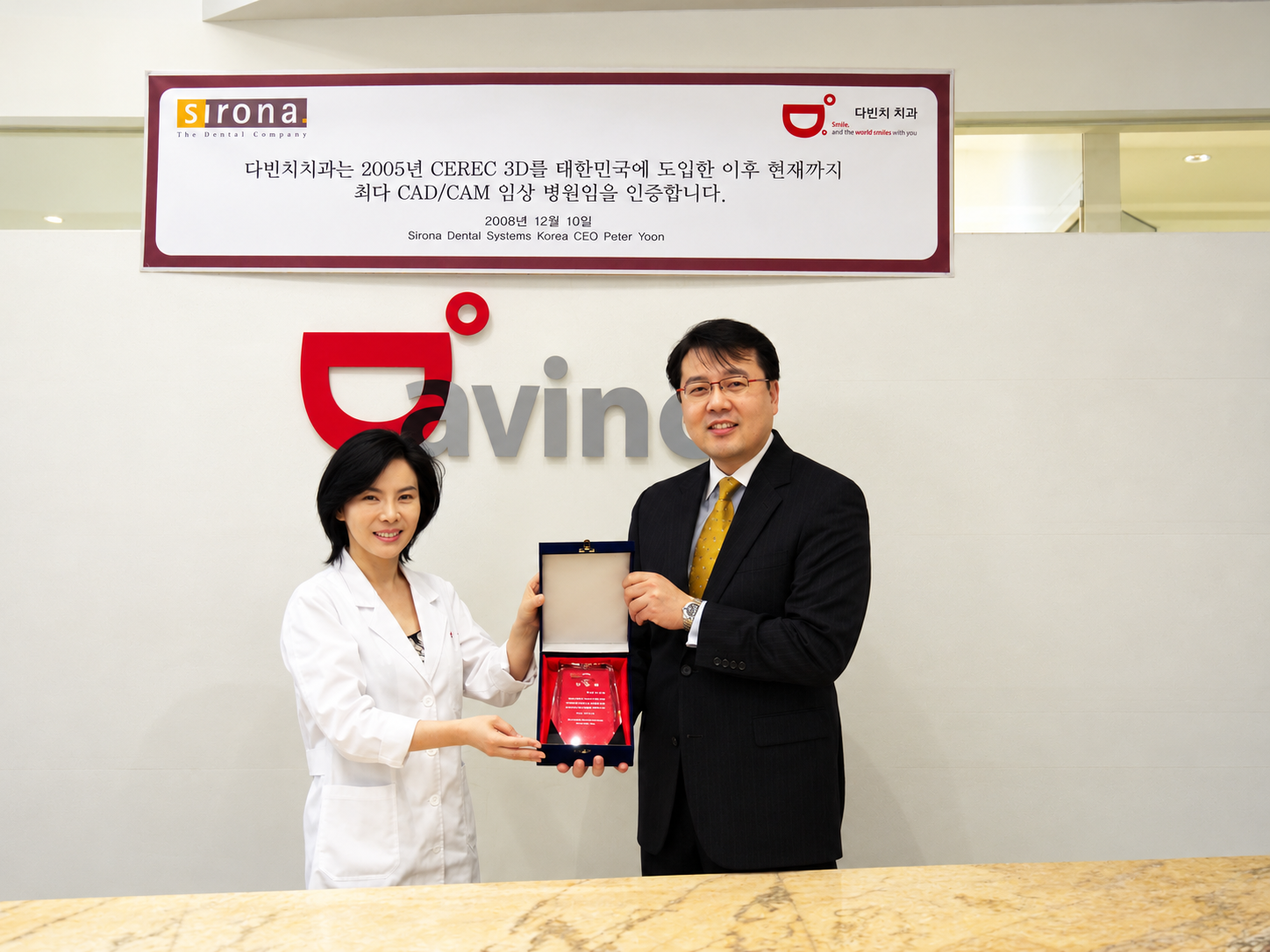
In October 2007, I heard that CEREC could mill ceramics. Hoping to reduce nighttime laboratory work, I invested hundreds of millions of Korean won to install the system.
A major investment did not make the process easy. The equipment and software were different from today’s, and I needed to learn a new workflow to achieve the forms I wanted.
I stayed late, repeating design and milling to learn the system. For several months, I often worked through the night. Sometimes I slept in a dental chair, surprising the staff when they arrived in the morning.
At a recent CEREC dentists’ meeting, someone called me an “archaeopteryx”—a playful reminder of how long I had been working with the equipment.
My hands-on experience with wax and ceramics carried into planning forms on a screen. It was another tool for expressing the designs I had made by hand.

10. A system for direct design and same-day fabrication
I began making veneers and restorations with CEREC. The earlier wax-up and index approach to form and preparation expanded to include computer design and milling.
I developed my CEREC workflow to assess the necessary space and reduce preparation where possible. Equipment alone does not reduce preparation or make every case alike. Remaining tooth tissue and restorative space must come first.
Checking design and fabrication directly helped me see how my intended forms were realized. I tried to assess and adjust them to each patient’s teeth, face and smile.
Severe gum inflammation or inflammation around a tooth root may require treatment beforehand. Apart from such situations, completion on the same day is possible in most cases. Preliminary care for the patient’s other oral problems, rather than fabrication technology itself, can make same-day completion difficult.
11. Expanding into implant restorations — around 2018
From summer 2018, I became more involved in implant restoration fabrication. The reason was partly practical: fewer patients from China reduced revenue, and with little ability to shrink the clinic suddenly, I adjusted implant fees that had remained unchanged for years.
We also advertised in the subway then. Implant treatment and laboratory work subsequently increased, and I encountered more patients with severe oral conditions.
As production grew, we added equipment and considered how to use it. Suggestions for more efficient operation were difficult to put into practice immediately, so I decided to try myself. I wanted patients to receive their restorations as soon as possible.
I had already been doing the design, but began staying at night to mill implant abutments and zirconia myself. An abutment connects the implant and the restoration.
This helped create an integrated laboratory system. In 2020, I developed semi-custom abutments for full-arch implant provisional teeth. In 2024, we added precision equipment while preparing screw-retained implant restorations without cement, and continued updating our scanners.
Looking back, my impatience partly drove equipment investment. More than anything, I wanted to check the necessary steps in making restorations for patients myself.
12. My philosophy of tooth design
When considering tooth form, I look beyond length and width to facial proportions, the smile, translucency, color, symmetry, function and occlusion. One shape cannot suit everyone.
Treatment plans need to differ according to general health, oral anatomy, occlusion, facial proportions and habits. Enamel thickness, tooth form and eating habits also vary.
I consider preserving remaining tooth tissue alongside restorative form, function and the bite. I listen to patients’ wishes and discuss what is feasible and what is difficult under their particular conditions.
In the care I pursue, patients participate actively. We seek both functional stability and aesthetic satisfaction, while recognizing individual differences in methods and outcomes.
13. Continuing research and change
I believe technological advances should lead to greater consideration for patients. I therefore continue studying digital treatments, restorative materials and aesthetic design systems.
Work that once involved hand wax-ups and ceramic finishing now includes oral scanning, digital design, milling and verification. Deciding how equipment fits a treatment plan is as important as owning it.
In 2026, I began metal milling after years of preparation and study. I am pleased to apply it to various implant restorations to build stronger structures, trying different ways to address the limitations of each laboratory material.
These methods are considerably more complex and require additional materials and expense. I do this because I hope the restorations I provide can serve patients even a little longer.
14. The path I will keep following
Wax-ups, nighttime ceramics and learning new programs all grew from trying to solve problems in practice. It was not easy, but those years remain part of my care and design today.
Whenever planning treatment, I ask, “What if I were receiving treatment in this condition and situation?” That helps me feel at ease with the plan. My continued study and development have been efforts to find somewhat better care within the circumstances I faced. Dentists have different information, facilities, equipment and experience.
Even dentists sometimes see another dentist’s method differently. Shared foundations do not eliminate differences in experience and preference. I hope to remain a dentist who first considers the patient, keeps learning to understand better and personally checks the steps that need attention.
Thank you for reading my story.
Dr. Hanna Lee’s official profile →Harue’s technology →