
Lower front-tooth implant treatment and the decisions behind the plan
Photographed: September 30, 2026
CASE SUMMARY · Lower front-tooth implants
Case at a glance
83-year-old woman
Loose, painful lower front restorations
Previous implant removal because of peri-implantitis
Five teeth extracted · Four implants placed
Fixed PMMA temporary teeth connected on the day of surgery
Stability, surgical burden and maintenance considered
Final restoration after approximately three months
Zirconia with a titanium support framework
Initial review plan at three-month intervals
The teeth connected that day were temporary teeth, not the final restoration. This case treated a segment including the lower front teeth; it was not a full lower-arch implant treatment.
Treatment and clinical content review of the Korean source: DR. Hanna Lee
DR. Hanna Lee, Harue Dental Clinic · Lower front-tooth implant case
“My lower front dental work is very loose and painful.”
An 83-year-old woman came to us with this concern. Four implants were placed in a segment including the lower front teeth, fixed temporary teeth were connected that day, and the final restoration was fitted approximately three months later.
The decision I spent the most time considering was not the number of implants, but what to do with one relatively healthy remaining premolar. I had to weigh the value of preserving a tooth against the treatment burden and the patient's life afterward.
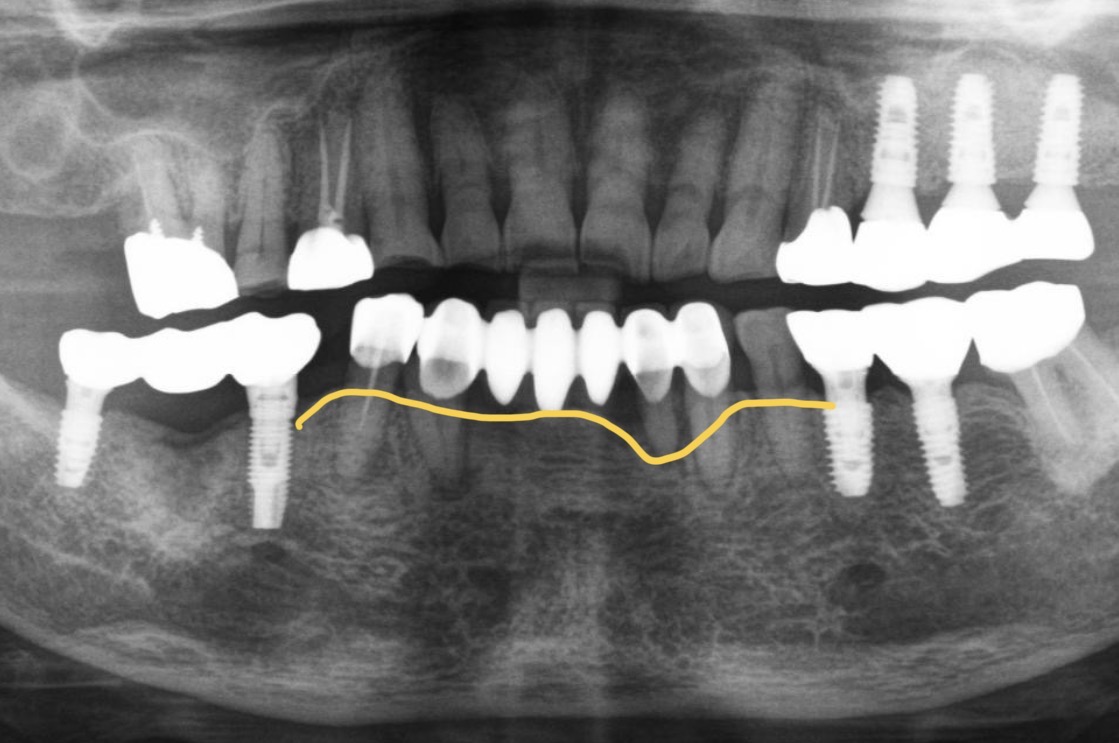
Photographed: May 11, 2026
01. Treating loose front teeth while considering life afterward
Examination revealed substantial supporting bone loss around some teeth, as well as severe decay and root-tip inflammation. After considering whether four compromised teeth could be preserved, extraction was judged appropriate.
The patient had previously had implants placed elsewhere removed because of peri-implantitis. Alongside restoring the teeth, I therefore placed particular importance on how she would clean and use the restoration afterward.
How long would treatment take, and how uncomfortable would a temporary denture be?
Would surgery become excessively complicated?
Would the finished restoration be easy to clean and review?
How could the burden of future treatment be reduced?
I wanted a plan that addressed her current looseness and pain while keeping the treatment process and subsequent daily care manageable for her.
02. Whether to preserve the relatively healthy tooth 34
The hardest decision concerned the adjacent premolar, tooth 34 (FDI notation). Because it was relatively healthy, I first considered ways to retain it.
Preserving tooth 34 while placing implants on the day of extraction would constrain the implant positions and restoration design I had planned. I considered adjusting positions through bone grafting and other measures, but questioned whether the added uncertainty and surgical burden were appropriate for this patient.
The choice could have been different if surgery were delayed until the extraction sites healed sufficiently. However, the alternative plan I anticipated involved approximately six months with a temporary denture. This was an estimate for this patient's alternative plan, not a period required for everyone.
Cost was also compared because it was an important burden for the patient. In her overall plan, preserving tooth 34 and extracting it had similar costs. I therefore focused more on waiting time, temporary-denture discomfort, surgical complexity and future maintenance than on price differences.
The benefit of preserving one tooth had to be weighed against the treatment burden that choice would create for her.
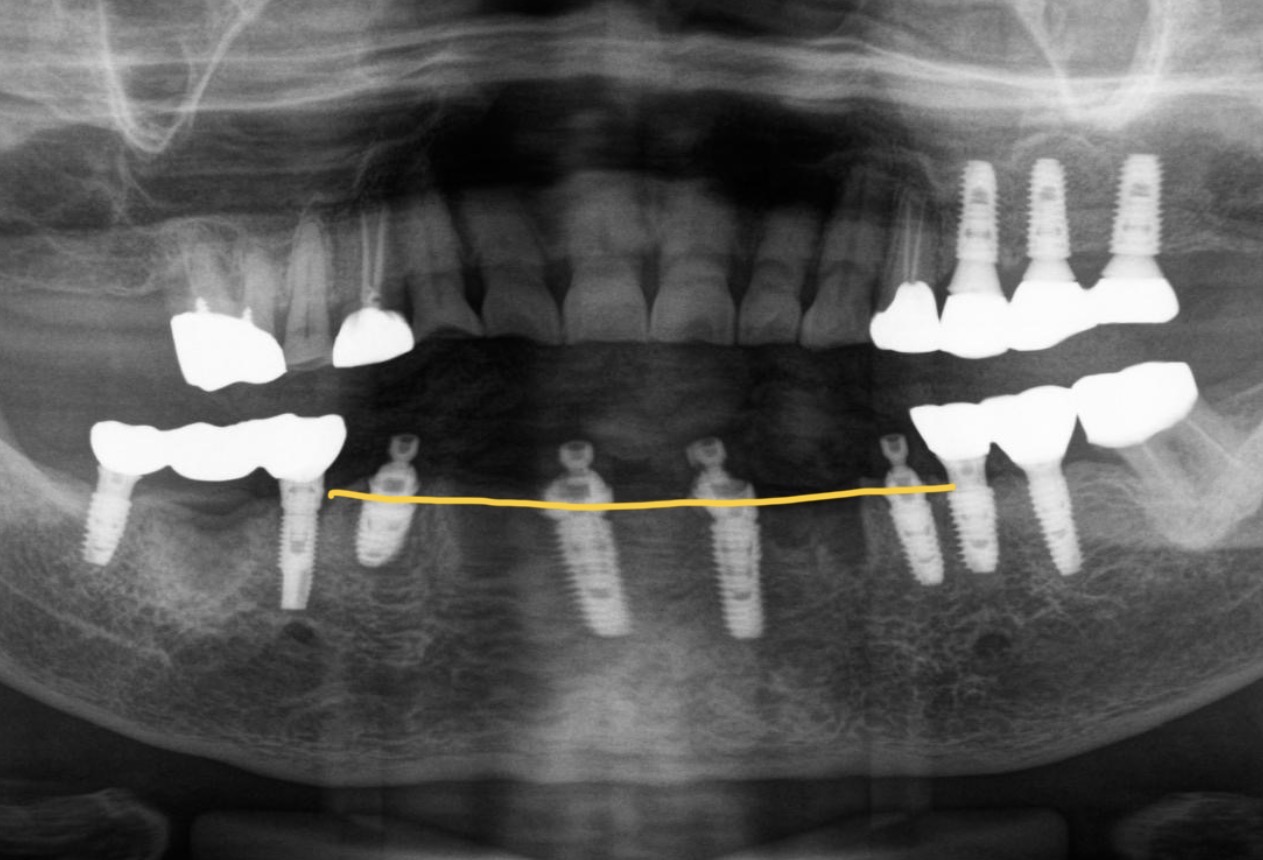
Photographed: May 11, 2026
03. Why strategic extraction of tooth 34 was chosen
A key goal was to restore the lower front teeth with fixed temporary teeth as soon as possible while reducing the burden of complex procedures such as bone grafting. We aimed to obtain sufficient primary stability in sites with good bone quality and no inflammation.
Comparing preservation with extraction of tooth 34, I judged that including it in the extractions would better support these implant positions and the connected restoration design.
- Obtain the required stability in sites with good bone quality and no inflammation
- Reduce the burden of complex procedures such as bone grafting
- Use the minimum necessary number of implants for same-day temporary teeth and progress to the final restoration as quickly as reasonably possible
- Establish a consistent bone level while considering restoration shape and cleanability
My choice could differ for another patient with the same X-ray findings. For a younger patient with good oral hygiene, I might have placed more weight on preserving tooth 34 and allowing a longer treatment course.
This patient was 83 and had already experienced implant removal. Considering prolonged temporary-denture use and future maintenance, we chose to extract five teeth including tooth 34 and place four implants in suitable positions.
Strategic extraction of tooth 34 was a decision based on the overall treatment plan. Because it involved a relatively healthy tooth, I sought to compare preservation and its associated burdens carefully. This was an individual judgment based on her teeth and treatment conditions, not a rule that age alone warrants extraction.
Photographed: September 30, 2026
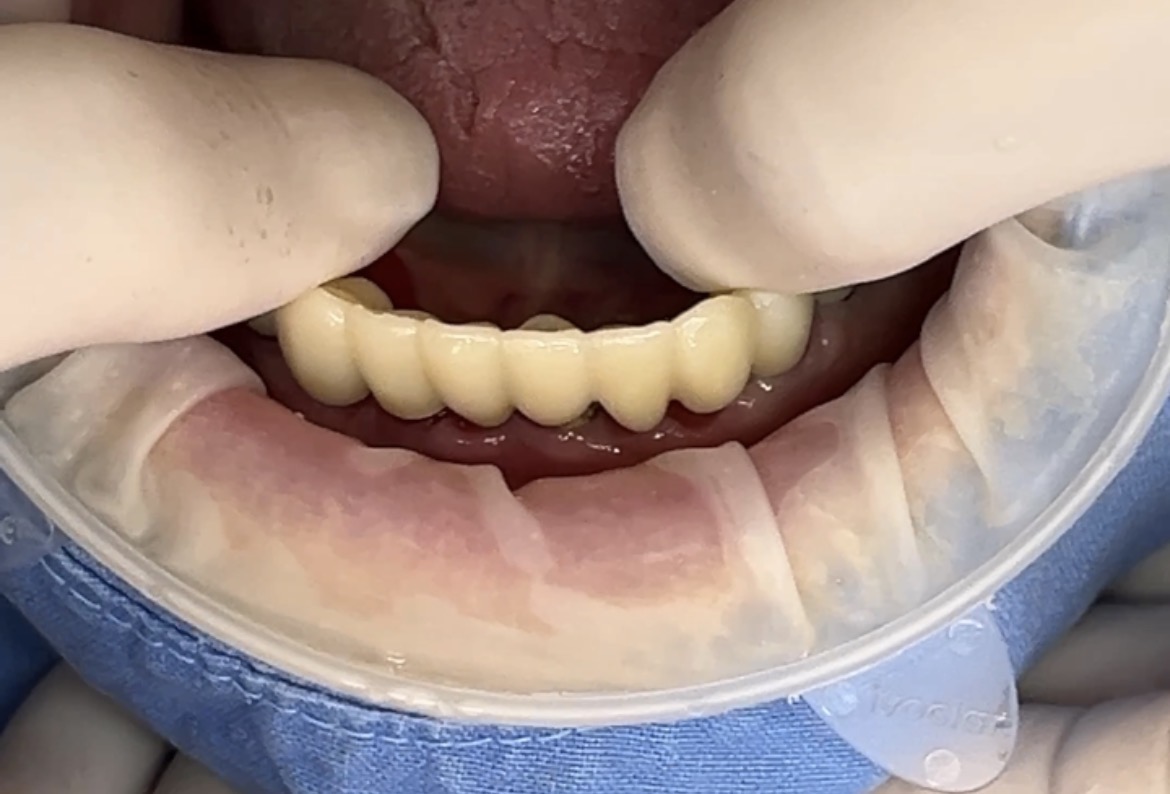
The patient originally had an underbite, with the lower front teeth ahead of the upper teeth. The temporary teeth were designed to remain approximately 1 mm clear of the upper front teeth, avoiding contact and reducing forces on the temporary restoration. This gap was selected for her individual bite and treatment plan.
04. Temporary teeth were connected on the day of extraction
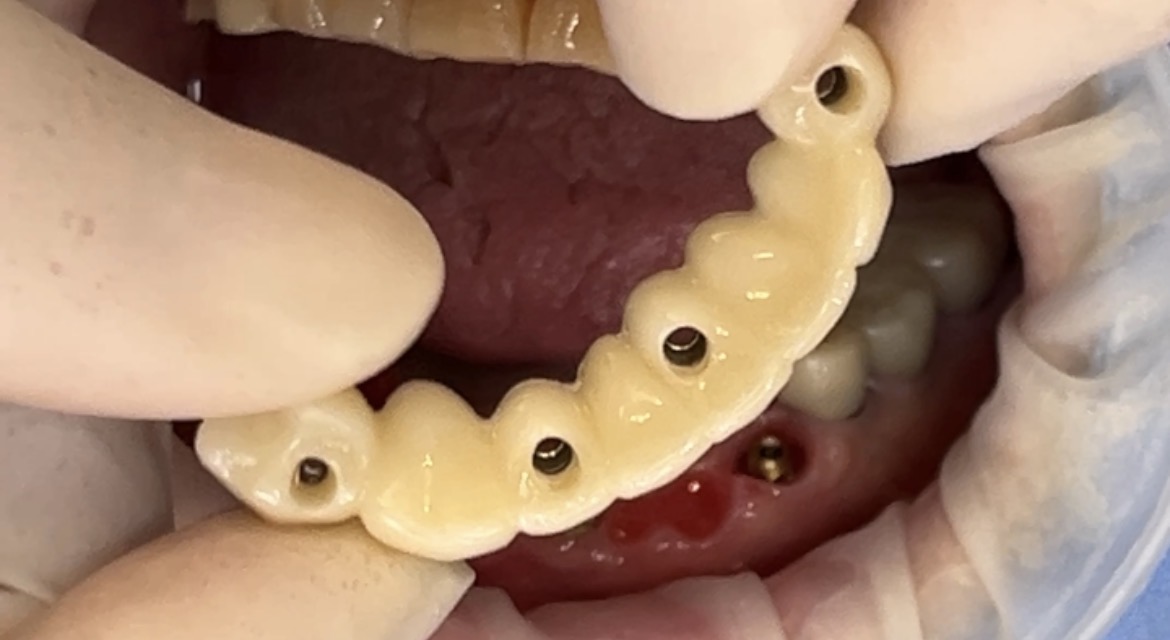
As planned, five teeth were extracted and four implants placed. Fixed PMMA temporary teeth were connected to MUA abutments that day. MUAs are components connecting the implants to a linked restoration.
Connecting same-day temporary teeth and completing the final restoration are separate stages. This patient used the temporary teeth before receiving the final restoration around three months later.
At the next-day review, there was some pain, swelling and bruising, and recovery was assessed. Checking postoperative progress was an important part of the treatment process.
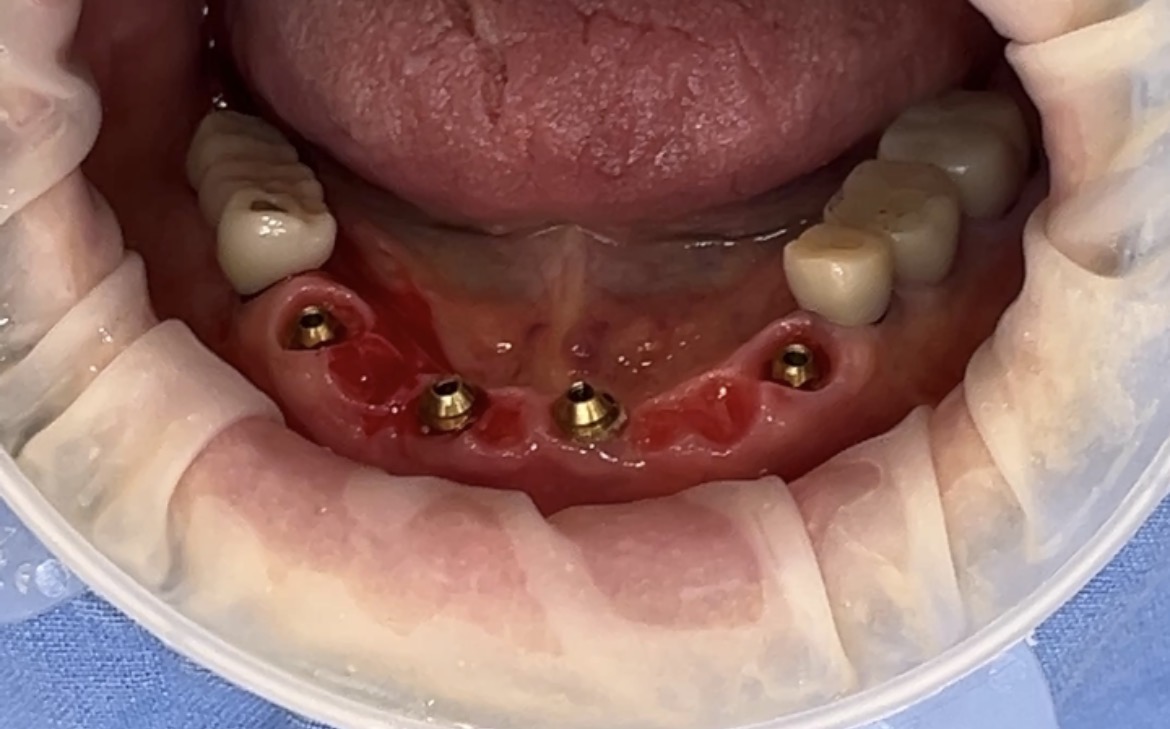
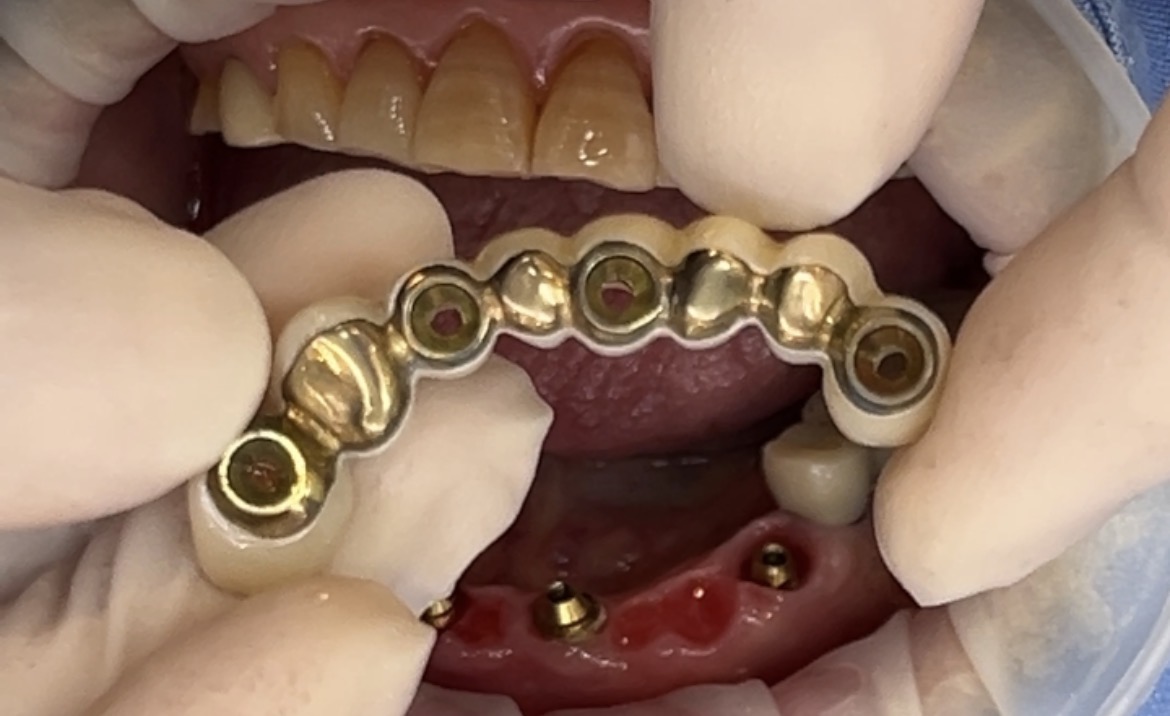
05. Implant number and final restoration structure were planned together
Implant number was decided alongside the restoration design. Because the connectors are narrow in the front region, we planned a zirconia restoration with a titanium support framework to account for the strength of the connected prosthesis.
This structure guided the positions of the four implants and the span of connected teeth. The final restoration was screw-retained on MUA abutments, with future removal for cleaning and inspection in mind.
What mattered to me was whether the number, positions and restoration structure suited her daily use and maintenance, rather than the number alone.
Treatment was completed with the final restoration approximately three months later. Its shape considered her longstanding bite and comfort. She preferred her existing underbite, so this was reflected in the design, and the shade was made brighter than the upper front teeth at her request.
06. Planning continued into aftercare
Given her previous peri-implantitis and maintenance burden, the initial plan was to check hygiene and the restoration every three months. Six-month reviews would be considered once good maintenance was established.
Follow-up visits are needed to confirm that the planned cleaning routine works in her daily life.
The hardest part was judging the remaining teeth and how far to reduce her treatment burden, rather than simply deciding implant number. I sought a suitable balance for this patient between tooth preservation, waiting time and cost, surgery and restoration structure, and ongoing maintenance.
Five points to discuss before a front-tooth implant consultation
Advantages and disadvantages of preserving versus extracting them
Overall costs of both options and what each estimate includes
The sequence of extraction, implant placement and temporary teeth, and any temporary-denture period
Implant number and position together with the final restoration design
A cleaning routine the patient or caregiver can perform and a regular review schedule
Lower Front-tooth Implant FAQ
Are the teeth fitted on extraction day the final teeth?
Why was a relatively healthy tooth extracted?
Does preserving a tooth cost more?
Do four implants mean the whole lower jaw was treated?
This case describes one patient's treatment record and the treating clinician's judgment. Tooth preservation, suitability for same-day temporary teeth and treatment duration vary with individual conditions.