
SINCE 1995 HARUE DENTAL CLINIC
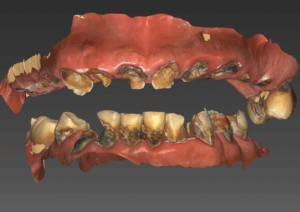
For this man in his 40s travelling from Delaware, extensive decay had left most teeth severely damaged. I planned full-mouth rehabilitation while retaining a serviceable existing implant. Stable implants supported temporary teeth on the day of surgery.
Dr. Hanna Lee
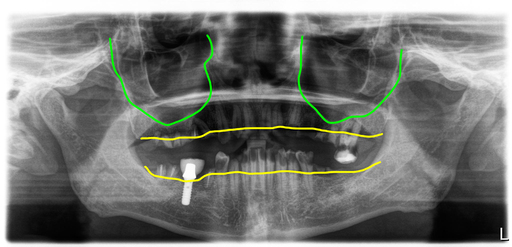
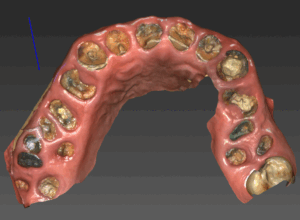
Extensive decay and the treatment decision
Most teeth had lost their crowns through decay, apart from an existing implant. A damaged tooth can sometimes be restored if its root is suitable, but the widespread loss of tooth structure made that approach unsuitable here. I recommended extracting teeth that could not be restored and retaining the usable implant.
Grafting, additional implants and temporary teeth
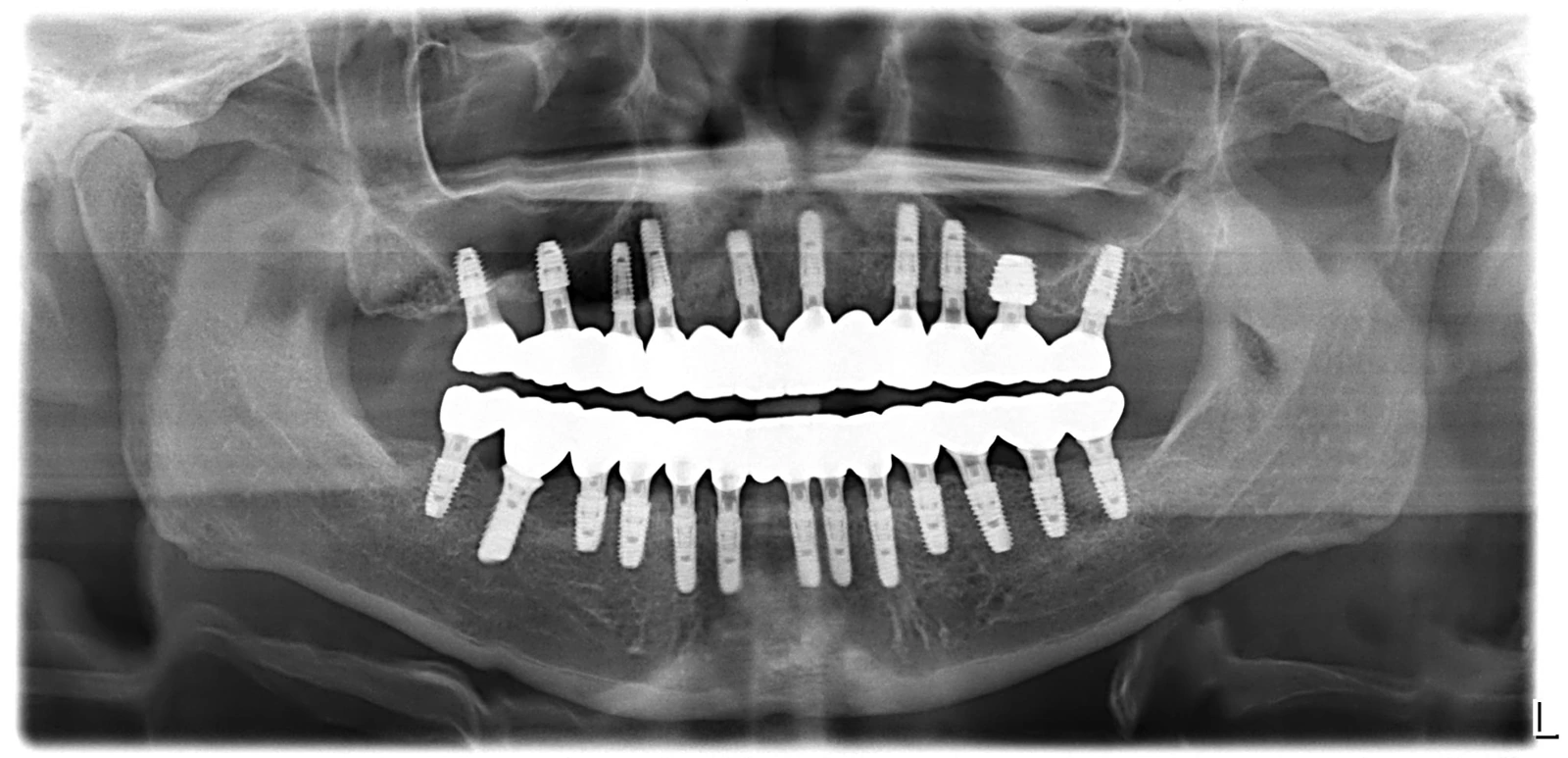
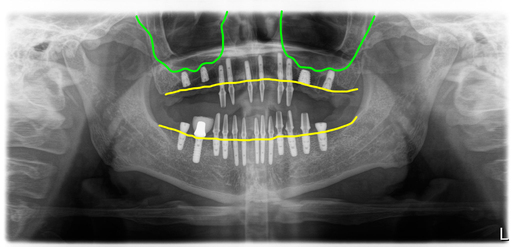
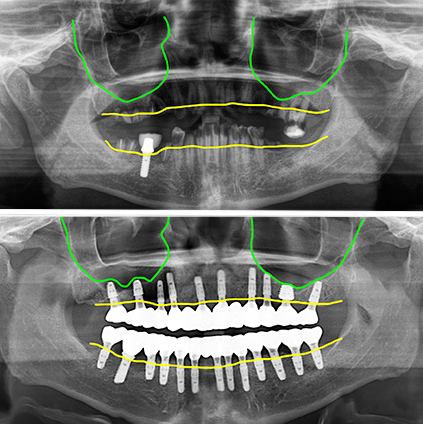
I placed ten upper implants with limited bilateral sinus-lift grafting. Four grafted-site implants had insufficient initial stability and were left submerged; six anterior implants supported eight temporary teeth. In the lower jaw, the existing implant was retained and 12 additional implants were placed. Abutments were connected to ten implants for the temporary restoration. Temporary teeth were fitted that day; definitive restorations came after healing.
Scanning after approximately six months
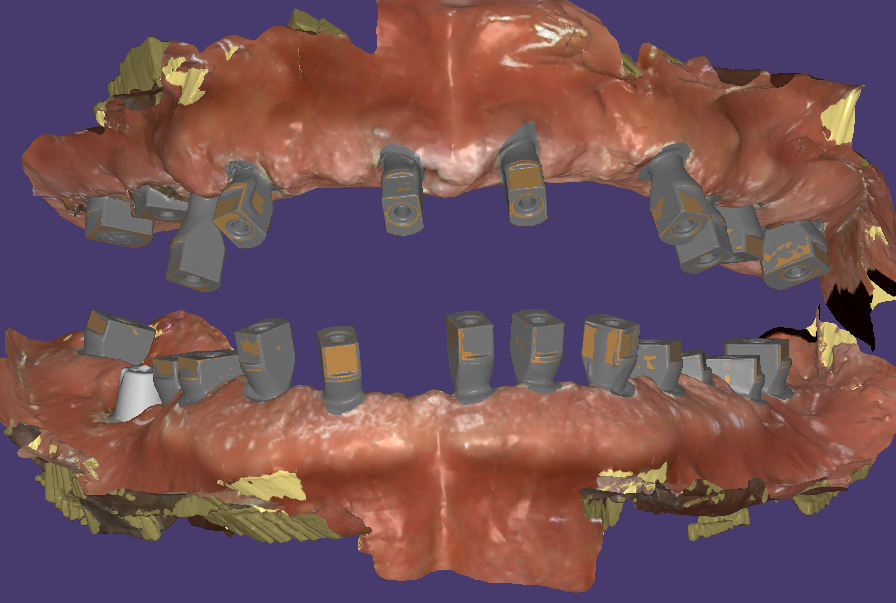
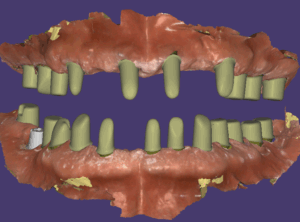
At six months I used scan bodies to record implant positions and design abutments and crowns. The submerged upper posterior implants required an incision for scanning. I then waited two weeks for the incision sites to recover before definitive fitting. I designed abutments to fit the implant positions and gum contours.
Definitive zirconia restorations
The case record describes integration of the implants and grafted sites. The ridge contour was relatively even because the principal problem was decay rather than advanced periodontal destruction. I completed the zirconia restorations with cleaning and appearance in mind. This case does not establish that decay-related implant treatment always has a better outcome.
Four appointments and two-year follow-up
The recorded course was approximately six months and four appointments: surgery, suture removal, scanning and definitive fitting. The scan was at six months, followed by fitting after two weeks of soft-tissue recovery.
At the review on 1 April 2025, approximately two years after treatment, the condition was favourable. This describes the patient at that review, not a guarantee for others. Continued maintenance is necessary.
Clinical photographs
Photographed: 2022.06.16 / 2022.07.11 / 2023.01.25 / 2025.04.01


Korean-language treatment video
Frequently asked questions
Can everyone receive temporary teeth on the day of surgery?
No. The amount and quality of bone, implant initial stability, grafting and bite must be assessed. Temporary teeth do not mean bone healing is complete, and chewing may need to be restricted.
Must all remaining teeth be removed?
I assess each tooth for periodontal support, infection, restorability and its role in the overall bite. Maintainable teeth or existing implants may be retained when appropriate.
Why are reviews needed after definitive restorations?
Reviews check the surrounding bone and gums, bite, cleaning access and restoration components. A favourable photograph at one visit does not replace ongoing maintenance.