
CERAMIC PIECE · A chipped front-tooth case
Are you concerned about a chipped front tooth? A broken tooth is also called a tooth fracture. If the chip is small, could we restore only the missing part? In this case, we used a ‘ceramic piece’: a small ceramic restoration made to fit the shape of the missing portion and bonded to the tooth. The treatment matched the original tooth’s color and length without removing additional tooth structure.
These are before-and-after photographs of the same patient. Treatment and results vary with the extent of the chip, the remaining tooth and the bite. Ceramic restorations can also fracture or come off, and sensitivity may occur after treatment, so regular checks are needed.
01 · A small but noticeable front-tooth chip
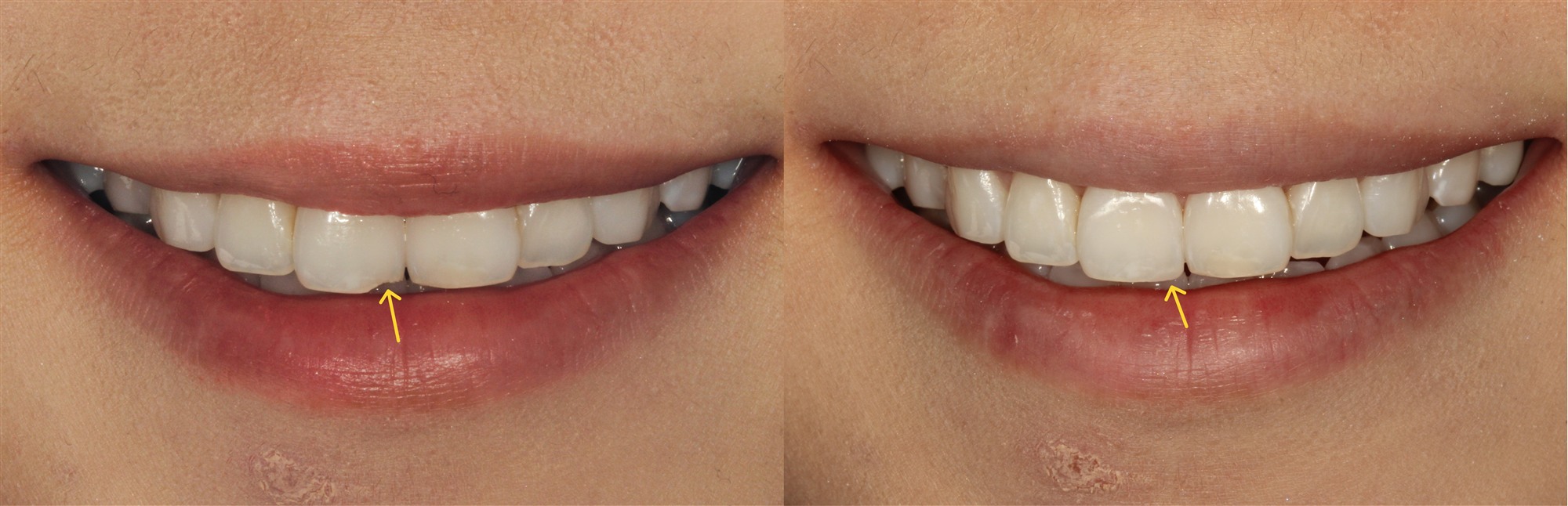
Both photographs taken on 2010.12.17
1. What if a front tooth chips after biting a chicken bone?
What should you do if you accidentally bite a bone while eating chicken and chip a front tooth like this?
A chip of this size may cause little or no pain. But when it affects a central incisor, one of the most visible teeth in the smile, smiling or speaking can feel awkward.
Even without pain, it is best to assess the extent of the damage and check for cracks. The visible size alone does not determine treatment.
02 · Could we just smooth it a little?
2. Could a chipped front tooth simply be smoothed?
It can be tempting to think, ‘It is only a small chip, so a little smoothing should be enough.’
However, reshaping the edge of a central incisor without careful planning can change its appearance more than expected. A difference in length between the two front teeth can become more noticeable, or shortening a tooth can alter the balance of the smile line.
Central incisors that appear slightly longer than the neighboring teeth can help create a natural smile line. However, teeth and lips differ between people, so making teeth longer is not always the answer.
Smoothing may be suitable for a very small rough area. In this case, rather than shortening the tooth further, we chose to fill the missing portion to preserve the original length and shape.
03 · A small ceramic piece fitted to the chip
3. A ceramic piece that blends with the natural tooth
For this patient, we made a ceramic fragment in a shade close to the natural tooth, bonded it only to the chipped area and finished it. This is ceramic piece treatment.
Because the restoration was made to fit the missing shape, no separate tooth preparation was needed in this case. We filled the missing portion while preserving as much remaining tooth structure as possible.
We reduced the need for further tooth removal and considered the ceramic’s light transmission when matching color and shape to the surrounding tooth. In the photographs, the arrows indicate the change at the incisal edge.
The same method is not suitable for every fractured tooth. We first assess whether enough tooth remains for bonding and how forces act on the damaged area. Pain and the need for anesthesia also depend on tooth condition.
04 · Composite resin is another option
4. How does this differ from a front-tooth composite restoration?
Composite resin can also be used in this area. It is another treatment option for a small chip.
Even if the restoration initially looks satisfactory, differences in color or a visible margin can develop between composite and natural tooth over time. The photograph below is a separate composite restoration reference case illustrating this point.
Both composite and ceramic can fracture or detach. To decide which is more suitable, we should consider more than the material name, including the shape and size of the chip, bonding conditions, the bite and daily habits.
05 · What I consider important

This is a different case from the ceramic piece before-and-after photographs above.
5. Preserving as much of your own tooth as possible
If a front tooth chips, I encourage careful treatment that preserves as much natural tooth structure as possible and limits changes to its familiar appearance.
A small chip still deserves careful treatment. Small details require close attention to shape and color so they blend with the original tooth.
06 · Aftercare
6. Avoid excessive forces on the tooth edge
After treatment, avoid biting bones or hard objects with the front teeth or using them to open packaging. Brushing and flossing to keep the bonded area clean are also important.
Arrange a check if the tooth edge feels rough or the bite feels uncomfortable. Tell us if you grind or clench your teeth.
7. Frequently asked questions about chipped front teeth
Is a ceramic piece the same as a veneer?
Here, a ceramic piece means a small ceramic fragment bonded to a localized chipped area. Its coverage differs from a conventional veneer, which covers a broader part of the tooth’s front surface.
Can it be treated without removing tooth structure?
This case required no additional preparation. However, the extent of the chip, the remaining tooth and bonding conditions may make smoothing or a different treatment necessary.
Is a small chip harmless if it does not hurt?
No pain does not necessarily mean all damage is minor. Assessing the extent of fracture, cracks and the bite helps us choose between smoothing, composite and ceramic restoration.
8. Learn more about front-tooth treatment
Whether to restore only the missing portion or adjust color and shape over a wider area depends on the current tooth condition and the changes you want.
Front-tooth veneers planned with a diagnostic wax-up and mock-up