
Harue Dental · Dr. Hanna Lee · Orthodontic and veneer case
When canines stand outside the arch, we consider tooth position separately from tooth shape. This case first aligned the front teeth and canines with orthodontics, then completed the shape and shade with veneers.
Tooth positions were adjusted before the required restoration contours were planned. Here are the stages from orthodontic finishing and brace removal to same-day veneer preparation and bonding, followed by review.
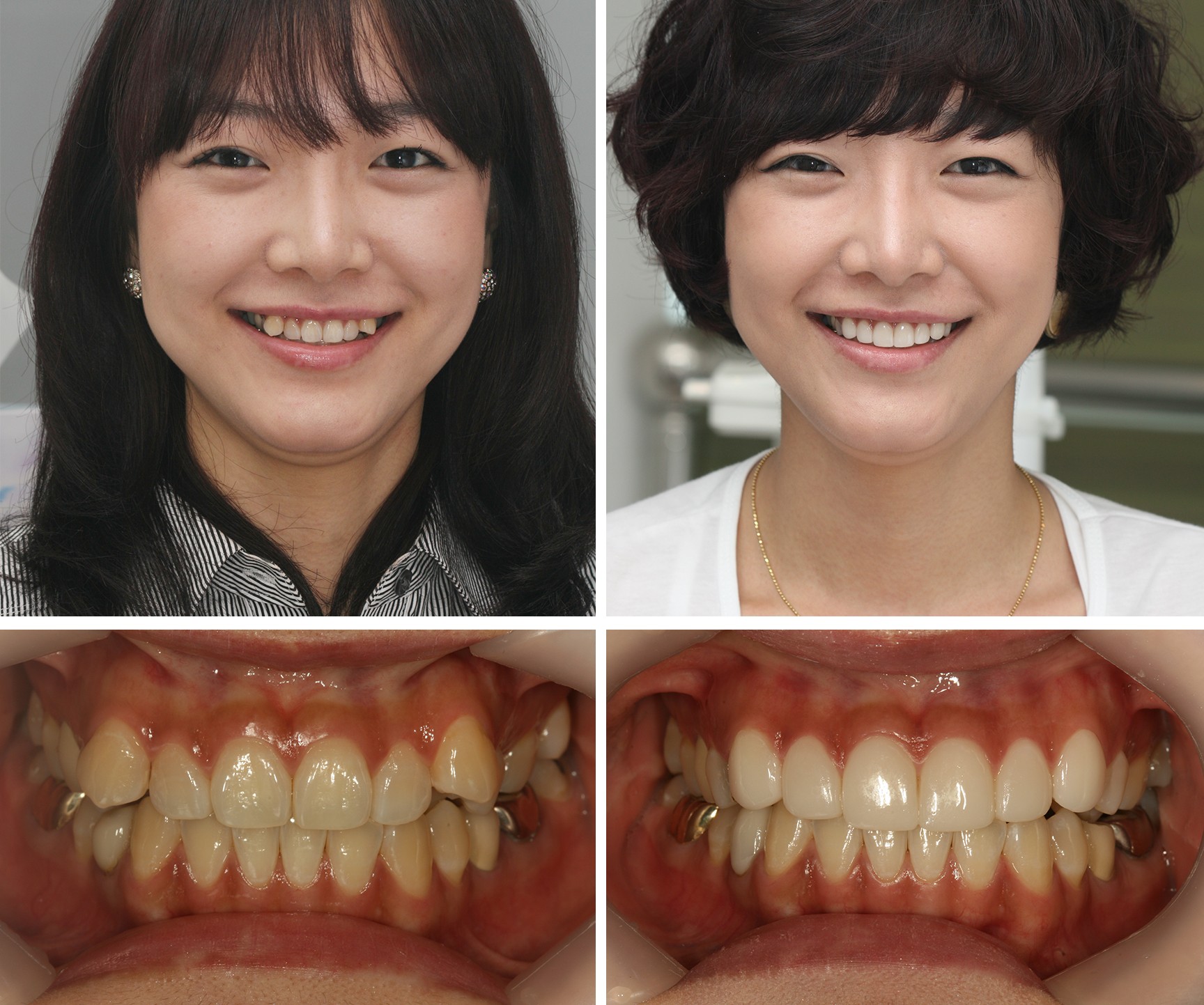
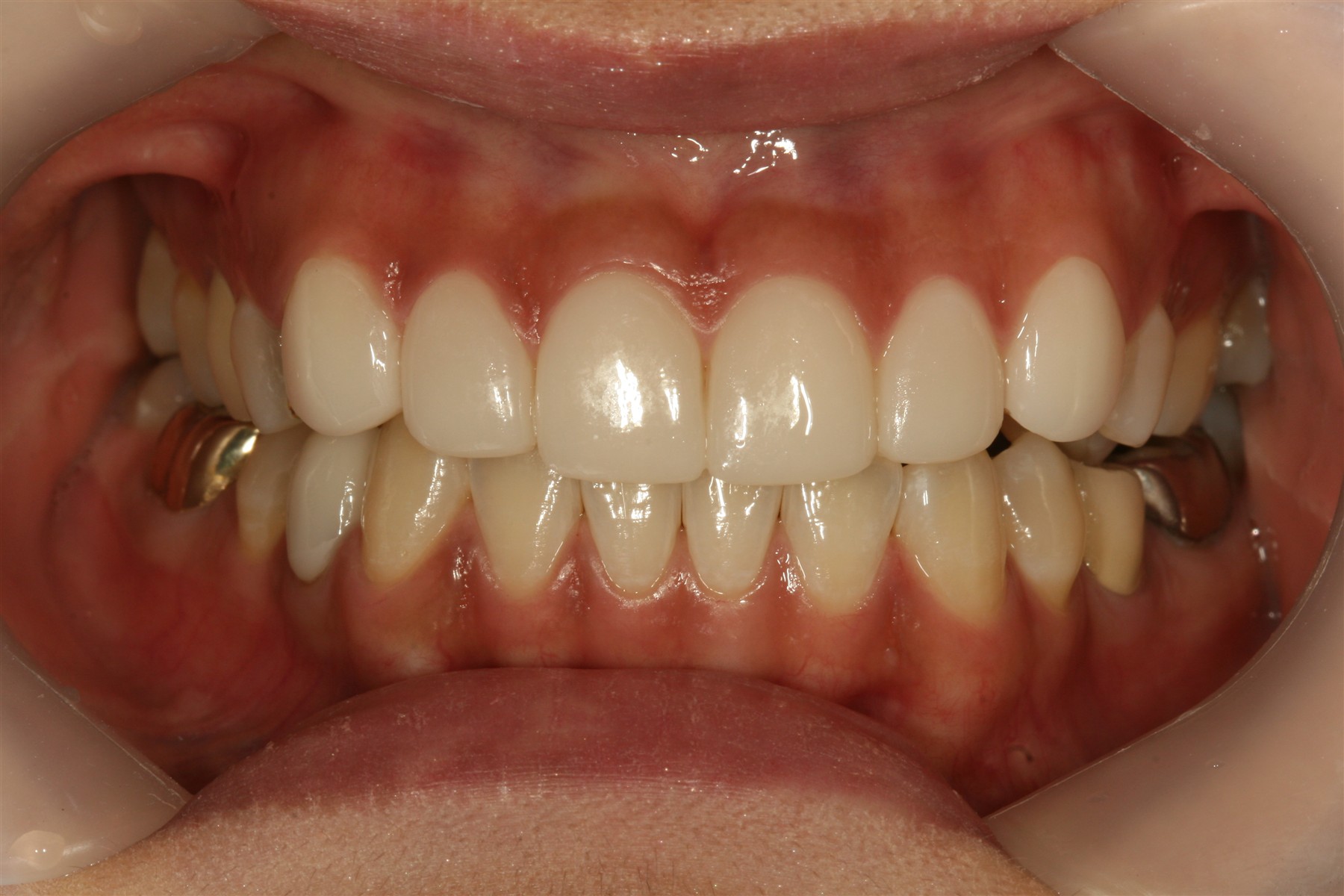
Left: before 2009.04.22 / Right: follow-up 2009.07.06
Top: smile · Bottom: frontal intraoral views
1. Assessing the Canines and Front-tooth Alignment
Before treatment, both canines stood outside the line of the front teeth, whose directions and heights also differed.
Teeth can look different in close-up and in the smile. We assessed frontal and oblique smiles and the teeth visible between the lips to understand how alignment and contours appeared.
Distinguishing positional changes from contour adjustments was the starting point for this plan.
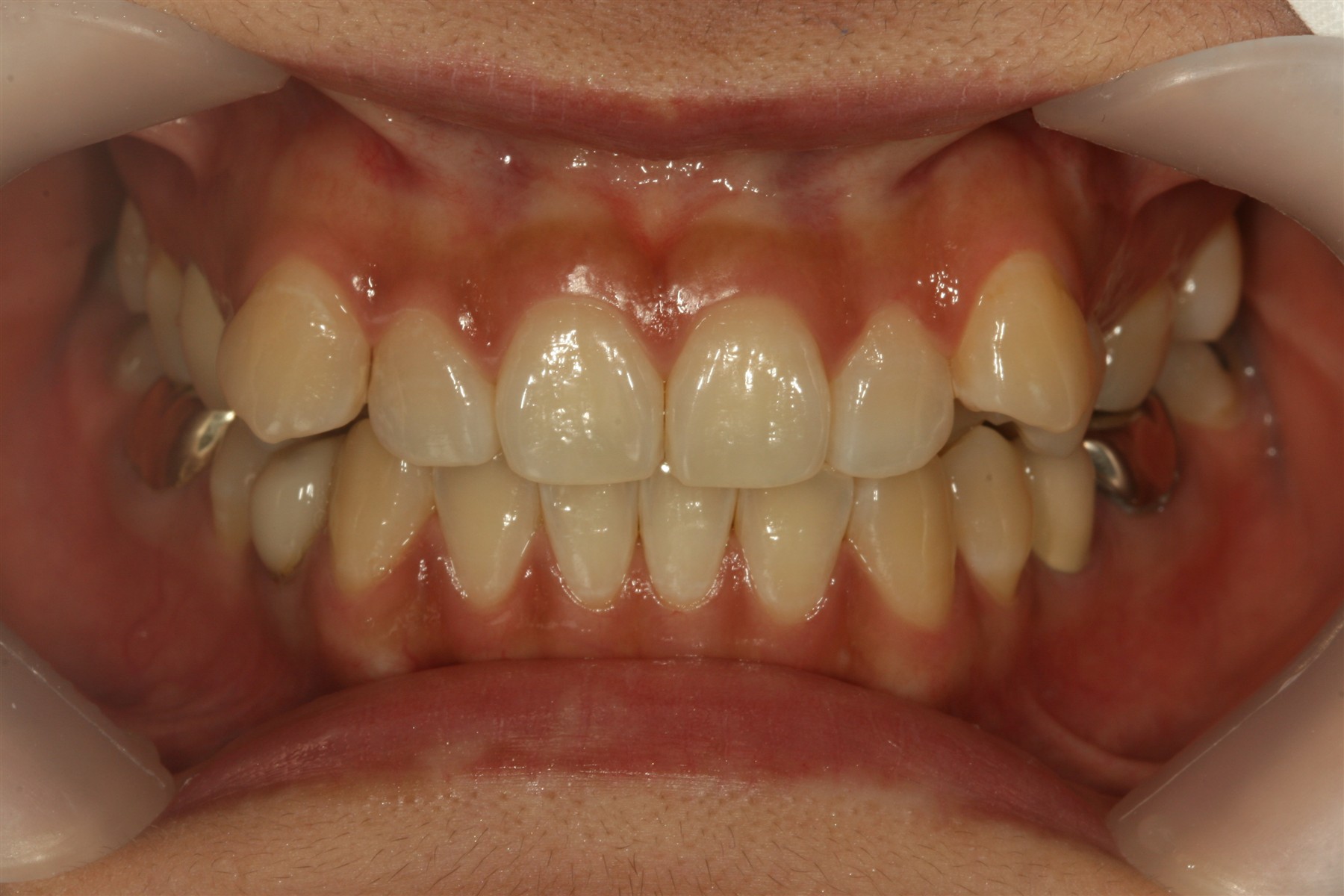




2. Aligning the Teeth before Removing the Braces
Photographs from 29 June 2009 show the finishing stage and the teeth just after brace removal. Viewing these stages separately makes the orthodontic alignment easier to assess.
Orthodontics moves the teeth themselves to change position and direction. Veneers bond to their surfaces to change contours and shade. We planned these different roles together.
After removing the braces, we reassessed widths, lengths and the contours visible in the smile before preparing for veneers.
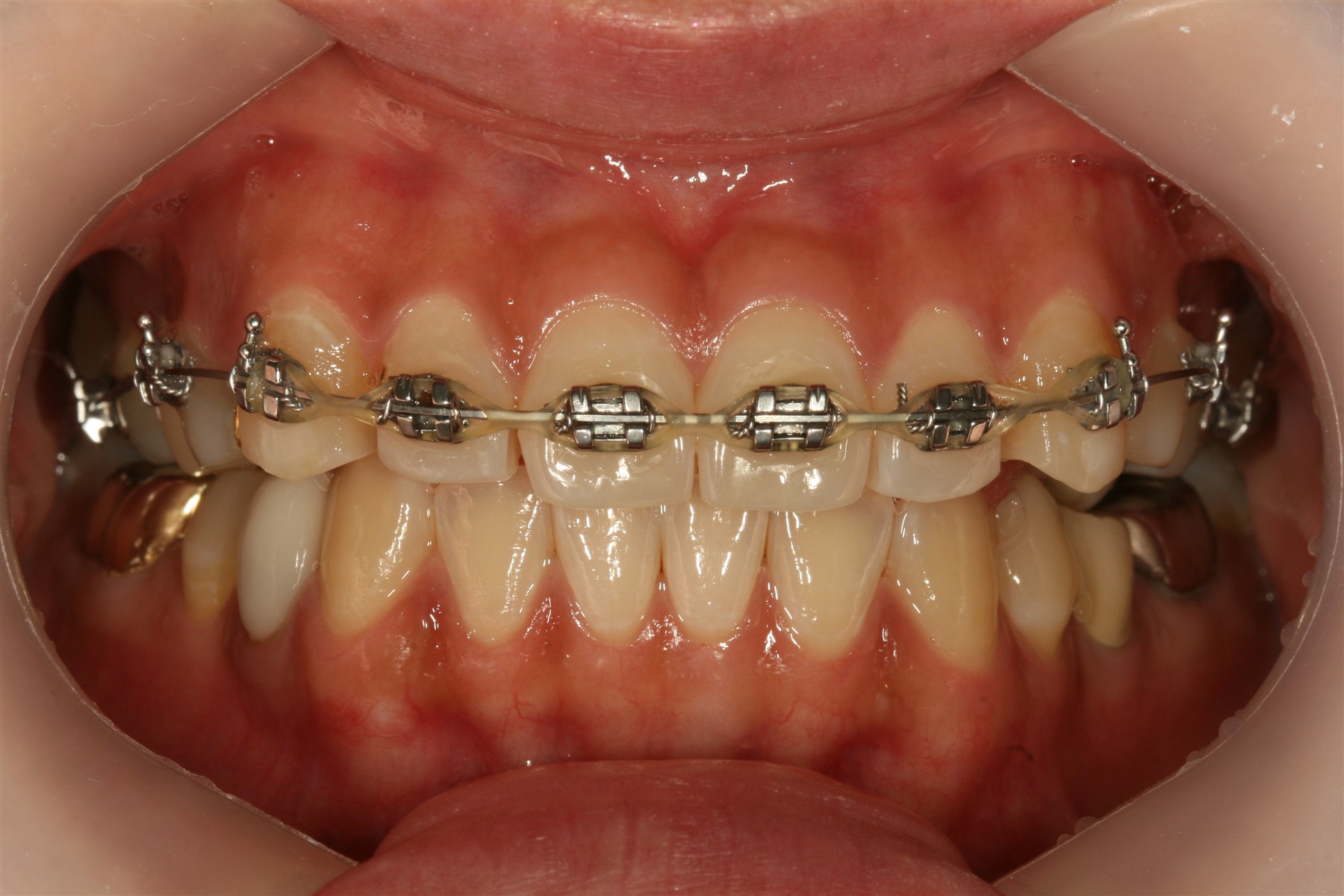

3. Preparing Veneers for the New Tooth Positions
The next image shows the prepared tooth surfaces. After alignment, the required areas were prepared for the planned restorations.
Rather than trying to change canine positions with restorations alone, we moved the teeth first and then assessed the space for ceramic.
Orthodontics first does not make every case suitable for no-preparation veneers. The required preparation depends on final contours, the bite and remaining teeth. Removed tooth tissue cannot be restored to its original state, so the decision requires care.
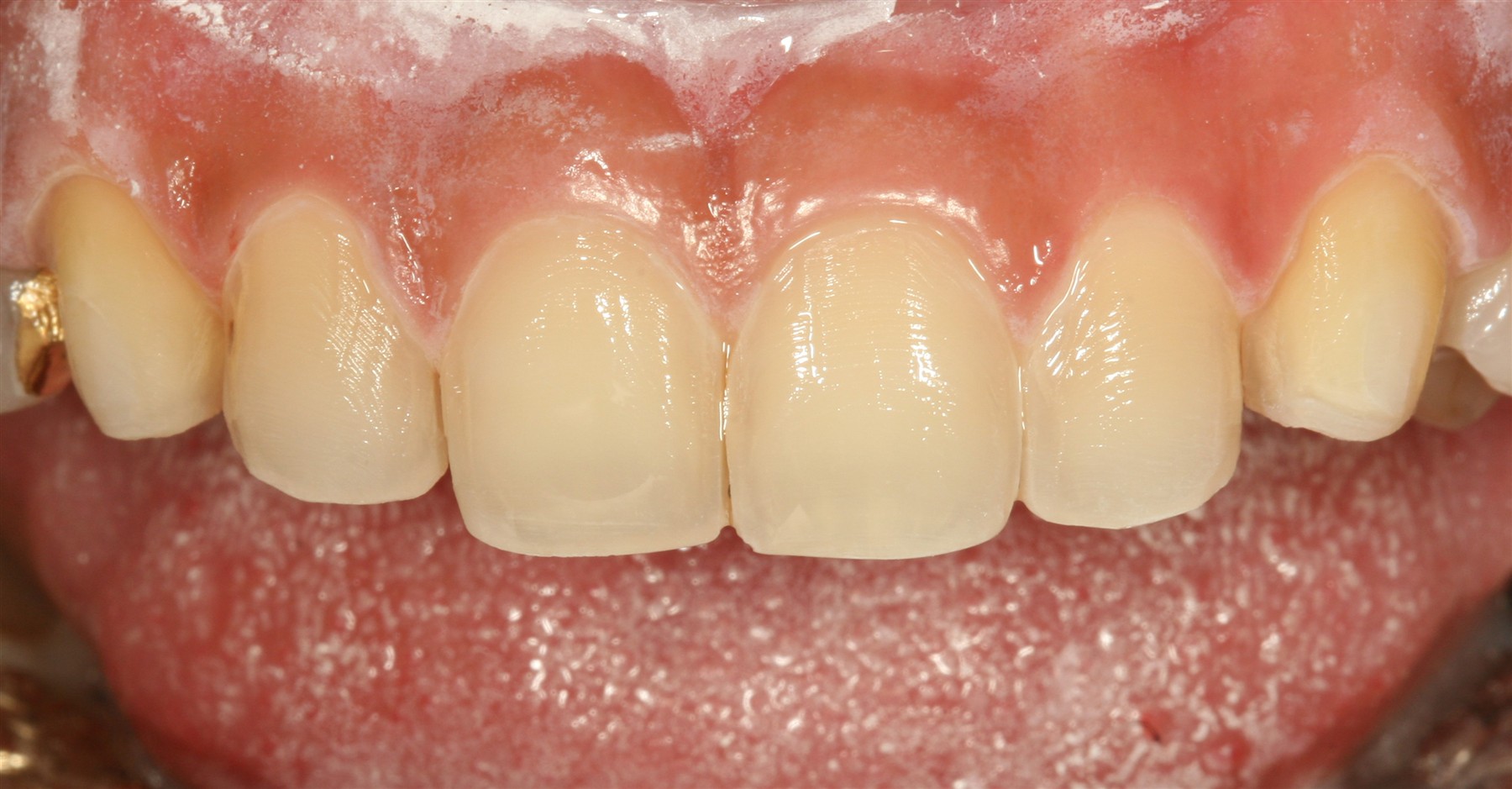
4. Veneers Bonded on the Same Day
This smile photograph was taken just after veneer bonding on 29 June 2009, following orthodontic finishing and brace removal. We assessed the connected front-tooth line, dimensions and appearance between the lips.
Here, “same-day veneers” means veneer preparation and bonding occurred on the same day. The preceding orthodontic treatment took place beforehand.
The case combined orthodontic alignment with veneer refinement of shape and color.
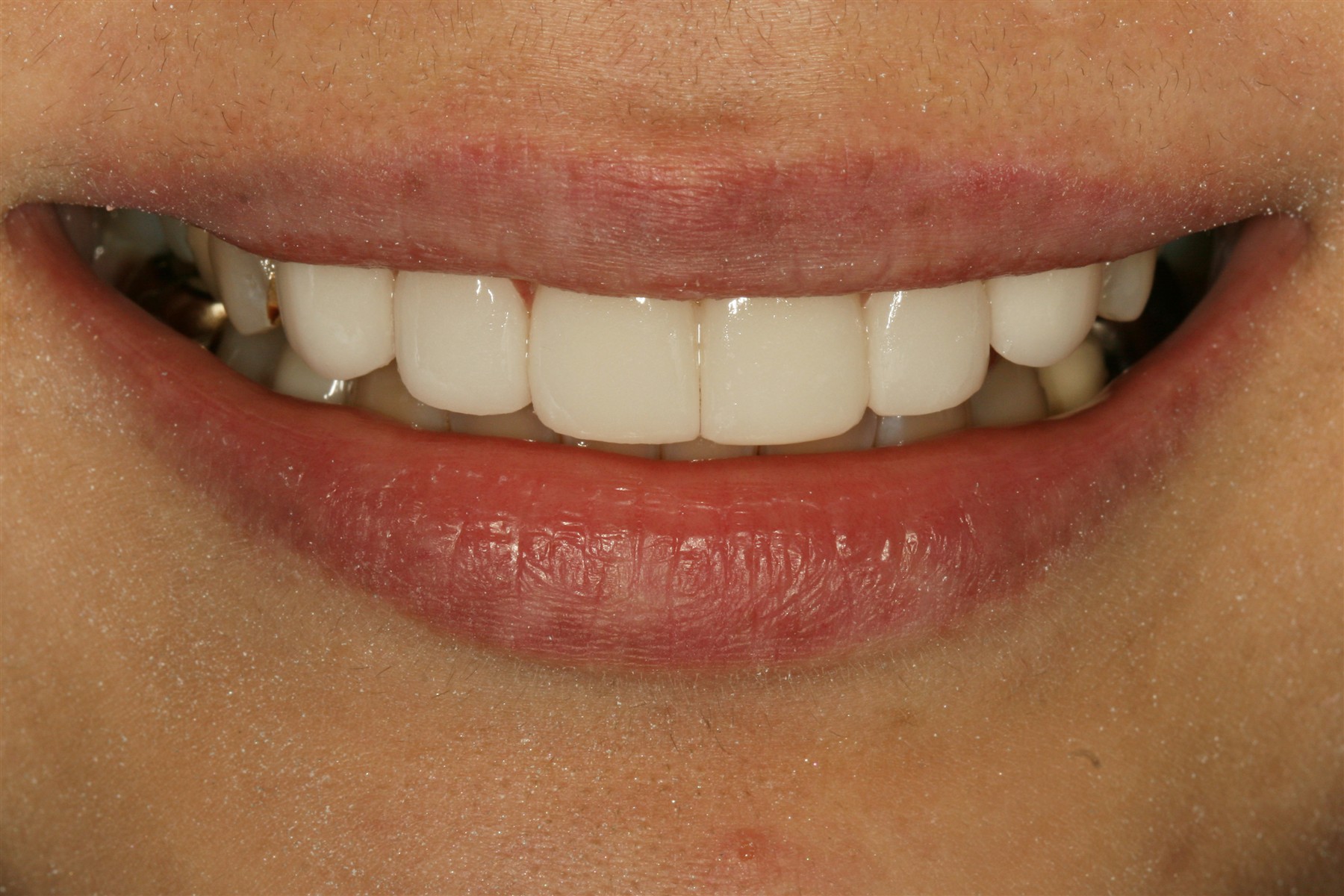
5. Reviewing the Teeth and Smile on 6 July 2009
Follow-up photographs were taken on 6 July after veneer bonding. The intraoral view shows contours and gum margins; frontal and oblique smile views show the relationship with the face.
Alongside straight-looking teeth, we assess how the lips and teeth relate when smiling.
Compare both the alignment achieved through orthodontics and the contours refined with veneers.



6. Care after Orthodontics and Veneers
Veneers do not replace orthodontic retention. Moved teeth can shift again; continue the prescribed retainer use and checks.
Veneers may develop sensitivity, fracture, debonding or surrounding decay and require repair or replacement. Avoid biting hard objects with front teeth, and clean between teeth and along gum margins. Seek review for an uncomfortable bite or looseness.
Not every prominent canine requires both orthodontics and veneers. Additional treatment depends on whether alignment alone meets the goal and whether remaining concerns involve contours or shade.
7. Questions about Veneers after Orthodontics
Why was orthodontics performed first?
To adjust position and direction before planning the necessary restoration shapes. Tooth movement and surface shape/color changes had separate roles.
Does orthodontic treatment always need veneers afterward?
No. If the alignment and smile meet the goal, additional restorations may be unnecessary. Remaining shape or color concerns are weighed against the burden of preparation.
Does same-day veneer treatment include all orthodontics in one day?
No. Orthodontics came first. On 29 June 2009, finishing and brace removal were followed by veneer preparation and bonding.
Does orthodontics first allow no-preparation treatment?
This case includes a preparation stage. No-preparation veneers are not appropriate for every case; the required extent depends on teeth, final contours and the bite.
Are retainers still used after veneers?
The moved teeth need retention. Follow the individual instructions for appliance type and use, and seek review if it is loose or does not fit.
Planning Position and Shape Together
For prominent canines, first consider what needs tooth movement and what needs restorative refinement. We explain how the remaining teeth can be preserved and the intended smile planned.
Orthodontic treatment guideVeneer treatment guideOrthodontic/veneer consultation · 1544-0208Treatment and explanation: Dr. Hanna Lee, Harue Dental · Article revised: 2026.11.16
General treatment and care references: American Dental Association: veneers · British Orthodontic Society: retainers